 5 citations
,
April 1999 in “PubMed”
5 citations
,
April 1999 in “PubMed” Two drugs, Minoxidil and Finasteride, can modestly maintain or regrow hair on the scalp's vertex with minimal side effects.
17 citations
,
July 1988 in “International Journal of Dermatology” The 2% minoxidil solution is safe and effective for early male pattern baldness.
 April 2024 in “Anais brasileiros de dermatologia/Anais Brasileiros de Dermatologia”
 Using both minoxidil and biotin together increased hair growth more than using either one alone.
 3 citations
,
January 2016 in “Annals of Dermatology”
3 citations
,
January 2016 in “Annals of Dermatology” Minoxidil was the most effective treatment for hair regrowth in rats compared to Aminexil or Kerium.
Combining bromelain with finasteride improves hair regrowth and reduces inflammation in alopecia.
May 2013 in “DOAJ (DOAJ: Directory of Open Access Journals)” The multimodal microemulsion with minoxidil, diclofenac, and tea tree oil is more effective for hair growth than minoxidil alone.
A bald man grew hair on his head after taking a drug called diazoxide, but lost it again when he stopped the medication.
April 2021 in “International Journal of Research in Dermatology” The combination of minoxidil and finasteride is more effective for hair growth than minoxidil alone.
 May 2015 in “Journal of The American Academy of Dermatology”
 Niosomal minoxidil, when applied topically, increases hair count more than conventional minoxidil solution.
 June 1996 in “Journal of Dermatological Science”
 Two new compounds were found that could promote hair growth as well or better than minoxidil.
 370 citations
,
September 1999 in “The New England Journal of Medicine”
370 citations
,
September 1999 in “The New England Journal of Medicine” Finasteride and minoxidil are effective for hair loss, but continued research is needed for better treatments.
March 2025 in “Asian Journal of Pharmaceutics” Herbal shampoo tablets are promising eco-friendly hair care options.
 May 1987 in “Inpharma (Balgowlah)”
 Topical minoxidil may slow hair loss but often doesn't lead to satisfactory hair regrowth and requires ongoing treatment.
3 citations
,
January 2002 in “Pediatric Drugs” Tinea capitis is a common scalp infection in children, treated with antifungal medications like griseofulvin, terbinafine, and fluconazole.
 71 citations
,
January 2004 in “Dermatology”
71 citations
,
January 2004 in “Dermatology” Oral finasteride works better than topical minoxidil for hair growth, both are safe.
 December 2025 in “IP Indian Journal of Clinical and Experimental Dermatology”
 DNCB is more effective than betamethasone for hair regrowth but has more side effects.
3 citations
,
March 2022 in “Archives of Dermatological Research” 10 citations
,
March 2004 in “Journal of the American Academy of Dermatology” The 5% minoxidil solution effectively treated hair loss with good tolerability.
January 2025 in “Mansoura Medical Journal” Minoxidil is more effective than cetirizine for treating male hair loss.
 1 citations
,
January 1967 in “The BMJ”
1 citations
,
January 1967 in “The BMJ” The document concludes that while some hair and scalp disorders can be treated, hair loss from destroyed follicles is permanent, and damaged hair can only regrow naturally.
4 citations
,
January 1983 in “PubMed” Minoxidil can regrow hair, but cyproterone acetate doesn't help when used together.
 1 citations
,
August 2022 in “Медицинский совет”
1 citations
,
August 2022 in “Медицинский совет” The treatment with an oral drug and topical lotion is effective and well-tolerated for hair loss after COVID-19.
Hair loss causes emotional distress, leading to high spending on treatments, with Minoxidil and Propecia being common but having side effects.
 January 2026 in “RIGGS Journal of Artificial Intelligence and Digital Business”
 A pomade with peppermint oil and minoxidil can effectively promote hair growth, with the best formulation having a balanced texture and stability.
 April 2024 in “Journal of the American Academy of Dermatology”
 Low-dose minoxidil helps hair grow longer and thicker in people with short anagen syndrome.
The 2% minoxidil cream is stable, spreads well on the skin, and helps with hair growth.
2 citations
,
May 1989 in “JAMA” Minoxidil can help hair growth but may not always look cosmetically good.
 September 2021 in “International Ayurvedic Medical Journal”
 Bhringraj capsule and oil with Nasya effectively reduce hair fall and related symptoms.
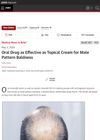
Oral minoxidil works as well as topical minoxidil for male pattern baldness.
1 citations
,
May 1989 in “JAMA” Minoxidil can help hair growth but may not always look cosmetically good.