 21 citations
,
August 1960 in “British journal of dermatology/British journal of dermatology, Supplement”
21 citations
,
August 1960 in “British journal of dermatology/British journal of dermatology, Supplement” Endoxan often causes hair loss, which usually starts in the third week of treatment.
 October 2023 in “Journal of Drug Delivery and Therapeutics”
 SANG5 niosomal gel effectively treats acne.
 March 2023 in “International Journal of Biomedicine”
 Hair loss from Telogen Effluvium can be managed by treating the underlying cause and may improve with treatments like minoxidil.
 441 citations
,
May 2008 in “British Journal of Pharmacology”
441 citations
,
May 2008 in “British Journal of Pharmacology” Anabolic steroids can build muscle and strength but have risks and need more research on their clinical benefits and side effects.
 95 citations
,
December 1980 in “The New England Journal of Medicine”
95 citations
,
December 1980 in “The New England Journal of Medicine” Minoxidil helped bald patient regrow hair.
 75 citations
,
May 1986 in “Clinics in endocrinology and metabolism”
75 citations
,
May 1986 in “Clinics in endocrinology and metabolism” Male hormones are important for hair and oil gland development and can cause conditions like excessive hair growth and acne.
 58 citations
,
January 2006 in “Skin Pharmacology and Physiology”
58 citations
,
January 2006 in “Skin Pharmacology and Physiology” High levels of testosterone and 5α-DHT can lead to cell death in cells important for hair growth.
 53 citations
,
May 1986 in “Clinics in endocrinology and metabolism”
53 citations
,
May 1986 in “Clinics in endocrinology and metabolism” Androgens like testosterone affect hair growth and oil production differently across body parts and individuals.
 32 citations
,
December 2009 in “Archives of Dermatological Research”
32 citations
,
December 2009 in “Archives of Dermatological Research” Dihydrotestosterone increases certain inflammatory signals in skin cells, potentially contributing to acne.
 28 citations
,
August 2003 in “Steroids”
28 citations
,
August 2003 in “Steroids” Hirsute women have lower type 2 17β-HSD enzyme levels, which improve with treatment.
 19 citations
,
July 1993 in “The journal of investigative dermatology/Journal of investigative dermatology”
19 citations
,
July 1993 in “The journal of investigative dermatology/Journal of investigative dermatology” Dermal-epidermal interactions are crucial for hair growth and maintenance.
 12 citations
,
May 2003 in “Journal of dermatological science”
12 citations
,
May 2003 in “Journal of dermatological science” Hsc70 protein may influence hair growth by responding to androgens.
 12 citations
,
May 1995 in “Australasian Journal of Dermatology”
12 citations
,
May 1995 in “Australasian Journal of Dermatology” Hair loss in women can be slowed with treatment, but more research needed for better solutions.
 11 citations
,
January 2018 in “Royal Society Open Science”
11 citations
,
January 2018 in “Royal Society Open Science” Scientists found genes linked to the growth of high-quality brush hair in Chinese Haimen goats.
 11 citations
,
May 2011 in “World Journal of Pediatrics”
11 citations
,
May 2011 in “World Journal of Pediatrics” The document emphasizes the importance of correctly identifying and classifying genetic hair disorders to help diagnose related health conditions.
 11 citations
,
August 2000 in “Journal of Endocrinology”
11 citations
,
August 2000 in “Journal of Endocrinology” DHEA acts like a male hormone on rat skin glands and doesn't turn into female hormones there.
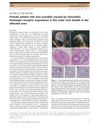 5 citations
,
August 2012 in “Journal of Dermatology”
5 citations
,
August 2012 in “Journal of Dermatology” Tamoxifen may cause female hair loss by increasing androgen receptor expression.
 5 citations
,
December 1979 in “Clinical and Experimental Dermatology”
5 citations
,
December 1979 in “Clinical and Experimental Dermatology” Anti-androgens are effective for female acne but less so for male-pattern hair loss, with side effects similar to birth control pills.
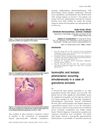 4 citations
,
January 2009 in “Indian Journal of Dermatology, Venereology and Leprology”
4 citations
,
January 2009 in “Indian Journal of Dermatology, Venereology and Leprology” A patient with granuloma annulare experienced both isotopic and isomorphic responses, with skin lesions responding to steroids but relapsing after stopping treatment.
 2 citations
,
January 2019 in “International Journal of Medicine in Developing Countries”
2 citations
,
January 2019 in “International Journal of Medicine in Developing Countries” Telogen Effluvium is a common hair loss condition, particularly in women, with no specific FDA-approved treatment, and recovery can take up to 18 months.
 2 citations
,
October 1998 in “Family Practice”
2 citations
,
October 1998 in “Family Practice” New oral treatment, finasteride, effectively and safely treats common hair loss.
 1 citations
,
March 2021 in “Skin health and disease”
1 citations
,
March 2021 in “Skin health and disease” Better hair loss models needed for research.
 February 2026 in “Frontiers in Medical Technology”
 Keratinocyte stem cells are crucial for skin renewal and have potential in wound healing and tissue regeneration.
 September 2021 in “Physiology News”
 Air Vice-Marshal Sir Ralph Jackson significantly advanced dialysis technology in the UK.

Researchers found a genetic link for hereditary hair loss but need more analysis to identify the exact gene.
January 2016 in “Dermatology Online Journal” Hormonal therapy changes skin and hair in transgender patients, who need better researched dermatologic care.
 59 citations
,
August 1998 in “International Journal of Dermatology”
59 citations
,
August 1998 in “International Journal of Dermatology” Genetics and hormones cause hair loss; finasteride treats it safely.
 30 citations
,
May 2018 in “Experimental Dermatology”
30 citations
,
May 2018 in “Experimental Dermatology” The conclusion is that future hair loss treatments should target the root causes of hair thinning, not just promote hair growth.
 18 citations
,
May 1992 in “American Journal of Biological Anthropology”
18 citations
,
May 1992 in “American Journal of Biological Anthropology” Higher androgen levels do not cause baldness in men.
 13 citations
,
August 1980 in “Cancer”
13 citations
,
August 1980 in “Cancer” Multimodal primary treatment improves survival in premenopausal breast cancer patients and is also beneficial for postmenopausal women.