 8 citations
,
October 2018 in “Journal of the European Academy of Dermatology and Venereology”
8 citations
,
October 2018 in “Journal of the European Academy of Dermatology and Venereology” Mohs micrographic surgery is effective for early-stage non-melanoma skin cancers on the lips, with basal cell carcinoma more common on the upper cutaneous lip and squamous cell carcinoma more common on the lower vermilion lip.
 September 2017 in “Journal of Investigative Dermatology Symposium Proceedings”
 Non-melanoma skin cancer in darker-skinned people can be misdiagnosed, so doctors need to be more aware to diagnose it correctly and early.
 May 2017 in “Journal of The American Academy of Dermatology”
 595 nm pulsed dye laser is a cost-effective treatment for nonmelanoma skin cancer with a low recurrence rate.
78 citations
,
January 2013 in “Brachytherapy” HDR electronic brachytherapy effectively treats nonmelanoma skin cancer with good cosmetic results and minimal side effects.
 1 citations
,
January 2023 in “International Journal of Molecular Sciences”
1 citations
,
January 2023 in “International Journal of Molecular Sciences” Understanding how Regulatory T Cells work could help create treatments for certain skin diseases and cancers.
December 2024 in “International Journal of Molecular Sciences” Platelet-rich fibrin may help reduce nonmelanoma skin cancer cell growth.
September 2018 in “Dermatologic Surgery” Hypothyroidism may increase the risk of nonmelanoma skin cancer.
 April 2018 in “Journal of Investigative Dermatology”
 Nonmelanoma skin cancers have higher levels of certain osteopontin variants than normal skin.
Stem cells play a key role in nonmelanoma skin cancers, with different origins and genetic changes linked to basal and squamous cell carcinomas.
 1 citations
,
April 2016 in “Journal of The American Academy of Dermatology”
1 citations
,
April 2016 in “Journal of The American Academy of Dermatology” Blood pressure medications may increase the risk of skin cancer.
Basal cell carcinoma behaves like hair follicles and targeting specific pathways may help treat it.
 August 2024 in “Journal of Dermatology & Cosmetology”
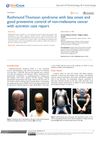
 Acitretin effectively prevented skin cancer in a patient with late-onset Rothmund-Thomson syndrome.
36 citations
,
October 2019 in “Cell Proliferation” Tryptanthrin effectively suppresses non-melanoma skin cancer and is safe for normal skin.
 14 citations
,
April 2019 in “PLOS ONE”
14 citations
,
April 2019 in “PLOS ONE” Skin cancer is common in elderly nursing home residents, with risk factors including being male, having light skin, outdoor work history, and smoking. Regular skin checks are recommended.
 3 citations
,
June 2021 in “Clinical, Cosmetic and Investigational Dermatology”
3 citations
,
June 2021 in “Clinical, Cosmetic and Investigational Dermatology” Dermoscopy is an effective tool for accurately detecting skin cancers.
 7 citations
,
August 2022 in “Experimental dermatology”
7 citations
,
August 2022 in “Experimental dermatology” Blocking YAP/TAZ could be a new way to treat skin cancer.
 June 2023 in “British Journal of Dermatology”
 High-quality data on skin cancer is crucial for understanding its trends and allocating healthcare resources effectively.
 May 2014 in “Journal of The American Academy of Dermatology”
 Patients with nonmelanoma skin cancers are most bothered by fear of progression, appearance concerns, and having cancer.
 150 citations
,
April 2013 in “Dermato-endocrinology”
150 citations
,
April 2013 in “Dermato-endocrinology” Estrogen therapy can reduce skin aging but has cancer risks.
 27 citations
,
December 2014 in “Current problems in dermatology”
27 citations
,
December 2014 in “Current problems in dermatology” Photodynamic therapy is the preferred treatment for skin precancer due to its effectiveness and safety.
 12 citations
,
June 2024 in “Archives of Dermatological Research”
12 citations
,
June 2024 in “Archives of Dermatological Research” Older people at home often have skin issues, but there's little evidence on how to prevent or treat them effectively.

Melanoma characteristics vary by age, which could help doctors with diagnosis and prevention.
15 citations
,
March 2018 in “Cancer Medicine” Alopecia areata patients have varied cancer risks, with some cancers being lower and others higher.
 5 citations
,
January 2016 in “Stem Cells International”
5 citations
,
January 2016 in “Stem Cells International” Certain skin cells near the base of hair muscles may help renew and stabilize skin, possibly affecting skin disorder understanding.
 2 citations
,
November 2015 in “Actas Dermo-Sifiliográficas”
2 citations
,
November 2015 in “Actas Dermo-Sifiliográficas” Epidermal stem cells show promise for future dermatology treatments due to ongoing advancements.

Higher TGF-β signaling may increase skin cancer risk in organ transplant recipients.
2 citations
,
April 2020 in “International Journal of Dermatology and Venereology” Beta-HPV and MCPyV are linked to certain skin cancers, with ongoing research and vaccine development.
 25 citations
,
March 2012 in “Journal of Dermatological Science”
25 citations
,
March 2012 in “Journal of Dermatological Science” Genetic variants linked to ten skin diseases were found, showing both immune and non-immune factors play a role.
 60 citations
,
September 2013 in “Alimentary Pharmacology & Therapeutics”
60 citations
,
September 2013 in “Alimentary Pharmacology & Therapeutics” Immunosuppressive and anti-TNF therapies in IBD patients can increase the risk of skin cancer and cause various skin issues.
 34 citations
,
July 2011 in “Journal of the European Academy of Dermatology and Venereology”
34 citations
,
July 2011 in “Journal of the European Academy of Dermatology and Venereology” The study concluded that scalp tumors show different patterns based on age, gender, and tumor thickness, and emphasized the importance of early detection and scalp examinations.