1 citations
,
March 2025 in “Journal of Cosmetic Dermatology” Exosomes and laser therapy can help regrow and repigment hair.
Both treatments improved hair loss, but 15% Minoxidil caused more side effects than Low Level Laser Therapy.
1 citations
,
January 2009 in “Elsevier eBooks” Using Eflornithine cream with laser treatments improves facial hair removal.
 11 citations
,
June 2005 in “Journal of Cosmetic Dermatology”
11 citations
,
June 2005 in “Journal of Cosmetic Dermatology” Lasers in hair transplantation show promise but are not yet standard, with current methods causing some side effects and needles still being preferred for creating recipient sites.
 April 2026 in “International Journal of Research in Dermatology”
 Laser therapies may improve scarring alopecia, but more research is needed.
 1 citations
,
May 2022 in “Recima21”
1 citations
,
May 2022 in “Recima21” Microneedling and low-intensity laser are safe and effective for treating male hair loss.
 31 citations
,
April 1999 in “Dermatologic Clinics”
31 citations
,
April 1999 in “Dermatologic Clinics” Nd:YAG laser can reduce hair with multiple treatments, but permanent removal isn't guaranteed.
16 citations
,
April 2020 in “Dermatology practical & conceptual” Laser treatment can effectively reduce unwanted hair growth, particularly for people with fair skin and dark hair.
 January 2009 in “Actas dermo-sifiliográficas/Actas dermo-sifiliográficas”
 Lasers and light treatments are now the most common ways to remove hair.
September 2024 in “Journal of the American Academy of Dermatology” Subcision is the most efficient, cost-effective, and safest treatment for post-acne boxcar scarring in skin of color.
 1 citations
,
January 2022 in “Open Access Macedonian Journal of Medical Sciences”
1 citations
,
January 2022 in “Open Access Macedonian Journal of Medical Sciences” Both platelet-rich plasma and low-level laser therapy effectively treat hair loss with minimal side effects and good cost-benefit ratio.
85 citations
,
November 2004 in “Journal of the American Academy of Dermatology” The 308-nm excimer laser helps hair regrowth in some alopecia areata cases but not all.
6 citations
,
March 1990 in “The American journal of cosmetic surgery” 3 citations
,
January 2003 in “Facial plastic surgery” Laser hair removal is a noninvasive way to reduce unwanted hair long-term.
 August 2025 in “Arabixiv (OSF Preprints)”
 Low-level laser therapy effectively improves hair growth in androgenetic alopecia with minimal side effects.
 3 citations
,
June 2017 in “Medical lasers”
3 citations
,
June 2017 in “Medical lasers” A treatment combining laser energy and injections improved hair loss and unexpectedly also reduced hair graying.
 June 2020 in “Medicinskij alfavit”
 Laser and cell treatments effectively help hair regrowth in people with focal alopecia.
 12 citations
,
March 2019 in “Lasers in Surgery and Medicine”
12 citations
,
March 2019 in “Lasers in Surgery and Medicine” Low-level laser therapy improves hair growth and dermal papilla cell function.
October 2025 in “Dermatologica Sinica” Combining laser therapy with other treatments effectively increases hair density and thickness for hair loss.
 112 citations
,
July 1998 in “Journal of Investigative Dermatology”
112 citations
,
July 1998 in “Journal of Investigative Dermatology” Ruby laser pulses best destroy hair follicles during the growth phase and effectiveness varies with laser intensity; melanin is key for targeting, and timing treatments can improve results.
 22 citations
,
June 2002 in “Seminars in cutaneous medicine and surgery”
22 citations
,
June 2002 in “Seminars in cutaneous medicine and surgery” Laser hair removal works well for people with dark hair and light skin, but it's less effective for light hair or dark skin; improvements are expected.
Laser therapy is effective for treating vascular lesions with the right light settings and trained professionals.
47 citations
,
March 1987 in “The Journal of dermatologic surgery and oncology” Carbon dioxide laser treatment effectively removed facial hair cysts without scarring or them coming back.
 February 2010 in “Journal of The American Academy of Dermatology”
 Low-level laser therapy increased hair growth compared to no treatment.
January 2025 in “Dermatologic Therapy” Combining fractional CO2 laser with type III collagen improves acne scar treatment.
 November 2025 in “International Journal of Advanced Research”
 Platelet-rich plasma therapy effectively treated laser-induced skin lightening.
April 2023 in “Journal of Investigative Dermatology” In-person laser treatments help hair growth in androgenetic alopecia.
Lasers and light therapy are effective for treating skin conditions like hair loss, vitiligo, psoriasis, and molluscum contagiosum.
 3 citations
,
April 2017 in “Dermatologic Surgery”
3 citations
,
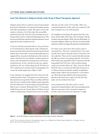
April 2017 in “Dermatologic Surgery” Laser hair removal can be an effective last-resort treatment for men with stubborn Alopecia Areata who want to be uniformly bald.
 1 citations
,
September 2016 in “PubMed”
1 citations
,
September 2016 in “PubMed” Using finasteride 0.5% solution with laser therapy significantly reduces unwanted facial hair in women.