 4 citations
,
January 2011 in “Annals of Dermatology”
4 citations
,
January 2011 in “Annals of Dermatology” Researchers found a new mutation in the HR gene linked to a rare hair loss condition.
 1 citations
,
March 2023 in “International journal of rheumatic diseases”
1 citations
,
March 2023 in “International journal of rheumatic diseases” Relatives of lupus patients show signs of immune system activity but not full-blown lupus.
62 citations
,
March 2017 in “Journal of Investigative Dermatology” Mutations in the ACTB gene cause Becker’s nevi and may lead to muscle issues in Becker’s nevus syndrome.
January 2015 in “프로그램북(구 초록집)” Trichoscopy effectively diagnoses and assesses hair loss severity in androgenetic alopecia and alopecia areata.
76 citations
,
January 2011 in “Indian Journal of Dermatology/Indian journal of dermatology” Dermoscopy is a useful tool for diagnosing and managing alopecia areata.
July 2024 in “GLOBAL JOURNAL FOR RESEARCH ANALYSIS” A 24-year-old man developed both alopecia areata universalis and type 1 diabetes at the same time, which is rare.
12 citations
,
May 2006 in “Journal of Neurology Neurosurgery & Psychiatry” Neuromyotonia and morphoea can occur together in the same body areas.
 6 citations
,
January 2020 in “BMC Medical Genetics”
6 citations
,
January 2020 in “BMC Medical Genetics” A new mutation in the STS gene causes X-linked ichthyosis, even in rare female cases.
Digit ratio likely doesn't predict male hair loss.
 42 citations
,
June 2012 in “Clinical and Experimental Dermatology”
42 citations
,
June 2012 in “Clinical and Experimental Dermatology” Black dots under trichoscopy can appear in different hair and scalp conditions, not just in alopecia areata.
 September 2023 in “British Journal of Dermatology”
 Some cases of short anagen hair syndrome are linked to specific genetic variations that are also connected to male pattern baldness.
 April 2016 in “Journal of The American Academy of Dermatology”
 The study found that Temporal Triangular Alopecia often starts in early childhood, mainly affects the left side of the scalp, and has no effective treatment except surgery.
 November 2017 in “International journal of research in dermatology”
 A rare skin disorder, nevus comedonicus, can appear on one side of the body following Blaschko's lines.
 2 citations
,
February 2025 in “Dermatology and Therapy”
2 citations
,
February 2025 in “Dermatology and Therapy” UVF-dermoscopy is a useful tool for accurately diagnosing types of alopecia, especially in people with lighter skin.
 August 2018 in “Pediatric Dermatology”
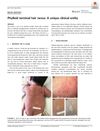
 A baby had a unique skin condition with a pale patch and surrounding dark hairs, not linked to other health issues.
June 2025 in “British Journal of Dermatology” Segmented hair color changes can indicate active alopecia areata.
 22 citations
,
April 1998 in “Dermatologic Clinics”
22 citations
,
April 1998 in “Dermatologic Clinics” Interferons are effective for some skin conditions and cancers, but can have side effects and need more research for optimal use.
2 citations
,
September 2024 in “International Journal of Dermatology” Women and people with skin of color are more likely to be misdiagnosed with alopecia areata.
December 2025 in “Al-Azhar International Medical Journal /Al-Azhar International Medical Journal” Using both trichoscopy and folliscopy together improves hair loss diagnosis in men.
15 citations
,
August 2013 in “Gene” The MTHFR C677T mutation may increase the risk of alopecia areata in the Turkish population.
January 2026 in “Journal of Hair Restoration and Regenerative Medicine” Hair transplantation is unsafe for diffuse unpatterned alopecia; focus on medical treatment and reassessment.
 2 citations
,
March 2018 in “The Journal of Dermatology”
2 citations
,
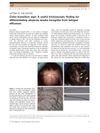
March 2018 in “The Journal of Dermatology” The "color-transition sign" helps tell apart alopecia areata incognita from telogen effluvium by looking at hair color changes.
69 citations
,
May 2002 in “Journal of Investigative Dermatology” Congenital atrichia with papular lesions is often misdiagnosed, and new diagnostic criteria can improve accuracy.
11 citations
,
March 2002 in “Pediatric Dermatology” Temporal triangular alopecia is a non-scarring hair loss seen in some Asian children.
 32 citations
,
April 2019 in “JAAD case reports”
32 citations
,
April 2019 in “JAAD case reports” JAK inhibitors helped treat hair loss in two people with Down syndrome.
September 2024 in “Indian Journal of Dermatology Venereology and Leprology”  April 2017 in “Journal of Investigative Dermatology”
 Deep phenotyping helps distinguish between xeroderma pigmentosum and trichothiodystrophy, aiding in diagnosis and treatment.
September 2024 in “Journal of the American Academy of Dermatology” A new type of alopecia areata, called the "confetti variant," causes small bald spots that often heal on their own in a few months.
7 citations
,
October 2008 in “Nature Genetics” Two key genetic areas linked to male-pattern baldness were identified.
 15 citations
,
January 2011 in “Annals of Dermatology”
15 citations
,
January 2011 in “Annals of Dermatology” The study concluded that neonatal occipital alopecia is common, not caused by physical friction, and usually resolves on its own without treatment.