September 2019 in “The journal of investigative dermatology/Journal of investigative dermatology” New RIPK4 gene mutations were found to cause a type of skin and limb birth defect.
2 citations
,
June 2019 in “The Journal of Dermatology” Two cases showed skin abnormalities without bone or neural defects.
 4 citations
,
January 2012 in “Springer eBooks”
4 citations
,
January 2012 in “Springer eBooks” The document concludes that signs of male and female pattern baldness include uneven hair thickness, yellow spots, skin discoloration around hair follicles, more thin and soft hairs, and many hair follicles with just one hair.
Genetic mutations linked to ectodermal dysplasias and hair loss were identified in Pakistani families.
 3 citations
,
February 2011 in “Journal of Biomedical Research/Journal of biomedical research”
3 citations
,
February 2011 in “Journal of Biomedical Research/Journal of biomedical research” A new mutation in the KRT86 gene was found to cause the hair disorder monilethrix in a Han family.
17 citations
,
July 2019 in “Lupus Science & Medicine” Plucked hair follicles can help diagnose scalp lupus.
35 citations
,
October 2017 in “JAMA dermatology” Children with alopecia areata should only have thyroid screening if they have Down syndrome, a history of atopy, family history of thyroid disease, or signs of thyroid problems.
49 citations
,
January 2006 in “Developmental Dynamics” Noggin gene inactivation causes skeletal defects in mice, varying by genetic background.
September 2024 in “Dermatology Reports” Sonidegib often causes hair loss, and LC-OCT helps identify early signs.
 June 2019 in “Journal of evolution of medical and dental sciences”
 Dermoscopy is useful for tracking alopecia areata treatment, with yellow dots and new vellus hairs being good indicators of hair regrowth.
49 citations
,
October 1989 in “Genomics” Type I keratin genes are closely linked to the rex locus on mouse chromosome 11, affecting hair development.
 3 citations
,
April 2015 in “AFRICAN JOURNAL OF BIOTECHNOLOGY”
3 citations
,
April 2015 in “AFRICAN JOURNAL OF BIOTECHNOLOGY” Certain genetic markers on the Y-chromosome may influence prostate cancer risk in Iraqi males.
1 citations
,
October 2023 in “Animals” Certain DNA regions in alpacas are linked to fiber diameter.
9 citations
,
April 1985 in “Archives of Dermatology” Recognizing the "bamboo hair defect" is crucial for diagnosing Netherton's syndrome.
 58 citations
,
December 2018 in “Nature Communications”
58 citations
,
December 2018 in “Nature Communications” Male pattern baldness is mostly inherited, involves many genes, and is linked to other traits like early puberty and strong bones.
January 2023 in “Indian Dermatology Online Journal” A 23-year-old man has a benign, non-progressive hair loss patch that doesn't respond to treatment but can be cosmetically treated.
 June 2024 in “Annals of Medicine and Surgery”
 A 23-year-old Syrian woman has two rare hair disorders, and avoiding hair treatments plus using vitamins and minoxidil may help.
April 2023 in “Journal of Investigative Dermatology” 3D ultrasound can detect hair follicle changes and disease phases in alopecia areata.
Non-invasive methods can effectively diagnose and manage alopecia areata.
 May 2025 in “The Journal of Rheumatology”
 Regular monitoring of autoantibodies in ANA-positive patients with hair loss helps detect and treat lupus early.
 January 2025 in “TURKDERM”
 Alopecia areata incognito in children can be effectively treated with triamcinolone acetonide and supplements, leading to full hair regrowth.
 January 2019 in “The Egyptian Journal of Hospital Medicine”
 Trichoscopy helps effectively tell apart different types of patchy hair loss in Egyptian patients.
A new mutation in the CYP11B1 gene was found in a woman with mild hyperandrogenemia, a rare cause of non-classic congenital adrenal hyperplasia.
3 citations
,
December 2014 in “Annals of Laboratory Medicine” A Korean baby with nevus sebaceus syndrome was found to have a KRAS gene mutation.
June 2026 in “Skin Appendage Disorders” Pili annulati may be more common than thought, so recognizing its features is important for diagnosis.
 July 2025 in “Health Sciences”
 A 7-year-old girl with non-scarring alopecia will have hair follicle transplantation to improve her quality of life.
 July 2025 in “Dermatology Practical & Conceptual”
 A 2-year-old boy has a rare hair disorder causing brittle hair and hair loss, which may improve with age.
 September 2023 in “Journal of the American Academy of Dermatology”
 Children with alopecia areata, especially with Down syndrome or thyroid issues, should be screened for thyroid disease.
 21 citations
,
January 2005 in “Pediatric Dermatology”
21 citations
,
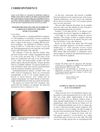
January 2005 in “Pediatric Dermatology” An 8-year-old girl with vitiligo developed extra hair growth on her knee after using tacrolimus ointment.
January 2020 in “SSRN Electronic Journal” Different autoantibody groups in pediatric SLE are linked to specific symptoms and disease outcomes.