11 citations
,
December 2015 in “Indian journal of dermatology, venereology, and leprology” Dermoscopy quickly and accurately diagnosed a rare hair disorder in a 12-year-old girl.
October 2025 in “JMIR Dermatology” Exclamation-mark hairs and yellow dots indicate alopecia areata, while follicular ostia loss and white scarring indicate lichen planopilaris and discoid lupus erythematosus.
10 citations
,
January 1997 in “Dermatology” Two siblings were diagnosed with Trichothiodystrophy, identified by brittle hair and low sulfur content.
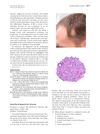
The man has Temporal Triangular Alopecia, a stable, non-scarring hair loss condition best treated with hair transplantation.
 7 citations
,
October 1985 in “Genetics Research”
7 citations
,
October 1985 in “Genetics Research” Beige and leaden pigment genes act within melanocytes, affecting pigment patterns.
36 citations
,
November 2005 in “Forensic Science International” BioPlex-11 improves DNA profiling from telogen hair roots in forensic work.
 February 2024 in “Research Square (Research Square)”
 The research suggests that SFRP2 and PTGDS proteins might be indicators of female pattern hair loss and could contribute to hair loss.
53 citations
,
May 1996 in “The Journal of Clinical Endocrinology & Metabolism” Different mutations in the 5 alpha-reductase-2 gene were found in affected individuals in the Dominican Republic, suggesting no common ancestry.
 March 2023 in “Journal of skin and stem cell”
 Trichoscopy is a good, quick, non-invasive way to diagnose different types of hair loss.
5 citations
,
November 1979 in “PubMed” A hereditary condition causes hair loss and twisted hair in some family members.
 September 2023 in “Cureus”
 Early recognition and treatment of atypical alopecia areata in infants are crucial.
June 2025 in “British Journal of Dermatology” Syphilis can mimic other diseases, making diagnosis challenging, but proper testing and treatment are effective.
 1 citations
,
December 2025 in “Selçuk tıp dergisi/Selçuk Üniversitesi Tıp Fakültesi dergisi”
1 citations
,
December 2025 in “Selçuk tıp dergisi/Selçuk Üniversitesi Tıp Fakültesi dergisi” Lower 2D:4D finger ratios in HS patients suggest prenatal hormone influence on the disease.
 November 2023 in “Research Square (Research Square)”
 NIR-II imaging effectively tracked stem cells that helped repair facial nerve defects in rats.
 June 2023 in “medRxiv (Cold Spring Harbor Laboratory)”
 Nociplastic type pain, common in Chronic Overlapping Pain Conditions, is a complex, heritable trait linked to 24 unique genetic factors and 127 genes, with potential shared mechanisms in cognitive, personality, and metabolic traits.
 October 2022 in “Amplla Editora eBooks”
 Pre-natal, internal, and external factors may contribute to the development of Autism Spectrum Disorder (ASD).
 January 2021 in “International journal of dermatology, venereology and leprosy sciences”
 Trichoscopy shows black dots, yellow dots, and empty follicles are common in Alopecia Areata, with broken and exclamation mark hair as typical patterns.
January 2026 in “Scientific Reports” Certain blood cell ratios are higher in kids with alopecia areata and might help predict the disease.
January 2023 in “Indian Dermatology Online Journal” Uncombable hair syndrome is linked to Zellweger syndrome.
2 citations
,
April 2025 in “Pediatric Dermatology” Macular alopecia is a distinct, non-scarring hair loss pattern that mostly affects young Hispanic/Latinx females and often resolves on its own.
26 citations
,
July 2020 in “Fertility and Sterility” Male infertility and genitourinary birth defects are often linked to genetic issues.
November 2024 in “Journal of Investigative Dermatology” The research aims to better understand hair follicle regulation and find new treatments for hair loss.
94 citations
,
April 2018 in “Nature Genetics” New genetic locations explain much of hair color variation in Europeans.
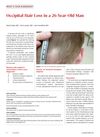 January 2022 in “Consultant”
 The man's occipital hair loss was due to temporal triangular alopecia, not alopecia areata.
 January 2025 in “Surgical & Cosmetic Dermatology”
 Histopathological confirmation is crucial to accurately diagnose alopecia triangular temporal and avoid unnecessary treatments.
November 2025 in “Journal of Investigative Dermatology” Disrupted cell interactions in hair follicles contribute to hair loss in androgenetic alopecia.
Certain genetic variations are linked to hair loss in Mexican men.
July 2005 in “The American Journal of Human Genetics” The AR gene is linked to male-pattern baldness, TNFSF4 to heart disease, SLC19A3 to BBGD, MCT8 to a syndrome, and segmental duplications to genetic variation.
The document concludes that the girl's hairlessness is likely inherited from her parents.
 April 2023 in “Journal of Investigative Dermatology”
 PTEN was identified as a specific marker for the skin disease cutaneous lupus erythematosus, and it helps increase the expression of harmful type I interferons.