 49 citations
,
April 2000 in “Journal of The American Academy of Dermatology”
49 citations
,
April 2000 in “Journal of The American Academy of Dermatology” Despite progress in treatment, the exact cause of Alopecia areata is still unknown.
 November 2023 in “Laser therapy”
 Trichoscopy is essential for diagnosing and managing alopecia areata in children.
 March 2016 in “West Indian medical journal”
 There is no significant link between alopecia areata and the PON1 enzyme polymorphisms studied.
 7 citations
,
August 2021 in “Journal of the European Academy of Dermatology and Venereology”
7 citations
,
August 2021 in “Journal of the European Academy of Dermatology and Venereology” Early treatment of fibrosing alopecia in a pattern distribution may improve outcomes.
 39 citations
,
July 2008 in “Dermatologic Therapy”
39 citations
,
July 2008 in “Dermatologic Therapy” Pseudopelade of Brocq is a unique hair loss condition, but its cause and development are still not fully understood.
 February 2017 in “Medicina cutánea ibero-latino-americana”
 An 8-year-old boy with hair loss had hair regrowth and responded well to clobetasol propionate treatment.
 1 citations
,
January 2013 in “Elsevier eBooks”
1 citations
,
January 2013 in “Elsevier eBooks” The document reviews various hair and nail disorders, their causes, and treatments, emphasizing the need for proper diagnosis and the link between nail changes and systemic diseases.
 1 citations
,
December 2022 in “Pediatric dermatology”
1 citations
,
December 2022 in “Pediatric dermatology” A boy developed a rare skin condition after recovering from a severe skin reaction, and it improved with lotion treatment.
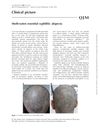 3 citations
,
July 2014 in “QJM”
3 citations
,
July 2014 in “QJM” A 35-year-old man had patchy hair loss that was actually due to syphilis, not alopecia areata.
 March 2023 in “Journal of Cosmetic Dermatology”
 A woman's progressive hair loss was correctly diagnosed as a rare condition called fibrosing alopecia in a pattern distribution after initially being mistaken for a more common type.
January 2016 in “Çağdaş tıp dergisi” Topical 1% pimecrolimus effectively treated alopecia areata.
January 2022 in “JAAD case reports” Granulomatous alopecia areata is a rare but real form of hair loss.
The woman's skin and health issues were due to a severe zinc deficiency.
 April 2026 in “International Journal of Research in Dermatology”
 Laser therapies may improve scarring alopecia, but more research is needed.
February 2006 in “DOAJ (DOAJ: Directory of Open Access Journals)” Alopecia areata treatments include immune inhibitors, topical sensitizers, irritants, and minoxidil, with future focus on immunosuppressive approaches.
October 2001 in “Journal of the American Academy of Dermatology” Topical minoxidil and anthralin work for patchy alopecia areata but not for alopecia totalis/universalis.
 November 2017 in “International journal of research in dermatology”
 A rare skin disorder, nevus comedonicus, can appear on one side of the body following Blaschko's lines.
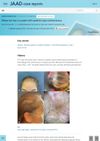 August 2023 in “JAAD Case Reports”
 A woman with lupus experienced hair regrowth after treatment, but hair transplantation is not advised for her condition.
10 citations
,
October 1981 in “Archives of Dermatology” The man's skin condition was finally identified as tinea incognito, a fungal infection.
 6 citations
,
August 1991 in “Pediatric Clinics of North America”
6 citations
,
August 1991 in “Pediatric Clinics of North America” The document concludes that various hair and scalp disorders in children have specific treatments and proper diagnosis is essential.
1 citations
,
January 2004 in “Linchuang pifuke zazhi” Topical cyclosporin-A is recommended for severe alopecia areata.
14 citations
,
June 2011 in “Australasian Journal of Dermatology” An 8-year-old boy had both alopecia areata and vitiligo on the same spot on his scalp, which is very rare.
 April 2022 in “Health care of Tajikistan”
 Managing alopecia areata in children needs a personalized approach considering genetic, immune, and environmental factors.
 January 2018 in “Springer eBooks”
 Congenital triangular alopecia is a harmless, non-spreading hair loss condition often seen in young children.
 1 citations
,
December 2022 in “Journal of cosmetic dermatology”
1 citations
,
December 2022 in “Journal of cosmetic dermatology” The combination of vitamin D analogues with potent steroids is a favorable treatment for alopecia areata with fewer side effects.
1 citations
,
January 2024 in “Journal of the Egyptian Womenʼs Dermatologic Society” Routine eye exams may be needed for alopecia areata patients due to common eye issues.
July 2026 in “Indian Journal of Dermatology Venereology and Leprology”  August 2015 in “Dermatología Argentina”
 Frontal fibrosing alopecia causes hairline recession and eyebrow loss in postmenopausal women.
 2 citations
,
January 2018 in “DOAJ (DOAJ: Directory of Open Access Journals)”
2 citations
,
January 2018 in “DOAJ (DOAJ: Directory of Open Access Journals)” The most effective way to diagnose non-scarring hair loss is by transverse sectioning, and some cases, particularly in males with inflammation around hair follicles, might be curable.
 13 citations
,
November 2012 in “Journal of The European Academy of Dermatology and Venereology”
13 citations
,
November 2012 in “Journal of The European Academy of Dermatology and Venereology” Certain factors like allergies, nail problems, and hair loss patterns can predict how well someone with patchy hair loss will respond to skin cream treatments.