 26 citations
,
June 2018 in “Australasian Journal of Dermatology”
26 citations
,
June 2018 in “Australasian Journal of Dermatology” Stopping sunscreen use on the forehead led to hair regrowth in a woman with frontal fibrosing alopecia.
 35 citations
,
May 2012 in “Expert Opinion on Pharmacotherapy”
35 citations
,
May 2012 in “Expert Opinion on Pharmacotherapy” The document concludes that there are various treatments for different types of alopecia, but more research is needed for evidence-based treatments.
 June 2022 in “Indian Dermatology Online Journal”
 A man with total hair loss developed blackhead-like spots on his scalp, possibly because no hair was present to help drain oils.
 September 2013 in “Hair transplant forum international”
 The document says doctors should identify and treat Frontal fibrosing alopecia medically before considering surgery, as treatments often don't work well.
 August 2021 in “Acta medica Philippina”
 A girl's hair loss was found to be caused by both a hair-pulling disorder and another hair loss condition.
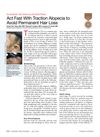 July 2024 in “Federal Practitioner”
 Act quickly to prevent permanent hair loss from tight hairstyles.

Alopecia Areata is treated with drugs and therapies to reduce inflammation and immune response.
 June 2016 in “Experimental Dermatology”
 Changing hair follicle identity could potentially reverse balding.
 January 2018 in “Journal of Cosmetics, Dermatological Sciences and Applications”
 Hair transplant surgery can successfully treat hair loss at the back of the neck.
 March 2025 in “Journal of Clinical Medicine”
 Frontal fibrosing alopecia in men is often misdiagnosed and needs better diagnostic criteria and treatment strategies.

The patient with total hair loss did not regrow hair despite treatment, indicating a poor outlook for this type of hair loss.

Male androgenetic alopecia (MAA) is a common, hereditary hair loss condition in men, linked to heart disease, and can be treated with minoxidil, finasteride, or hair transplantation.
June 2025 in “British Journal of Dermatology” A rare dual diagnosis of alopecia areata and lichen planopilaris requires thorough evaluation for effective treatment.
August 2017 in “DOAJ (DOAJ: Directory of Open Access Journals)” Patients with certain types of hair loss often experience emotional and mental health issues.
Alopecia areata causes hair loss and needs personalized care to manage its emotional and social effects.
 13 citations
,
February 2016 in “Clinical Medicine”
13 citations
,
February 2016 in “Clinical Medicine” The document concludes that diagnosing and treating hair loss is complex and requires understanding its psychological effects and underlying causes, while also calling for more research and new treatments.
13 citations
,
August 2013 in “International Journal of Dermatology” Frontal fibrosing alopecia can affect African men and may be underdiagnosed.

Some treatments like minoxidil, finasteride, and surgery can help with hereditary hair loss.
3 citations
,
January 2002 in “Actas Dermo-Sifiliográficas” Excessive minoxidil use can damage hair structure.
 January 2024 in “International journal of homoeopathic sciences”
 Early intervention and patient education are crucial for managing alopecia areata.
December 2025 in “Zenodo (CERN European Organization for Nuclear Research)” Alopecia areata causes sudden, patchy hair loss due to immune system attacks on hair follicles.
 November 2024 in “SKIN The Journal of Cutaneous Medicine”
 Visual signs are crucial for accurately diagnosing and treating different types of hair loss in Black patients.

Alopecia areata often starts around age 23, can be permanent in 30% of cases, and treatments are usually temporary.
 January 2019 in “SAGE Open Medical Case Reports”
 A scalp biopsy revealed systemic amyloidosis in a woman who initially seemed to have a common hair loss condition.
 8 citations
,
October 2016 in “Actas Dermo-Sifiliográficas”
8 citations
,
October 2016 in “Actas Dermo-Sifiliográficas” FFA in men, often mistaken for other hair loss types, may be more common than thought and needs larger studies for confirmation.
 January 2023 in “The Egyptian Journal of Hospital Medicine”
 New treatments for sudden hair loss include oral medications and a special laser, both showing promise in hair regrowth.
 9 citations
,
April 1986 in “Postgraduate Medicine”
9 citations
,
April 1986 in “Postgraduate Medicine” Hair loss has many causes and treatments, and losing some hair daily is normal; proper diagnosis is key, and minoxidil can help treat it.
 3 citations
,
October 2021 in “Indian Journal of Plastic Surgery”
3 citations
,
October 2021 in “Indian Journal of Plastic Surgery” Early diagnosis and aggressive treatment are important for managing scarring alopecia; hair transplantation's effectiveness is uncertain.

Telogen effluvium causes temporary hair loss, especially in women.