 August 2021 in “EMC - AKOS - Trattato di Medicina”
 Acquired alopecia is hair loss that can be reversible or irreversible, depending on whether the hair follicle is destroyed.
 1 citations
,
June 2012 in “Actas Dermo-Sifiliográficas”
1 citations
,
June 2012 in “Actas Dermo-Sifiliográficas” Early and aggressive treatment of scarring alopecia is important to prevent further hair follicle damage.
 February 2021 in “Cureus”
 A woman's hair loss was initially misdiagnosed as scarring hair loss but was actually a treatable autoimmune hair loss.
 August 2017 in “Journal of evolution of medical and dental sciences”
 Trichoscopy is effective for diagnosing different types of non-scarring hair loss.
April 2023 in “The Medical Journal of Australia” A five-year-old girl has a harmless, unchanging bald patch on her scalp.
 January 2016 in “Journal of The American Academy of Dermatology”
 The woman has a type of scarring hair loss with red bumps around hair follicles.
 May 2023 in “Elsevier eBooks”
 Scarring alopecia causes permanent hair loss, and treatment aims to reduce inflammation and stop it from getting worse.
 December 2019 in “Journal of pediatrics & neonatology”
 A 13-year-old boy had a rare, stable type of hair loss with little chance of regrowth, but treatment is available for looks.
May 2011 in “Harper's Textbook of Pediatric Dermatology” Alopecia areata causes patchy hair loss and has no cure, but treatments like corticosteroids and minoxidil can help.
 November 2012 in “South African Family Practice”
 The article concludes that early treatment of alopecia is crucial to prevent permanent hair loss.
Alopecia treatment takes time, needs specific plans, and may include drugs or hair transplants.

Hair loss can be caused by hormones, illness, autoimmune disorders, or vitamin deficiencies, and treatments vary depending on the type.
 September 2025 in “Ukrainian Journal of Dermatology Venerology Cosmetology”
 Early diagnosis and treatment can stop hair loss and prevent scalp damage in pseudopelade of Brocq.
 December 2007 in “CRC Press eBooks”
 Alopecia areata incognita causes widespread hair loss without patches and needs a scalp biopsy for diagnosis.
 19 citations
,
January 2011 in “Clinics”
19 citations
,
January 2011 in “Clinics” A young woman with a rare hair loss condition improved with steroid and biotin treatment.
 27 citations
,
January 2015 in “Current problems in dermatology”
27 citations
,
January 2015 in “Current problems in dermatology” The document concludes that primary scarring alopecias cause permanent hair loss, have unpredictable outcomes, and lack definitive treatments, requiring personalized care.
 1 citations
,
May 2022 in “Dermatologic Therapy”
1 citations
,
May 2022 in “Dermatologic Therapy” Hair transplants can be used for rare types of scarring hair loss.
1 citations
,
April 1990 in “PubMed” Alopecia areata causes unpredictable hair loss and is hard to treat.
 4 citations
,
July 2015 in “Case Reports in Dermatology”
4 citations
,
July 2015 in “Case Reports in Dermatology” A woman with unexplained hair loss was found to have harmless skin tumors and a scarring hair loss condition, but the tumors didn't cause the hair loss.
 2 citations
,
January 2023 in “Annals of Dermatology”
2 citations
,
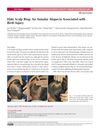
January 2023 in “Annals of Dermatology” A hairless patch on a boy's scalp from birth injury improved with minoxidil treatment.
 January 2022 in “Clinical Cases in Dermatology”
 A condition called Central Centrifugal Cicatricial Alopecia causes hair loss and scalp burning in middle-aged African women, and it's treated with various medications, hair transplants, and non-drug methods like wigs.
December 1972 in “Archives of Dermatology” The girl has an inflammatory type of scarring hair loss.
2 citations
,
May 2000 in “International Society of Hair Restoration Surgery” Scarring alopecias are a complex type of hair loss that are hard to treat and often can't be fixed with hair transplants.
4 citations
,
September 2020 in “Journal of Cutaneous Pathology”  57 citations
,
January 2003 in “Clinical and experimental dermatology”
57 citations
,
January 2003 in “Clinical and experimental dermatology” Postmenopausal frontal fibrosing alopecia is a type of hair loss in postmenopausal women that may stop on its own but has no effective treatment.
 January 2012 in “Yearbook of Dermatology and Dermatologic Surgery”
 Alopecia areata is a hair loss condition that often starts before age 30 and can affect various body parts, with unpredictable hair regrowth chances.
1 citations
,
November 2022 in “Journal of pharmaceutical negative results” Alopecia areata is an autoimmune condition causing patchy hair loss, with treatments focusing on immune system regulation and hair regrowth.
 3 citations
,
August 2012 in “The American Journal of Dermatopathology”
3 citations
,
August 2012 in “The American Journal of Dermatopathology” A man with a birthmark on his scalp developed hair loss that improved with treatment, but the link between the birthmark and hair loss was unclear.
 May 2010 in “Journal of the Dermatology Nurses' Association”
 Cicatricial alopecia causes permanent hair loss and is treated to relieve symptoms and stop progression.
October 2022 in “Hair Transplantation” Hair loss can be treated with careful diagnosis and sometimes hair transplants, but caution is needed for certain types.