 8 citations
,
January 2007 in “Mycoses”
8 citations
,
January 2007 in “Mycoses” A man's scalp infection, mistaken for bacterial, was actually a rare fungal infection treated successfully with antifungal medication.
September 2024 in “The Journal of Dermatology” Nevus comedonicus can sometimes grow terminal hair, challenging previous beliefs.
 16 citations
,
March 2013 in “JAMA Dermatology”
16 citations
,
March 2013 in “JAMA Dermatology” A cancer drug called nilotinib might cause hair loss due to inflammation around hair follicles.
May 2022 in “Journal of Cutaneous Immunology and Allergy” Asymptomatic cats can spread scalp infections to humans.
December 2017 in “Canadian journal of ophthalmology” A rare skin condition was misdiagnosed as a harmless mole on a woman's eyelid.
 January 2025 in “Journal of the European Academy of Dermatology and Venereology”
 Trichophyton mentagrophytes genotype VII is a sexually transmitted fungus causing skin issues, mainly among men who have sex with men in Europe, and requires quick treatment.
2 citations
,
June 2023 in “Medicine” A rare skin cancer on a man's elbow was successfully treated with surgery, showing no recurrence after one year.
January 2020 in “JAAD case reports” Systemic mastocytosis may cause a type of hair loss called cicatricial alopecia.
2 citations
,
September 2024 in “PLoS ONE” Bendamustine combined with tucidinostat may effectively treat adult T-cell leukemia.
 May 2025 in “The Journal of Rheumatology”
 Early recognition and management of gastrointestinal tuberculosis in lupus patients are crucial to prevent complications.

Doctors should consider Netherton syndrome in patients with chronic skin and hair issues to avoid misdiagnosis.

A woman and her guinea pig were successfully treated for a fungal infection.
 74 citations
,
September 1980 in “Medical Clinics of North America”
74 citations
,
September 1980 in “Medical Clinics of North America” Toxic epidermal necrolysis is a severe skin condition often caused by drugs, with complex treatment and a high risk of death, but survivors usually heal without scars.
 17 citations
,
January 2014 in “Annals of Dermatology”
17 citations
,
January 2014 in “Annals of Dermatology” Malassezia folliculitis mainly affects the trunk in males and is better detected with d-PAS staining.
March 2005 in “Journal of the American Academy of Dermatology” Recognizing minor skin lesions can help identify serious cancer syndromes.
 May 2024 in “Australasian journal of dermatology”
 A man with a type of skin lymphoma had unusual yellowish skin growths despite normal blood lipid levels, and treatment reduced some symptoms but not the growths.
 January 2021 in “American journal of dermatological research and reviews”
 The muscle damage was caused by T-cell large granular lymphocytic leukemia, not dermatomyositis.
12 citations
,
June 2011 in “Journal of Dermatological Case Reports” Shaving, erythromycin cream, and clotrimazole powder effectively treated the bad odor and rough hair.
January 2026 in “Dermatologic Therapy” Folliculotropic Mycosis Fungoides requires stage-based treatment, with early stages using skin therapies and advanced stages needing aggressive treatments.
21 citations
,
February 1988 in “Toxicology” High doses of TCB cause severe health issues in marmoset monkeys.
 23 citations
,
January 2005 in “Nihon Ishinkin Gakkai zasshi”
23 citations
,
January 2005 in “Nihon Ishinkin Gakkai zasshi” Nested PCR can reliably identify fungal infections when traditional methods fail.
2 citations
,
April 2013 in “PubMed” Abnormal T-cells from thymomas cause non-motor symptoms in some myasthenia gravis patients.
 2 citations
,
October 2019 in “Current sports medicine reports”
2 citations
,
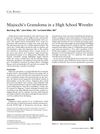
October 2019 in “Current sports medicine reports” A high school wrestler's skin rash was cured with antifungal medication after a misdiagnosis and incorrect treatment led to a fungal infection.
 June 2022 in “IP Indian journal of clinical and experimental dermatology”
 A woman had a rare, non-cancerous skin growth on her face, which was removed and did not come back after a year.
July 2019 in “Zenodo (CERN European Organization for Nuclear Research)” Follicular mucinosis in a 15-year-old is usually harmless but needs monitoring for possible lymphoma.
 14 citations
,
January 2016 in “Experimental and molecular pathology”
14 citations
,
January 2016 in “Experimental and molecular pathology” Giving immune serum from vaccinated mice to mice without T cells prevents infection and tumor growth.
 1 citations
,
October 2023 in “Journal of the Pakistan Medical Association”
1 citations
,
October 2023 in “Journal of the Pakistan Medical Association” Folliculotropic mycosis fungoides can occur in children and is diagnosed with specific tests, but often stays in early stages with treatment.
 January 2022 in “Autopsy and Case Reports”
 A man had a non-cancerous neck tumor related to hair follicles removed with no return of the tumor.
86 citations
,
November 2015 in “Journal of Gastroenterology” The NUDT15 R139C variant causes thiopurine-induced leukocytopenia through a different mechanism than previously thought in Japanese patients with inflammatory bowel disease.
14 citations
,
January 2014 in “Annals of Dermatology” Some cases of folliculotropic mycosis fungoides may progress slowly and not need aggressive treatment.