Search
for
Sort by
Research
60-90 / 1000+ results
research Dutasteride improves hair growth in patients with male pattern baldness more effectively than finasteride,
Dutasteride is more effective for male pattern baldness than finasteride, and black cohosh extract BNO 1055 is as effective as conjugated estrogens in treating postmenopausal symptoms, with added benefits in reducing sweating and mental symptoms.
research BindingDB Entry 50021519: Discovery of (2S)-N-(6-Cyano-5-(trifluoromethyl)pyridin-3-yl)-3-(6-(4-cyanophenyl)-3,6-diazabicyclo[3.1.1]heptan-3-yl)-2-hydroxy-2-methylpropanamide as a Highly Potent and Selective Topical Androgen Receptor Antagonist for Androgenetic Alopecia Treatment.
research Nanomilled Oral Testosterone Plus Dutasteride Effectively Normalizes Serum Testosterone in Normal Men With Induced Hypogonadism
A combination of nanomilled oral testosterone and dutasteride normalized testosterone levels in men with low testosterone and is safe for short-term use.

research Latest advances in oral hormonal male contraception: efficacy, mechanisms of action, and future perspectives
New male contraceptive pills show promise in reducing sperm production with mild side effects.

research 892 Behavior of the two circulating androgens testosterone and DHEA and their main intracellular metabolites in an androgen-sensitive sebocyte cell line
Testosterone affects androgen receptors and lipid storage in cells, while DHEA does not convert to testosterone or affect these receptors in the same way.
research In vivo and in vitro effect of novel 4,16-pregnadiene-6,20-dione derivatives, as 5α-reductase inhibitors
The new compounds may be more effective and cheaper than current treatments for conditions like baldness.
research EFFECT OF A COMBINATION OF DUTASTERIDE AND PARENTERAL TESTOSTERONE UNDECANOATE ON TESTOSTERONE DEFICIENCY SYMPTOMS AND PROSTATE IN PATIENTS WITH TESTOSTERONE DEFICIENCY AND BENIGN PROSTATIC HYPERPLASIA
The combination treatment reduced prostate size and improved testosterone deficiency symptoms but was less effective for sexual function.
research Engineered Dutasteride-Lipid Based Nanoparticle (DST-LNP) System Using Oleic and Stearic Acid for Topical Delivery
The formulation with oleic acid may be better for treating male pattern baldness.

research Steady-state pharmacokinetics of oral testosterone undecanoate with concomitant inhibition of 5α-reductase by finasteride
Finasteride doesn't affect oral testosterone undecanoate, and high DHT levels may cause acne, prostate issues, and hair loss.

research Formulation, Evaluation and Stability Studies of Dutasteride Loaded Niosomal Gel
The gel effectively delivers dutasteride for hair loss treatment and remains stable for 90 days.
research A high-performance liquid chromatography–tandem mass spectrometry assay of the androgenic neurosteroid 3α-androstanediol (5α-androstane-3α,17β-diol) in plasma
Testosterone increases 3α-androstanediol levels, which can be blocked by finasteride.
research Enzalutamide/finasteride/goserelin/zoledronic-acid
research Novel Synthetic Steroid Derivatives: Target Prediction and Biological Evaluation of Antiandrogenic Activity
New steroid compounds may help with hormonal therapy and have potential benefits for glucose disorders, but more research is needed.

research FDA declines approval of testosterone drug for third time
The FDA rejected a testosterone drug again due to safety concerns.
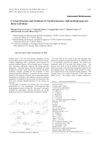
research Crystal Structure and Synthesis of 17α-Hexanoyloxy-16β-methylpregna-4,6-diene-3,20-dione
A new compound that could treat various androgen-related conditions was created and analyzed.
research Dutasteride/finasteride
research Bicalutamide
research Neomycin sulfate and triamcinolone acetonide suspended ointment designed for transdermal delivery: formulation and in vitro evaluation
The ointment effectively treats neurodermatitis and chronic eczema without causing skin irritation.
research Synthesis and Evaluation of 2‘-Substituted 4-(4‘-Carboxy- or 4‘-carboxymethylbenzylidene)-N-acylpiperidines: Highly Potent and in Vivo Active Steroid 5α-Reductase Type 2 Inhibitors
Compounds 15, 20, and 25 are strong inhibitors of human steroid 5α-reductase type 2.
research New ester derivatives of dehydroepiandrosterone as 5α-reductase inhibitors
New compounds may help treat prostate issues without affecting androgen receptors.
research Synthesis and biological evaluation of esters of 16-formyl-17-methoxy-dehydroepiandrosterone derivatives as inhibitors of 5α-reductase type 2
Certain derivatives are more effective 5α-reductase type 2 inhibitors than finasteride.
research 267 Single- and multiple-ascending dose studies of DS-2325a, a KLK5 inhibitor for the treatment of Netherton syndrome
DS-2325a is safe and well-tolerated, supporting further development for Netherton Syndrome treatment.
research Epitestosterone
Epitestosterone may counteract testosterone's effects and has roles in body processes like prostate growth and hair distribution.
research Dutasteride-loaded nanostructured lipid carrier for androgenic alopecia treatment - An in vivo study.
Nanostructured lipid carriers can improve androgenic alopecia treatment by reducing dutasteride dosage and maintaining its presence in hair follicles longer.

research Isotope Dilution-Based Targeted and Nontargeted Carbonyl Neurosteroid/Steroid Profiling
Researchers created a new method to measure brain steroids, finding higher levels of certain steroids and changes due to a drug.

research Finasteride treatment and neuroactive steroid formation.
Finasteride treatment can decrease certain steroids and increase others, possibly leading to depression symptoms in some cases.
research 17-Oximino-5-androsten-3β-yl esters: synthesis, antiproliferative activity, acute toxicity, and effect on serum androgen level
Some synthesized compounds were more effective than Finasteride in reducing prostate cancer cell growth and androgen levels.
research [Clinical findings with a low-dosed antiandrogene (cyproteronacetate) and aethinyloestradiol women with virilising symptoms (author's transl)].
The treatment improved acne, seborrhoea, and hirsutism, with some side effects like spotting and nervousness.
research Inhibition of skin 5α-reductase by oral contraceptive progestinsin vitro
Norgestimate is the most effective birth control progestin for reducing an enzyme linked to acne and excessive hair growth in women.