 January 2018 in “Georg Thieme Verlag eBooks”
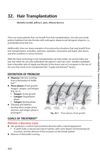
 Hair transplantation is a surgical procedure to move hair to bald areas, requires good donor hair, and results show in about a year.
 September 2017 in “Springer eBooks”
 FUE hair transplants have improved to give more natural results with less scarring and pain.
 June 2017 in “Journal of The American Academy of Dermatology”
 The new treatment was safe and may effectively treat male pattern hair loss.
 May 2014 in “Transfusion and Apheresis Science”
 PRP treatment showed no hair regrowth improvement after the first application in patients with alopecia.
 January 2014 in “Journal of Cutaneous and Aesthetic Surgery”
 The document suggests that for better patient satisfaction in hair transplants, high-quality photos are needed, and using a narrow donor strip might lead to fewer grafts and dissatisfaction, but filling the scar with FUE grafts and using tranexamic acid can improve results.

Botulinum toxin injections can reduce hair loss and stimulate new hair growth in some men with male pattern baldness.

Botulinum toxin-A injections in the scalp can reduce hair loss and promote new hair growth in men with certain types of baldness.

Botulinum toxin-A may increase hair growth and reduce hair loss in men with baldness, and injecting near blood vessels can improve pain relief and last longer.
 May 2012 in “Reactions Weekly”
 A man developed hair loss from testosterone treatment but improved with additional medication.
 April 2012 in “The Journal of Urology”
 Male pattern baldness may predict prostate cancer risk.
July 2010 in “学術講演梗概集. A-1, 材料施工” Finasteride effectively slowed hair loss and promoted hair growth in Taiwanese men with AGA.
 July 2009 in “International Society of Hair Restoration Surgery”
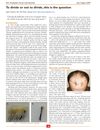
 Dividing hair grafts may make hair look fuller, but more research is needed.

More men have androgenic alopecia than women, with stress linked to the condition in both genders.
 January 2009 in “대한피부과학회지”
 The conclusion is that more women in their forties are getting AGA and stress is linked to AGA in both men and women.
March 2008 in “International Society of Hair Restoration Surgery” Smoking 20+ cigarettes daily increases the risk of severe hair loss in men.
January 2008 in “대한피부과학회지” Androgenetic alopecia is more common in men, often linked to genetics and hormones.
January 2008 in “대한피부과학회지” Androgenetic alopecia is more common in men, linked to genetics and androgen levels, but routine pelvic ultrasound isn't recommended.
 July 2007 in “Faculty Opinions – Post-Publication Peer Review of the Biomedical Literature”
 The BASP classification is a detailed system for categorizing hair loss in both men and women, but it may be complex for beginners and not fully suitable for grading female hair loss.
July 2019 in “Journal of Dermatology and Dermatologic Surgery” Wearing headcovers doesn't affect male-pattern hair loss severity.
 July 2016 in “Journal of Cutaneous Medicine and Surgery”
 Receding hairlines in men are uneven, with the right side larger than the left.
 September 2004 in “PubMed”
 Androgenetic alopecia, or hair loss, is influenced by hormones and genetics, and can be treated with medications like minoxidil, finasteride, or hormone therapy, with effectiveness evaluated after 6 months.
 57 citations
,
August 2003 in “British Journal of Dermatology”
57 citations
,
August 2003 in “British Journal of Dermatology” Minoxidil and pyrithione zinc combo most effectively increases hair density.
 50 citations
,
December 2008 in “Clinical Endocrinology”
50 citations
,
December 2008 in “Clinical Endocrinology” Hair loss in young men linked to higher risk of insulin resistance and metabolic issues.
 32 citations
,
July 2020 in “Journal of The American Academy of Dermatology”
32 citations
,
July 2020 in “Journal of The American Academy of Dermatology” AGA linked to worse COVID-19 outcomes in men.
 29 citations
,
July 2020 in “Journal of The American Academy of Dermatology”
29 citations
,
July 2020 in “Journal of The American Academy of Dermatology” Men with severe balding have a higher risk of getting very sick from COVID-19.
 19 citations
,
December 2008 in “Medical Journal of Australia”
19 citations
,
December 2008 in “Medical Journal of Australia” Baldness does not affect vitamin D levels in men.
16 citations
,
January 2002 in “Dermatology” Early baldness is noticed due to both reduced hair density and thinner hair shafts.
16 citations
,
January 2000 in “Dermatology” Men with X-linked recessive ichthyosis can still experience male-pattern baldness.
 8 citations
,
December 2017 in “Skin appendage disorders”
8 citations
,
December 2017 in “Skin appendage disorders” WNT7A gene expression is higher in early stages of androgenetic alopecia, showing the role of WNT pathway, apoptosis, and inflammation in the disorder.
 6 citations
,
September 2020 in “Journal of The American Academy of Dermatology”
6 citations
,
September 2020 in “Journal of The American Academy of Dermatology” Severe male balding may increase the risk of serious COVID-19, and treatments that reduce androgens or block a specific enzyme might help protect these individuals.