December 2004 in “PLoS ONE” The Foxn1(-/-) phenotype disrupts hair growth and affects skin stem cells.
43 citations
,
September 2001 in “Annals of Neurology” Hair root analysis can effectively detect somatic mosaicism in double cortex syndrome.
6 citations
,
March 2023 in “Frontiers in Cellular and Infection Microbiology” Golvatinib shows promise as a treatment for Omicron in elderly patients.
 69 citations
,
January 2013 in “Frontiers in Immunology”
69 citations
,
January 2013 in “Frontiers in Immunology” The FOXN1 gene is crucial for developing immune cells and preventing immune disorders.
2 citations
,
November 2022 in “bioRxiv (Cold Spring Harbor Laboratory)” Mutant stem cells adapt their metabolism differently to outcompete normal cells in the skin.
 40 citations
,
January 2017 in “Intestinal Research”
40 citations
,
January 2017 in “Intestinal Research” Genotyping for NUDT15 p.Arg139Cys can help predict thiopurine side effects in Japanese IBD patients.
 June 2023 in “medRxiv (Cold Spring Harbor Laboratory)”
 Nociplastic type pain, common in Chronic Overlapping Pain Conditions, is a complex, heritable trait linked to 24 unique genetic factors and 127 genes, with potential shared mechanisms in cognitive, personality, and metabolic traits.
18 citations
,
September 1994 in “Clinical and Experimental Dermatology” Localized trichorrhexis nodosa is a hair condition where hair becomes fragile and breaks easily due to damage.
7 citations
,
January 2020 in “Dermatology online journal” An adult with a rare skin condition improved with tazarotene treatment.
1 citations
,
July 2024 in “Journal of Investigative Dermatology” Immune cells boost stem cell activity in hairy moles, causing more hair growth.
1 citations
,
January 2011 in “ScholarlyCommons (University of Pennsylvania)” Notch signaling is crucial for specifying niche cells in Drosophila testis.
6 citations
,
January 2015 in “Indian Dermatology Online Journal” PEODDN is a rare skin disorder with limited treatment options, best treated with laser therapy.
14 citations
,
August 2013 in “Journal of Parasitology” Mite infestations severely harm the health of endangered Amargosa voles.
 4 citations
,
January 2019 in “Dermatology Online Journal”
4 citations
,
January 2019 in “Dermatology Online Journal” Low-dose naltrexone might be a cheap and effective additional treatment for hair loss with scalp discomfort due to its anti-inflammatory effects and few side effects.
74 citations
,
October 2012 in “The American Journal of Human Genetics” Mutations in the HOXC13 gene cause hair and nail development issues.
 17 citations
,
June 2017 in “Gene”
17 citations
,
June 2017 in “Gene” A rare genetic mutation found in an Indian family can be detected through prenatal screening.
34 citations
,
April 1982 in “BMJ” 5 citations
,
July 1999 in “Journal of Anatomy” Methylene blue staining effectively reveals detailed nerve structures in rat snouts.
6 citations
,
October 2022 in “Frontiers in Physiology” Calcium channels are vital for normal skin function and their dysfunction can lead to skin issues.
 4 citations
,
January 2009 in “Indian Journal of Dermatology, Venereology and Leprology”
4 citations
,
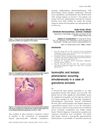
January 2009 in “Indian Journal of Dermatology, Venereology and Leprology” A patient with granuloma annulare experienced both isotopic and isomorphic responses, with skin lesions responding to steroids but relapsing after stopping treatment.
 5 citations
,
October 2012 in “CMAJ. Canadian Medical Association journal”
5 citations
,
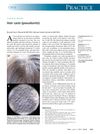
October 2012 in “CMAJ. Canadian Medical Association journal” The girl had harmless hair casts, not lice.
 April 2018 in “Journal of Investigative Dermatology”
  6 citations
,
January 2018 in “Dermato-endocrinology”
6 citations
,
January 2018 in “Dermato-endocrinology” Darkened knuckles can be an early sign of insulin resistance.
May 2024 in “Reactions weekly” 47 citations
,
November 1966 in “Archives of Dermatology” Trichorrhexis nodosa is mainly caused by hair trauma, not a metabolic defect.
Niosomes improve aminexil's effectiveness in preventing hair loss without needing propylene glycol.
12 citations
,
February 2017 in “Journal of neuroscience research” Removing certain brain receptors in mice worsens seizure severity and response to treatment during hormone withdrawal.
 2 citations
,
January 1990 in “Leukemia & Lymphoma”
2 citations
,
January 1990 in “Leukemia & Lymphoma” The combination of mitoxantrone, etoposide, and prednisolone is effective for treating relapsed lymphoma with manageable side effects.
 4 citations
,
June 2014 in “The Journal of Dermatology”
4 citations
,
June 2014 in “The Journal of Dermatology” Elkonyxis, a rare nail condition, improved when patients stopped their nail-picking habits.
203 citations
,
December 1947 in “Annals of Internal Medicine”