 January 2007 in “Journal of The American Academy of Dermatology”
 Post-steroid panniculitis is now rare because doctors taper steroids more carefully.
 May 2022 in “Annals of Oncology”
 Photobiomodulation therapy may speed up hair regrowth after chemotherapy in the short term.
 April 2023 in “Cancer research”
 KRTAP2-3 could help predict cancer recurrence by identifying specific cancer cells.
 February 2025 in “Intisari Sains Medis”
 PDRN from salmon may slow skin aging by improving skin quality and reducing inflammation.
 May 2017 in “Journal of The American Academy of Dermatology”
 An intact skin barrier is crucial to prevent infection in cases of tether-induced tenosynovitis.
 January 2022 in “Dermatology Review”
 Microneedling with bleomycin effectively treats plantar warts with fewer sessions.
14 citations
,
March 2019 in “European journal of pharmaceutics and biopharmaceutics” Proretinal nanoparticles improve skin absorption and reduce irritation of topical retinoids.
Wnt10b promotes hair growth, while SFRP2 inhibits it in Wanxi Angora rabbits.
 3 citations
,
January 2019 in “Therapeutic advances in urology”
3 citations
,
January 2019 in “Therapeutic advances in urology” WS PRO 160 I 120 mg effectively treats urinary symptoms from BPH with good safety and tolerability.
 December 2023 in “Jurnal Penelitian Pendidikan IPA”
 PRP heals pockmarked skin better than salmon DNA serum.
January 2014 in “cIRcle (University of British Columbia)” Photoacoustic imaging can detect prostate brachytherapy seeds better with enhanced contrast methods, but depth limits remain.
 November 2024 in “NeoReviews”
 Pallister-Killian Syndrome is a complex genetic disorder requiring coordinated care and genetic counseling.
 February 2026 in “Bioengineering”
 Platelet-rich plasma treatment is more effective than pelvic floor muscle training for improving quality of life in women with stress urinary incontinence.
12 citations
,
January 2013 in “Indian dermatology online journal” Dermatopathia pigmentosa reticularis causes skin discoloration, hair loss, and nail problems.
October 2025 in “Journal of Cosmetic Dermatology” AOPT-MTL effectively and safely treats nasal blackheads in Asians.
July 2026 in “Environmental Science & Technology” Human sweat can cause nanoplastics to clump together, affecting how they penetrate the skin.
 May 2025 in “Archives of Dermatological Research”
 Patient-reported hair improvements align with actual hair density changes, not hair width.

The document concludes that the development of certain tumors is influenced by genetic background and that a specific gene modification can lead to tumor regression and reduced growth.
Combining Nanofat with PRP is a safe and effective treatment for female pattern hair loss.
 6 citations
,
October 2012 in “Journal of Heredity”
6 citations
,
October 2012 in “Journal of Heredity” The Itpr3 gene causes a specific hair pattern in mice.
4 citations
,
April 2019 in “JAAD Case Reports” DPR can cause skin, hair, and nail issues, sometimes appearing later in life.
 April 2019 in “Radiotherapy and oncology”
 HPV infection is linked to better survival in advanced anal cancer, higher radiation doses improve survival, especially in HPV-negative patients, and prostaglandin E₂ pretreatment can protect mouse hair follicles from radiation damage.
26 citations
,
June 2010 in “Electrophoresis” New techniques helped identify rare wool proteins by reducing dominant ones.
 May 2011 in “Value in Health”
 CP-690,550 significantly reduced itching in patients with moderate-to-severe plaque psoriasis.
November 2025 in “Journal of Investigative Dermatology” A new genetic mutation causing Xeroderma Pigmentosum was found in an 8-year-old girl, affecting her DNA repair.
July 2025 in “Frontiers in Medicine” Mutations in the LIPH gene cause woolly hair in a child.
 8 citations
,
February 2005 in “British Journal of Haematology”
8 citations
,
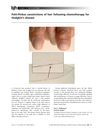
February 2005 in “British Journal of Haematology” Chemotherapy caused the patient's hair to have alternating thick and thin segments.
 1 citations
,
May 2021 in “Scientific Reports”
1 citations
,
May 2021 in “Scientific Reports” Certain cancer drugs are strongly linked to nerve damage, requiring close monitoring and early treatment.
April 2018 in “The Journal of urology/The journal of urology” A new score can help predict which patients might have trouble urinating after prostate surgery.
1 citations
,
December 2016 in “Revista română de medicină de laborator” The NIPAL4 mutation c.527C>A is common in Romanian patients with autosomal recessive congenital ichthyosis.