 January 2015 in “Springer eBooks”
 Fat-derived stem cells and their secretions show promise for treating skin aging and hair loss.
 November 2013 in “Elsevier eBooks”
 Skin and hair renewal is maintained by both fast and slow cycling stem cells, with hair regrowth primarily driven by specific stem cells in the hair follicle bulge. These cells can also help heal wounds and potentially treat hair loss.
 January 2013 in “Otorhinolaryngology clinics : an international journal”
 PRP shows promise for improving healing and hair growth in cosmetic surgery but results can vary.
 October 2012 in “Humana Press eBooks”
 Grape seed extract is good for skin care, with antioxidant, anti-inflammatory, and anti-cancer effects.
 August 2012 in “Pharmaceutical Medicine”
 The document concludes that various medications and treatments can have significant, sometimes adverse, effects on health outcomes.
 June 2011 in “Journal of medicine and life science”
 Hizkia fusiforme seaweed extract can help promote hair growth.
 January 2011 in “International Journal of Trichology”
 The conference highlighted new diagnostic tools, the role of genetics in hair loss, and emerging treatments.
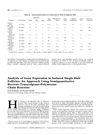 May 1995 in “Journal of Investigative Dermatology”
 Researchers developed a new way to measure gene activity in single hair follicles and found that a specific gene's activity changes with different amounts and times of treatment.
 June 2018 in “Advances in Cosmetic Surgery”
 Hair loss caused by genetics and hormones; more research needed for treatments.
 December 2016 in “Paleontological Journal”
 Hair growth can be induced by transplanting certain cells, but these cells lose their properties during culturing. The best cell interaction happens in a liquid medium under gravity, and using collagen doesn't help. Future research could focus on using growth factors to stimulate these cells.
 August 2002 in “Dermatologic Surgery”
 Fluridil safely promotes hair growth in men with androgenetic alopecia.
 17 citations
,
January 2010 in “PubMed”
17 citations
,
January 2010 in “PubMed” Optimal storage solutions and effective additives are crucial for improving the survival of hair transplant grafts.
 6 citations
,
October 2022 in “American journal of clinical dermatology”
6 citations
,
October 2022 in “American journal of clinical dermatology” The review shows how to properly diagnose and treat the loss of eyebrow and eyelash hair.
 April 2024 in “Frontiers in pharmacology”
 Cynoglossum amabile has medicinal potential but poses safety concerns due to liver toxicity.
 21 citations
,
November 2021 in “Biomolecules”
21 citations
,
November 2021 in “Biomolecules” Eclipta prostrata is a medicinal plant that helps treat diseases, protects the liver and nerves, and promotes hair growth.
22 citations
,
May 2004 in “Tissue Engineering” PGA fiber-reinforced collagen sponges improve hair growth and skin structure.
September 1990 in “Journal of Dermatological Science” 7 citations
,
September 2013 in “Tissue engineering. Part A” Hair follicle stem cells can become motor neurons and reduce muscle loss after nerve injury.
22 citations
,
January 2009 in “Advances in experimental medicine and biology” FOXN1 mutations cause severe immunodeficiency, hair loss, nail issues, and thymus defects.
15 citations
,
March 2007 in “BioTechniques” The assay quickly identifies substances that increase or decrease blood vessel growth.
April 2025 in “Frontiers in Pharmacology” Canagliflozin helps overcome progestin resistance in certain endometrial cancer cells.
May 2017 in “The journal of immunology/The Journal of immunology” Patients with certain FoxN1 gene mutations have severe immune issues but normal skin and hair.
109 citations
,
April 1998 in “Journal of Investigative Dermatology” HGF/SF injections can stimulate hair growth and increase hair follicle size in mice.
March 2026 in “Tissue Engineering and Regenerative Medicine”  101 citations
,
March 2019 in “Cell Stem Cell”
101 citations
,
March 2019 in “Cell Stem Cell” Certain immune cells in the skin release a protein that stops hair growth by keeping hair stem cells inactive.
107 citations
,
June 1997 in “PubMed” EGFR is essential for normal hair development and follicle differentiation.
51 citations
,
December 2006 in “Mammalian Genome” 35 citations
,
August 2009 in “Journal of the American Academy of Dermatology” Melanocytes might be targeted by the immune system in people with alopecia areata, but more research is needed.
33 citations
,
February 1990 in “Journal of the American Academy of Dermatology” Topical cyclosporine led to significant hair growth in some men with male pattern baldness.
29 citations
,
February 2011 in “PloS one” Astressin-B can reverse and prevent hair loss in stressed mice.