 September 2024 in “BMJ Case Reports”
 An adult had a rare scalp infection in the forehead area, treated successfully with itraconazole.
 5 citations
,
November 2017 in “Dermatologica Sinica”
5 citations
,
November 2017 in “Dermatologica Sinica” Transverse scalp biopsies are more accurate for diagnosing non-cicatricial alopecia, but examining both types is best for accuracy.
4 citations
,
May 2009 in “Clinical and experimental dermatology” Flexural follicular lichen planus is a rare skin condition affecting body folds.
51 citations
,
August 2010 in “British journal of dermatology/British journal of dermatology, Supplement” Intralesional triamcinolone acetonide helps regrow eyebrows in patients with frontal fibrosing alopecia.
 2 citations
,
June 2019 in “Operative Techniques in Otolaryngology-Head and Neck Surgery”
2 citations
,
June 2019 in “Operative Techniques in Otolaryngology-Head and Neck Surgery” The pedicled temporoparietal fascial flap is a reliable and versatile option for reconstructive surgery in the head and neck area.
35 citations
,
September 2011 in “The Journal of Dermatology” Trichoscopy helps accurately diagnose temporal triangular alopecia.
1 citations
,
January 2009 in “The Open Dermatology Journal” Chemotherapy caused nail grooves and separation, but they healed after treatment stopped.
9 citations
,
March 2005 in “International Journal of Cosmetic Science” The torsional method effectively evaluates hair damage and the performance of hair care ingredients.
1 citations
,
August 2023 in “International Journal of Surgery Case Reports” Using titanium mesh and thigh tissue is effective for complex scalp reconstruction.
2 citations
,
December 2013 in “The Journal of Dermatology” July 2025 in “International Journal of Trichology” Trichoscopy effectively diagnoses temporal triangular alopecia in children.
October 2022 in “Amplla Editora eBooks”  42 citations
,
December 1990 in “The Journal of Dermatologic Surgery and Oncology”
42 citations
,
December 1990 in “The Journal of Dermatologic Surgery and Oncology” The study found that horizontal sections of scalp biopsies are better for analyzing hair loss, showing fewer hairs and more fine hairs in balding areas.
 September 2016 in “Journal of dermatological science”
 The OVOL1-OVOL2 axis is important for hair follicle differentiation and can help diagnose certain hair-related tumors.
 December 2020 in “Skin appendage disorders”
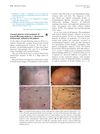
 A young man with an unusual type of scarring hair loss suggests a possible new variant of a known scalp condition.
 18 citations
,
June 2017 in “Journal of The American Academy of Dermatology”
18 citations
,
June 2017 in “Journal of The American Academy of Dermatology” Trichoscopy helps diagnose frontal fibrosing alopecia, even with unusual patterns.
 December 2020 in “TURKDERM”
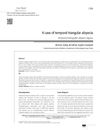
 A 3-year-old boy was diagnosed with a rare, non-scarring hair loss condition called temporal triangular alopecia.
22 citations
,
January 1999 in “Dermatology” The condition might be caused by genetic changes after birth.
15 citations
,
January 1998 Frequent blow-drying causes cracks and breakage in hair cuticles.
OCT can effectively diagnose different stages of hair loss non-invasively.
 September 2023 in “Cutis”
 A baby girl has a hair disorder called monilethrix, causing fragile hair that may improve over time.
 28 citations
,
February 2010 in “British journal of dermatology/British journal of dermatology, Supplement”
28 citations
,
February 2010 in “British journal of dermatology/British journal of dermatology, Supplement” WNT10A mutations cause varied symptoms in patients with odonto-onycho-dermal dysplasia.
23 citations
,
July 1994 in “Journal of Dermatological Science” Pili torti hair twists due to uneven outer root sheath cell development.
 January 2024 in “Figshare”
 Turpentine ointment is an effective and safe treatment for folliculitis.
39 citations
,
February 2011 in “American Journal of Dermatopathology” Onychomatricoma is a unique nail tumor that mimics the entire nail unit and is not related to other hair-related tumors.
 January 2020 in “Przegla̧d dermatologiczny”
 A 5-year-old boy was diagnosed with congenital triangular alopecia, a type of hair loss without skin changes, usually starting between ages 2-5, with no specific treatment.
 56 citations
,
March 2010 in “Journal of Dermatology”
56 citations
,
March 2010 in “Journal of Dermatology” Most cases of Temporal Triangular Alopecia are found in early childhood and may be related to genetic conditions.
 January 1995 in “Surgical technology international”
 Using consecutive transposition flaps can manage gaps in hair growth after multiple hair loss surgeries.
21 citations
,
September 2003 in “Journal of Clinical Investigation” Overexpressing noggin in mice causes severe osteoporosis.
11 citations
,
January 2017 in “Skin Appendage Disorders” Use lower concentrations of triamcinolone acetonide to reduce steroid-induced scalp atrophy.