 September 2017 in “Springer eBooks”
 FUE hair transplants have improved to give more natural results with less scarring and pain.

The document recommends a multidisciplinary approach and experience sharing to advance facial feminization surgery as a medical field.
 January 2017 in “Springer eBooks”
 Over 40% of postmenopausal women experience hair loss, with treatments aiming to stop further loss and possibly thicken hair.
 January 2017 in “Springer eBooks”
 The document explains various skin conditions and their treatments.
 January 2016 in “Georg Thieme Verlag eBooks”
 Facelift surgery has evolved to focus on natural results and safety, with patient selection and postoperative care being key to success.
Avicennia Marina extract and avicequinone C can reduce hair loss hormone production and increase hair growth factors, suggesting they could be used to treat androgenic alopecia.
 July 2015 in “Cambridge University Press eBooks”
 The document concludes that treatments for female hair loss and excess body hair are available, but managing expectations is important.
 September 2014 in “Springer eBooks”
 Men and women experience skin aging differently due to changes in sex hormone levels with age.

Chrysanthemum zawadskii extract may help treat hair loss by promoting hair growth and affecting growth factors.
 January 2014 in “Journal of Investigative Dermatology”
 Proteins like aPKC and PDGF-AA, substances like adenosine and ATP, and adipose-derived stem cells all play important roles in hair growth and health, and could potentially be used to treat hair loss and skin conditions.
 December 2013 in “Research Portal (King's College London)”
 Hair loss in Lichen Planopilaris is caused by immune system issues damaging hair follicles and stem cells.
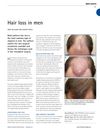 May 2013 in “Trends in Urology & Men's Health”
 Male-pattern hair loss is normal, often involves hormone effects on hair follicles, and can be treated with medication or surgery, but new treatments are being researched.
 March 2013 in “Revista Brasileira de Cirurgia Plástica”
 Using platelet growth factors can improve hair density in transplants, especially for those with fine hair.
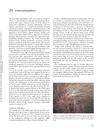 April 2012 in “Informa Healthcare eBooks”
 Lichen planopilaris is a rare, chronic condition causing hair loss, mainly in middle-aged women, and early treatment is important to prevent permanent baldness.

Thoracic medial branch block may be a simpler and effective alternative to thoracic vertebroplasty for pain management.
 November 2010 in “Clin-Alert”
 Monitoring for adverse effects in clinical treatments is crucial.
 June 2008 in “Springer eBooks”
 The document concludes that permanent hair loss conditions are complex, require early specific treatments, and "secondary permanent alopecias" might be a more accurate term than "secondary cicatricial alopecia."
 November 2006 in “Dermatologic Surgery”
 Cutting hair follicles into pieces for transplantation results in poor growth and thinner hair, and the technique is more invasive than previously thought.
 June 2004 in “Dermatologic Surgery”
 The single-scar technique in hair transplantation minimizes scarring and preserves hairs for future use, with proper training overcoming its perceived drawbacks.
 June 2004 in “Dermatologic Surgery”
 The commentary suggests that using a single-scar technique for hair transplants can give good cosmetic results, but some surgeons hesitate to use it despite ways to address their concerns.
 October 2002 in “Dermatologic Surgery”
 The document concludes that careful planning, efficient use of every hair graft, and setting surgical priorities are crucial for successful hair restoration surgery.
 September 2002 in “Dermatologic Surgery”
 The best results in surgical hair restoration come from careful techniques, optimal use of limited hair supply, correct hair direction, saving hair for key areas, understanding scarring effects, and adjusting hair graft density.
 January 1989 in “Side effects of drugs annual”
 Some cancer and immune system drugs can cause serious side effects, including heart, lung, nerve, and organ damage, which need careful monitoring and management.
 October 1890 in “Science”
 Pilocarpin can cause hair regrowth and color change in some cases but not in others, and it may have side effects in animals.
 December 2025 in “The American Journal of Medical Sciences and Pharmaceutical Research”
 Combining barber scalp care with medical treatment improves scalp health and well-being in early-stage alopecia.
New methods improve skin disease diagnosis and treatment.
 July 2024 in “Deleted Journal”
 The Ayurvedic program effectively manages hair loss due to iron deficiency anemia.
 April 2024 in “Journal of Ayurveda and Integrated Medical Sciences”
 Aaditya Pak Guduchi Tail effectively reduces hair fall and dryness, helping prevent baldness.

The document is a detailed guide on skin conditions and treatments for dermatologists.
 January 2018 in “Elsevier eBooks”
 The document concludes that alopecia has significant social and psychological effects, leading to a market for hair loss treatments.