 February 2023 in “Journal of Korean Medical Association”
 Targeted cancer therapies can cause new side effects, requiring careful monitoring and management to ensure patient safety.
 January 2023 in “TNOA journal of ophthalmic science and research”
 Minoxidil may cause vision problems.
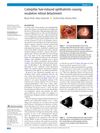 July 2022 in “BMJ Case Reports”
 Early treatment is crucial to prevent severe eye complications from caterpillar hair.
January 2022 in “Indian dermatology online journal” A baby with a skin condition improved with treatment but developed a rare form of the condition affecting only his trunk.
January 2020 in “Työväentutkimus Vuosikirja” Corneal health relies on cell migration and cooperation with the lacrimal gland, not Bmi1+ cells, and Eda gene mutations can cause dry eye disease.

Liver abscesses don't affect stress in beef feedlot steers.

The device applies substances directly to body tissues, improving cell transplant and treatment processes.
May 2011 in “Journal of Clinical Neuroscience” The woman was diagnosed with Vogt–Koyanagi–Harada disease and successfully treated with medication, restoring her vision and stopping headaches.
 January 2010 in “Yearbook of Dermatology and Dermatologic Surgery”
 Topical latanoprost and bimatoprost ophthalmic solutions don't help eyelash growth in patients with alopecia areata.
January 2010 in “PubMed Central” Bimatoprost effectively enhances eyelash growth but may not work for all eyelash loss conditions.
September 2008 in “Acta Ophthalmologica” Hair follicle stem cells can become corneal-like cells with the right environment.
October 2004 in “Kafrelsheikh Veterinary Medical Journal” Corn silage alone is not a balanced diet for buffalo calves.
 86 citations
,
July 2012 in “British journal of dermatology/British journal of dermatology, Supplement”
86 citations
,
July 2012 in “British journal of dermatology/British journal of dermatology, Supplement” There may be a connection between Frontal Fibrosing Alopecia and Lichen Planus Pigmentosus, and more research is needed to confirm this.
19 citations
,
October 2022 in “The Ocular Surface” 33 citations
,
October 2013 in “Cutaneous and ocular toxicology” Oral cyclosporine can help regrow hair in severe alopecia areata cases.
 18 citations
,
August 2012 in “Cutaneous and Ocular Toxicology”
18 citations
,
August 2012 in “Cutaneous and Ocular Toxicology” People with alopecia areata have higher insulin resistance.
 15 citations
,
November 2019 in “Cutaneous and Ocular Toxicology”
15 citations
,
November 2019 in “Cutaneous and Ocular Toxicology” Minoxidil tretinoin liposomal based hydrogel shows promise for effective treatment of hair loss by delivering both drugs at the same time.
 14 citations
,
March 2016 in “Cutaneous and Ocular Toxicology”
14 citations
,
March 2016 in “Cutaneous and Ocular Toxicology” Synthetic cannabinoid addiction can cause skin problems like acne and hair loss.
13 citations
,
May 2012 in “Cutaneous and ocular toxicology” Alopecia areata is not linked to vitamin B12 deficiency.
9 citations
,
December 2018 in “Cutaneous and Ocular Toxicology” Combined BRAF and MEK treatment increases rash risk but reduces other skin issues compared to BRAF alone.
 9 citations
,
April 2016 in “Cutaneous and ocular toxicology”
9 citations
,
April 2016 in “Cutaneous and ocular toxicology” Alpha Lipoic Acid helps protect skin from smoking damage.
9 citations
,
October 2015 in “Cutaneous and ocular toxicology” Vemurafenib can cause scalp issues but can be managed without changing the dose.
 9 citations
,
September 2011 in “Cutaneous and Ocular Toxicology”
9 citations
,
September 2011 in “Cutaneous and Ocular Toxicology” Using 2% minoxidil for baldness treatment might cause vision distortion due to fluid build-up under the retina.
 9 citations
,
January 2006 in “Cutaneous and ocular toxicology”
9 citations
,
January 2006 in “Cutaneous and ocular toxicology” L-cystine, D-pantothenat, and miliacin together significantly boost keratinocyte growth and metabolism.
 7 citations
,
June 2015 in “Cutaneous and Ocular Toxicology”
7 citations
,
June 2015 in “Cutaneous and Ocular Toxicology” Some drugs can cause skin reactions, which may improve when the drug is stopped, and rapid diagnosis and stopping the drug is crucial.
6 citations
,
September 2014 in “Cutaneous and ocular toxicology” Acitretin can cause eyebrow and eyelash hair loss.
 4 citations
,
March 2020 in “Cutaneous and ocular toxicology”
4 citations
,
March 2020 in “Cutaneous and ocular toxicology” Wen by Chaz Dean Sweet Almond Mint Cleansing Conditioner is better tolerated than salicylic acid and baby shampoos.
 3 citations
,
August 2020 in “Cutaneous and Ocular Toxicology”
3 citations
,
August 2020 in “Cutaneous and Ocular Toxicology” ATP helps prevent skin damage from vandetanib by reducing stress.
 2 citations
,
April 2022 in “Cutaneous and Ocular Toxicology”
2 citations
,
April 2022 in “Cutaneous and Ocular Toxicology” Tofacitinib may help treat hair loss in children with alopecia areata.
January 2026 in “Cutaneous and Ocular Toxicology” Yangxuebushen Decoction helps prevent hair loss from chemotherapy.