 July 2026 in “Journal of Cutaneous and Aesthetic Surgery”
 Male hair loss is mainly due to androgens, while female hair loss involves hormones, vitamins, and genetics.

Collagen, curcumin, and glutathione can improve skin health in aging women with low estrogen.
 March 2026 in “Scientific Reports”
 Ferulic acid may help hair grow by activating certain receptors in cells.
February 2026 in “Journal of the American Academy of Dermatology” Estrogen is not recommended for menopausal hair loss due to insufficient evidence.
 December 2025 in “Pakistan Journal of Health Sciences”
 Estrogen deficiency in postmenopausal women can cause skin and hair issues, but local estrogen therapies help improve vaginal health.
December 2025 in “International Journal of Innovative Technologies in Social Science” Localized estrogen treatments may improve skin quality with fewer risks than systemic hormone therapy.
October 2025 in “Journal of the Endocrine Society” Low estrogen due to poor nutrition can lead to non-alcoholic fatty liver disease.
 August 2024 in “Research Square (Research Square)”
 Using 5-alpha reductase inhibitors may lower the risk of breast cancer in females.
 January 2024 in “Journal of Applied Pharmaceutical Science”
 Procyanidin B2 and leucopelargonidin from Saraca asoca may help treat PCOS by balancing hormones.
 March 2023 in “Revista médica Clínica Las Condes”
 The study suggests a possible increase in androgen receptors in patients with frontal fibrosing alopecia, but more research is needed.
 November 2022 in “Journal of the Endocrine Society”
 Estrogen deficiency can reduce the enzyme activity needed to activate vitamin D.
 January 2019 in “ISGE series”
 Estrogen helps prevent artery plaque by stopping monocyte capture in blood vessels.
 December 2014 in “Bali Medical Journal”
 Females have higher estrogen receptor levels in hair than males, and these levels decrease in white hair compared to black hair.
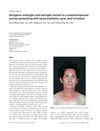 August 2009 in “International Journal of Dermatology”
 A postmenopausal woman's facial redness, acne, and excess hair were caused by too much hormone therapy for insomnia, but improved after stopping the treatment.
Estrogen and its receptors play a key role in hair growth, with differences between males and females.
Estrogens and progesterones can help manage various health issues.
July 2013 in “e-Jurnal Medika Udayana” Estrogen helps promote hair growth in women with androgenetic alopecia.
154 citations
,
October 1996 in “Proceedings of the National Academy of Sciences of the United States of America” Estrogen affects hair growth and skin cell multiplication.
 113 citations
,
April 1999 in “The Journal of Clinical Endocrinology and Metabolism”
113 citations
,
April 1999 in “The Journal of Clinical Endocrinology and Metabolism” Cyproterone acetate-estrogen most effective for hirsutism, but consider side effects and patient needs.
74 citations
,
December 1995 in “The Journal of Clinical Endocrinology & Metabolism” Leuprolide plus estrogen is more effective than oral contraceptives for reducing hirsutism.
72 citations
,
November 2002 in “Journal of Investigative Dermatology” Estrogen receptor α controls hair growth cycles and skin thickness in male mice.
71 citations
,
February 2000 in “Endocrinology and metabolism/American journal of physiology: endocrinology and metabolism” Estradiol stops hair growth in mice, but an antagonist can reverse this effect.
68 citations
,
May 1991 in “The Journal of clinical endocrinology and metabolism/Journal of clinical endocrinology & metabolism” Both cyproterone acetate and spironolactone effectively reduce hair growth in women with hirsutism.
67 citations
,
December 2009 in “International Journal of Dermatology” Hormonal changes in skin may cause stretch marks.
46 citations
,
July 1974 in “The Journal of Clinical Endocrinology & Metabolism” Low estrogen and high testosterone may cause excessive hair growth in women.
 37 citations
,
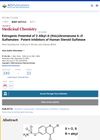
September 2003 in “Journal of Medicinal Chemistry”
37 citations
,
September 2003 in “Journal of Medicinal Chemistry” A substance called Compound 2g can strongly block STS (a hormone-related enzyme) without affecting estrogen levels, making it potentially good for treating breast cancer.
36 citations
,
July 1980 in “Journal of Toxicology and Environmental Health” High doses of ethynylestradiol in rats caused growth issues, organ changes, and some tumors, but didn't increase overall tumor rates.
 23 citations
,
April 1999 in “The Journal of Clinical Endocrinology and Metabolism”
23 citations
,
April 1999 in “The Journal of Clinical Endocrinology and Metabolism” All treatments reduce hair growth; low dose flutamide most effective with fewer side effects.
 19 citations
,
March 1998 in “Endocrinology”
19 citations
,
March 1998 in “Endocrinology” Male rats have more somatostatin neurons than females due to testosterone converting to estrogen during early development.
19 citations
,
March 1994 in “Fertility and sterility” The combination therapy reduced hirsutism in women with PCOD and was well-tolerated.