
MLO proteins are crucial for root hair growth by regulating calcium and ROS levels.
 11 citations
,
August 2010 in “Developmental neurobiology”
11 citations
,
August 2010 in “Developmental neurobiology” Ptprq has multiple forms that change during inner ear development.
 June 2026 in “Cell Regeneration”
 The olfactory epithelium can regenerate throughout life, aided by specific cells, genes, and new research methods.
140 citations
,
February 2014 in “Neuron” Delta opioid receptors help regulate touch sensation by reducing neurotransmitter release in the spinal cord.
 74 citations
,
October 1998 in “Journal of biological chemistry/The Journal of biological chemistry”
74 citations
,
October 1998 in “Journal of biological chemistry/The Journal of biological chemistry” The 190-kbp domain contains all human type I hair keratin genes, showing their organization and evolution.
 April 2023 in “Journal of Investigative Dermatology”
 Sweating can potentially be controlled through olfactory receptors, with β-ionone playing a key role, and responses may vary between genders.
6 citations
,
November 2022 in “Antioxidants” OR2AT4 helps reduce aging and cell damage in human skin cells.
 July 2025 in “Communications Biology”
 Rat vibrissae structure relates to their sensory function.
 December 2025 in “Nature Communications”
 Club-like receptors detect light touch but not whisking.
39 citations
,
February 1990 in “The journal of cell biology/The Journal of cell biology” Trichohyalin, a hair follicle protein, has a part with repeating patterns of 23 amino acids.
Pvalb8 is essential for zebrafish hearing and hair cell development, and its mutation causes hearing loss.
 18 citations
,
February 2015 in “Acta Crystallographica Section D: Structural Biology”
18 citations
,
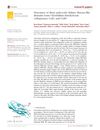
February 2015 in “Acta Crystallographica Section D: Structural Biology” The study concludes that certain domains in Clostridium histolyticum enzymes are structurally unique, bind calcium to become more stable, and play distinct roles in breaking down collagen, with potential applications in medicine and drug delivery.
April 2026 in “Proceedings of the National Academy of Sciences” Tmem30b is essential for hearing by maintaining hair cell structure in the ear.
 1 citations
,
May 2020 in “Beilstein Journal of Organic Chemistry”
1 citations
,
May 2020 in “Beilstein Journal of Organic Chemistry” Scientists made a sensor that can detect a specific type of RNA related to androgen receptors quickly and accurately.

CaBP1 and 2 are necessary for maintaining calcium currents and hearing in inner ear cells.
 July 2025 in “bioRxiv (Cold Spring Harbor Laboratory)”
 A new Wnt surrogate specifically targets the Frizzled7 receptor, promoting organoid formation and hair growth.
June 2025 in “Molecular Therapy — Nucleic Acids” A new treatment using a DNA aptamer can promote hair growth by targeting a specific receptor.
77 citations
,
March 2000 in “Journal of Investigative Dermatology” The research identified six functional hair keratin genes and four pseudogenes, providing insights into hair formation and gene organization.
1 citations
,
January 2010 Ornithine decarboxylase is crucial for human hair growth and the hair cycle.
 November 2022 in “Journal of Investigative Dermatology”
 The fragrance cyclohexyl salicylate helps promote hair growth and increase hair stem cell numbers.
 December 2025 in “Nature Communications”
 Blocking IL-17a can improve age-related smell loss in mice.
 March 2024 in “Biochimica et biophysica acta. Molecular basis of disease”
 Deferoxamine may help protect inner ear cells from damage caused by oxidative stress.
25 citations
,
October 2000 in “Gene” Gene regulatory regions evolve faster than protein coding regions, allowing new gene relationships without changing transcription factors.
7 citations
,
September 2024 in “PLANT PHYSIOLOGY” RALF22 is essential for root hair growth in response to fungal emissions in Arabidopsis.
November 2024 in “Journal of Investigative Dermatology” Stimulating OR10J1 can promote hair growth and may help treat hair loss.

CaBP1 and CaBP2 are important for continuous hearing by preventing inactivation of calcium currents in ear cells, with CaBP2 also able to restore hearing when reintroduced.
 11 citations
,
June 2017 in “Journal of cell science”
11 citations
,
June 2017 in “Journal of cell science” AGD1's PH domain is essential for its role in root hair growth and polarity.
14 citations
,
March 2022 in “Plant Cell & Environment” The protein AtRXR3 limits root hair growth in Arabidopsis, affecting phosphorus uptake.
 June 2026 in “Institutional Repositories DataBase (IRDB)”
 Crickets have genetically controlled hair plates that help them sense and move their antennae.
40 citations
,
February 1994 in “Journal of Investigative Dermatology”