Search
for
Sort by
Research
60-90 / 1000+ results
research Regulation of Receptor Binding Specificity of FGF9 by an Autoinhibitory Homodimerization
FGF9 controls which receptors it binds to through a process where two FGF9 molecules join, and changes in FGF9 can lead to incorrect receptor activation.

research Yin and yang of hair cells
Activin A increases inner ear hair cell development, while follistatin decreases it.
research Adaptations in the structure and innervation of follicle‐sinus complexes to an aquatic environment as seen in the Florida manatee (Trichechus manatus latirostris)
Manatee whiskers are specially adapted for touch in water.
research A WWP2–PTEN–KLF5 signaling axis regulates odontoblast differentiation and dentinogenesis in mice
WWP2 is crucial for tooth development in mice.
research Novel de novo pathogenic variant in the ODC1 gene in a girl with developmental delay, alopecia, and dysmorphic features
A new genetic mutation in the ODC1 gene causes developmental delay and other symptoms in a young girl.
research The Region Coding for the Helix Termination Motif and the Adjacent Intron 6 of the Human Type I Hair Keratin Gene hHa2 Contains Three Natural, Closely Spaced Polymorphic Sites
research Identification of Pygopus 2 as a component of the ribosomal RNA transcription complex in cancer
Pygopus 2 helps ovarian cancer cells grow by aiding ribosomal RNA production, independent of Wnt signaling.

research OXYTOCIN RECEPTOR EXPRESSION IN HAIR FOLLICLE STEM CELLS: A PROMISING MODEL FOR BIOLOGICAL AND THERAPEUTIC DISCOVERY IN NEUROPSYCHIATRIC DISORDERS
Rat hair follicle stem cells have functional oxytocin receptors, useful for studying neuropsychiatric disorders.

research 50285 Oxytocin receptor is present in keratinocytes near touch and pain sensory neurons
Oxytocin receptors are found in skin cells near touch and pain neurons.
research Novel missense mutation in the EDA gene in a family affected by oligodontia
Researchers found a new mutation in the EDA gene that likely causes missing teeth and mild skin symptoms in one family.
research α‐Difluoromethylornithine, a polyamine inhibitor: its potential role in controlling hair growth and in cancer treatment and chemo‐prevention
DFMO may help control hair growth and treat cancer.
research Structure of the sinus hair follicle in the big‐clawed shrew, Sorex unguiculatus
The big-clawed shrew's sinus hair follicles are highly specialized for sensing vibrations.
research Modulation of Murine Hair Follicle Function by Alterations in Ornithine Decarboxylase Activity
Ornithine decarboxylase is crucial for hair growth regulation in mice.
research Arabidopsis ADF8 and ADF11 contribute to root hair growth to respond to hormone and environmental signals
ADF8 and ADF11 help root hairs grow by responding to hormones and environmental signals.

research Arabidopsis Oil Body-Expressed Oleosin-rhFGF5 Inhibits Hair Growth in Mouse
A protein made in a plant stopped hair growth in mice.
research Olfactory Stem Cells From Adult Rats
Adult rat olfactory mucosa has stem cells that can self-renew and become different cell types.
research A temperature-sensitive FERONIA mutant allele that alters root hair growth
A mutant FERONIA gene affects root hair growth at high temperatures.
research Biochemical features of primary cells from a pediatric patient with a gain-of-function ODC1 genetic mutation
A new genetic disorder caused by an ODC1 mutation can be treated with DFMO.

research The atypical ‘hippocampal’ glutamate receptor coupled to phospholipase D that controls stretch‐sensitivity in primary mechanosensory nerve endings is homomeric purely metabotropic GluK2
A special receptor in sensory nerve endings helps control how they respond to stretching.
research Developmental Plasticity of Patterned and Regenerating Oral Organs
Fish teeth and taste bud densities are linked and can change between types due to shared genetic and molecular factors.

research Three-dimensional architecture and linearized mapping of vibrissa follicle afferents
Large-scale reconstructions enhance understanding of vibrissal sensory mapping in the brain.
research Gain‐of‐function variants in the ODC1 gene cause a syndromic neurodevelopmental disorder associated with macrocephaly, alopecia, dysmorphic features, and neuroimaging abnormalities
ODC1 gene mutations cause a neurodevelopmental disorder with large head size, hair loss, and facial abnormalities.
research Three-row stereocilia model predicts mammalian hair bundle behavior
The model explains how mammal ear hair cells respond to sound and adapt.
research Structure and expression of the ovine Hoxc-13 gene
The ovine Hoxc-13 gene is crucial for hair formation and may have other skin functions.
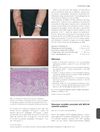
research Phenotypic variability associated withWNT10Anonsense mutations
WNT10A mutations cause varied symptoms in patients with odonto-onycho-dermal dysplasia.
research Cell surface receptor kinase FERONIA linked to nutrient sensor TORC signaling controls root hair growth at low temperature linked to low nitrate inArabidopsis thaliana
A protein called FERONIA helps control root hair growth in response to cold and low nitrogen by activating nutrient-sensing pathways in a plant called Arabidopsis.
research Expression of Foxi3 is regulated by ectodysplasin in skin appendage placodes
Foxi3 expression in developing teeth and hair is controlled by the ectodysplasin pathway.
research Activation of the OVOL1-OVOL2 axis in the hair bulb and in pilomatricoma and pilomatrix carcinoma
The OVOL1-OVOL2 axis is important for hair follicle differentiation and can help diagnose certain hair-related tumors.
research Dynamic expression of ornithine decarboxylase in hair growth
Ornithine decarboxylase is crucial for hair growth and follicle development.