1 citations
,
April 2025 in “American Journal of Medical Genetics Part C Seminars in Medical Genetics” Eflornithine improved symptoms in Bachmann–Bupp Syndrome patients.
 5 citations
,
October 2020 in “Frontiers in Cell and Developmental Biology”
5 citations
,
October 2020 in “Frontiers in Cell and Developmental Biology” Reducing FOXA2 in skin cells lowers their ability to grow hair.
 24 citations
,
July 1994 in “Molecular Endocrinology”
24 citations
,
July 1994 in “Molecular Endocrinology” Researchers found an RNA transcript that might help control a growth factor linked to tumor development.
 January 2025 in “Open Life Sciences”
 Overexpression of the HE4 gene in mice causes eye inflammation and cloudiness.
62 citations
,
December 2007 in “Journal of biological chemistry/The Journal of biological chemistry” A specific chemical change in the S100A3 protein leads to the formation of a four-part structure important for hair formation.
107 citations
,
April 2014 in “The Plant cell” The CAP1 gene helps control ammonium levels and is necessary for the proper growth of root hairs in Arabidopsis.
 November 2022 in “Journal of Investigative Dermatology”
 Activating a bitter taste receptor in hair follicles can stop hair growth by increasing a specific growth factor.
 April 2023 in “Journal of Investigative Dermatology”
 Being allergic to linalool, a common fragrance ingredient, might contribute to developing frontal fibrosing alopecia.
106 citations
,
February 2014 in “eLife” Lanceolate complexes in mouse hair follicles are essential for touch and depend on specific cells for maintenance and regeneration.
13 citations
,
January 2015 in “Steroids” The study created a model to help design new inhibitors for steroidal 5α-reductase enzymes.
 14 citations
,
February 2018 in “Psychoneuroendocrinology”
14 citations
,
February 2018 in “Psychoneuroendocrinology” Mice lacking steroid 5α-reductase 2 show less aggression and better impulse control.
 July 2020 in “European urology open science”
 Methylated gene parts may cause finasteride-resistance in some enlarged prostate patients.
 May 2026 in “Zenodo (CERN European Organization for Nuclear Research)”
 The EDAR V370A allele in East Asians likely evolved due to reliance on aquatic resources providing essential nutrients.
 May 2026 in “Zenodo (CERN European Organization for Nuclear Research)”
 The EDAR V370A allele in East Asians likely evolved due to reliance on aquatic resources providing essential nutrients.
4 citations
,
August 2023 in “Biomedicine & Pharmacotherapy” Ivacaftor can protect against noise-induced hearing loss by reducing oxidative stress.
 18 citations
,
April 2014 in “Stem cells”
18 citations
,
April 2014 in “Stem cells” The study found stem cells in minor salivary glands that can differentiate and are involved in tumor formation when exposed to tobacco.
18 citations
,
November 2005 in “Archives of Dermatological Research”  9 citations
,
August 2005 in “Experimental Dermatology”
9 citations
,
August 2005 in “Experimental Dermatology” Modified pep7, named EPM peptide, effectively promotes hair growth at low concentrations and works well with minoxidil.
Neurosteroids help control dopamine responses in the brain.
September 2020 in “bioRxiv (Cold Spring Harbor Laboratory)” Finasteride may help reduce opioid use.
 10 citations
,
February 2019 in “Toxicological Sciences”
10 citations
,
February 2019 in “Toxicological Sciences” Finasteride exposure affects gene expression and anogenital distance in male rat fetuses.
17 citations
,
July 2018 in “Environmental and Experimental Botany” Silencing NtNCED3-2 gene in tobacco reduces drought tolerance and impairs growth.
 6 citations
,
August 2014 in “Spectroscopy Letters”
6 citations
,
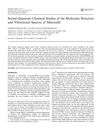
August 2014 in “Spectroscopy Letters” The analysis shows where minoxidil's atoms are likely to react and describes its electronic transitions and behavior with temperature changes.
 April 2019 in “Journal of Investigative Dermatology”
 Sandalore®, a synthetic scent, improved hair loss and satisfaction in women with telogen effluvium.
 February 2024 in “Advanced Materials”
 OG6, a sugar-based material, can stimulate hair growth.

Meis2 is essential for touch sensation and proper nerve connection to touch receptors in certain skin areas of mice.
43 citations
,
April 2011 in “AJP Endocrinology and Metabolism” Androgens increase muscle mass by promoting myoblast growth through ornithine decarboxylase.
15 citations
,
October 1976 in “Biochemical Journal” Naked-mouse hair lacks certain proteins and has less soluble fibril.
 138 citations
,
June 2012 in “Genes & Development”
138 citations
,
June 2012 in “Genes & Development” Sonic hedgehog signaling is crucial for hair growth and maintaining hair follicle identity.