54 citations
,
March 2024 in “Journal of Medicinal Chemistry” N-oxides are important in medicine for improving drug properties and targeting.
130 citations
,
January 2000 in “Nature biotechnology”  2 citations
,
June 2017 in “Journal of biomedicine and translational research”
2 citations
,
June 2017 in “Journal of biomedicine and translational research” Lychee fruit polyphenol (Oligonol®) may regulate genes linked to cell growth and inflammation in human scalp cells.
39 citations
,
September 2018 in “American Journal of Medical Genetics Part A” A new genetic mutation in the ODC1 gene causes developmental delay and other symptoms in a young girl.
10 citations
,
January 2011 in “Skin research and technology” Procyanidin oligomers can protect hair from oxidative damage and could be good for hair care products.
13 citations
,
April 1982 in “The Journal of Dermatology” Poly(ADP-ribose) synthesis is linked to skin cell differentiation.
 47 citations
,
January 2019 in “Nature communications”
47 citations
,
January 2019 in “Nature communications” Polyamines help fix DNA damage accurately in cells.
44 citations
,
May 2008 in “Plant journal” D'orenone stops root hair growth by disrupting auxin transport, but adding auxin can reverse this.
2 citations
,
November 2024 in “In Silico Pharmacology”  February 2024 in “Advanced Materials”
 OG6, a sugar-based material, can stimulate hair growth.
Newly designed proteins can effectively degrade specific proteins in cells, offering a potential new therapy method.
3 citations
,
June 2025 in “Gyemyeong uidae haksulji” PDRN is effective and safe for healing wounds and skin issues.
7 citations
,
January 2025 in “Current Issues in Molecular Biology” Microbial-derived polydeoxyribonucleotide is a better and more sustainable alternative to salmon-based versions for healing and immune support.
 June 2025 in “Aesthetic Cosmetology and Medicine”
 Polydeoxyribonucleotides may help with healing and anti-aging, but more research is needed.
15 citations
,
June 2019 in “Biochemical Journal” A new genetic disorder caused by an ODC1 mutation can be treated with DFMO.
June 2025 in “Molecular Therapy — Nucleic Acids” A new treatment using a DNA aptamer can promote hair growth by targeting a specific receptor.
8 citations
,
February 2009 in “Journal of Dermatological Science” Targeting androgen receptors with antiandrogen oligonucleotides could effectively treat hair loss.
January 2026 in “Journal of Aesthetic Nursing” Polynucleotides improve skin quality and are safe and effective for rejuvenation.
67 citations
,
September 2001 in “American Journal Of Pathology” Inhibiting ODC can prevent UV-induced skin cancer.
34 citations
,
October 1975 in “Biochimica et Biophysica Acta (BBA) - Nucleic Acids and Protein Synthesis”  8 citations
,
January 2013 in “Medicinal chemistry”
8 citations
,
January 2013 in “Medicinal chemistry” The compound 4c showed strong potential as an anticancer agent.
 1 citations
,
May 2020 in “Beilstein Journal of Organic Chemistry”
1 citations
,
May 2020 in “Beilstein Journal of Organic Chemistry” Scientists made a sensor that can detect a specific type of RNA related to androgen receptors quickly and accurately.
37 citations
,
January 1986 in “Carcinogenesis” ODC expression in mouse skin and tumors is varied and can be inhibited by retinoic acid or cycloheximide.
 September 2023 in “bioRxiv (Cold Spring Harbor Laboratory)”
 FOL-026 peptide can help repair blood vessels and promote growth, offering potential treatment for vascular diseases.
July 2017 in “Cancer Research” Polyamines help repair DNA breaks and may influence cancer development.
 80 citations
,
April 2017 in “Frontiers in Pharmacology”
80 citations
,
April 2017 in “Frontiers in Pharmacology” PDRN helps repair tissue and improve wound healing with a high safety profile.
April 2026 in “Chinese Chemical Letters” 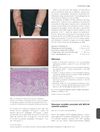 28 citations
,
February 2010 in “British journal of dermatology/British journal of dermatology, Supplement”
28 citations
,
February 2010 in “British journal of dermatology/British journal of dermatology, Supplement” WNT10A mutations cause varied symptoms in patients with odonto-onycho-dermal dysplasia.
1 citations
,
January 2017 in “Science” A new method was developed to create complex molecular knots using iron ions.
19 citations
,
January 2020 in “Journal of Biophotonics” A PEG-400/oleic acid mixture best improves drug delivery monitoring through hair follicles.