Search
for
Sort by
Research
420-450 / 1000+ resultsresearch Hair Sciences: The value of cooperation with hair biologists: How does minoxidil stimulate hair growth?
research Vitamins
Taking too much vitamin A can cause health problems like bone pain and hair loss.

research Eyebrow growth pattern analysis in patients with eyebrow hypotrichosis after receiving topical treatment: A retrospective study
Topical bimatoprost 0.01% improves eyebrow density and diameter, especially at the tail.

research Cover stories: 10 start-ups to watch: Liquid Light
Pomiferin may improve skin and scalp health by boosting important protein expression.

research screening and functional evaluation of hair-growth promoting polyphenols
Some natural compounds might help hair grow.
research Objective and Subjective Assessments of the Response of Photobiomodulation Therapy Against Alopecia Areata
Photobiomodulation therapy effectively promotes hair regrowth and improves quality of life in alopecia areata without side effects.
research Rickets with alopecia: An inborn error of vitaminD metabolism
Two sisters with rickets and hair loss had a genetic issue with vitamin D processing, and only improved when given phosphorus supplements.

research From Eye Care to Hair Growth: Bimatoprost
Bimatoprost helps with hair growth and eye conditions but can be costly and have side effects.
research Ichthyosis and Trichothiodystrophy: the Tay and PIBI(D)S Syndromes
Tay syndrome is a unique genetic disorder causing skin, hair, and developmental issues.
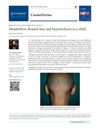
research Monilethrix: Beaded hair and hypotrichosis in a child
A 9-year-old girl has a rare hair disorder causing beaded, sparse hair.
research Photobiomodulation Facilitates Rat Cutaneous Wound Healing by Promoting Epidermal Stem Cells and Hair Follicle Stem Cells Proliferation
research Heterogeneity of ornithine decarboxylase expression in 12-O-tetradecanoylphorbol-13-acetate-treated mouse skin and in epidermal tumors
ODC expression in mouse skin and tumors is varied and can be inhibited by retinoic acid or cycloheximide.

research Unveiling the immune and vitamin profiles of blood: the potential biomarkers for alopecia areata
Certain immune markers and vitamin levels could help diagnose alopecia areata.

research Penetration and distribution of three lipophilic probes in vitro in human skin focusing on the hair follicle
Medium lipophilic substances penetrate skin best, and adding ethanol can increase delivery to hair follicles.
research Botanical extracts in combination improve autosomal recessive woolly hair/hypotrichosis caused by LIPH mutations
Botanical extracts can help treat hair loss in people with certain genetic conditions.
research [Various changes in hair structure with different amounts of vitamin A in the diet].
research Investigating the effect of herbal component-based natural hair oil using the Indigenous source of Bangladesh
Formulation B of the herbal hair oil promotes hair growth better than standard treatments and is safe for use.
research [Effect of 13-cis-retinoic acid on hair growth].

research EFFECT OF TOPICAL APPLICATION OF VITAMIN E ON THE HAIR GROWTH OF RABBITS
Vitamin E speeds up hair growth by improving blood flow.
research Hair cross-sectioning in uncombable hair syndrome: An easy tool for complex diagnosis
The document suggests finding a simpler, cheaper way to diagnose Uncombable Hair Syndrome.
research Effects of tocotrienol supplementation on hair growth in human volunteers.
Tocotrienol supplements significantly increased hair growth in people with hair loss.
research Serum vitamin B12, folate, ferritin, and iron levels in turkish patients with alopecia areata
Vitamin B12, folate, ferritin, and iron levels are not linked to alopecia areata.

research 368 Methods in Inflammatory Hair Disease Research: Enhanced Multiplex Imaging on Alopecia Areata Tissue Sections
New imaging technology can show up to 40 different markers in hair loss tissue, helping to understand hair disease better.

research IGFBP‐rP1 is a potential therapeutic target in androgenic alopecia
IGFBP-rP1 could be a new treatment for a common type of hair loss.

research FC054 The liver monoxygenase system in patients with alopecia
Alopecia patients have a less active liver monoxygenase system, which can be treated with photochemotherapy and system inducers.
research Injectables for Hair Loss Treatment
research The influence of valproic acid treatment on hair and serum zinc levels and serum biotinidase activity
Valproic acid treatment may cause temporary hair loss due to reduced zinc and biotinidase levels, which tend to normalize after 6 months.

research In Vivo Non-Invasive Observation of Dynamic Changes in Hair Shaft, Melanin, and Collagen During the C57BL/6 Follicle Cycle
Non-invasive methods can effectively monitor hair growth cycles, aiding hair loss treatment development.
research 10-Year-Old Female with an Irregularly Shaped Patch of Hair Loss
The girl's hair loss is due to trichotillomania, which may improve with behavioral therapy or a combination of treatments.