 19 citations
,
January 2013 in “International journal of medical sciences”
19 citations
,
January 2013 in “International journal of medical sciences” Increasing Wnt5a in mice skin delays hair growth but doesn't stop it.
 14 citations
,
January 2018 in “Scientific reports”
14 citations
,
January 2018 in “Scientific reports” Bioluminescence imaging can track hair follicle cells and help study hair regrowth.
37 citations
,
August 1999 in “Journal of Investigative Dermatology” A specific gene mutation causes complete hair loss without other health issues.
11 citations
,
October 2010 in “Behavioural Brain Research” Early neurosteroid changes can alter adult brain function and behavior.
 10 citations
,
March 2015 in “Journal of dermatology”
10 citations
,
March 2015 in “Journal of dermatology” The boy's severe skin disorder is caused by two new mutations in his TGM1 gene.
 June 2026 in “Cell Regeneration”
 The olfactory epithelium can regenerate throughout life, aided by specific cells, genes, and new research methods.
 January 2024 in “Wiadomości Lekarskie”
 Ancient immune and signaling pathways still regulate blood cell development.
July 2002 in “Science Signaling” Modified β-catenin can cause different effects in mouse skin cells, leading to cysts or tumors depending on the cell type.
 January 2008 in “Yearbook of Dermatology and Dermatologic Surgery”
 One type of progenitor cell can maintain normal skin in mice.
 13 citations
,
December 2020 in “PLoS ONE”
13 citations
,
December 2020 in “PLoS ONE” Genetic factors influence growth and brain development in children.
January 2019 in “DSpace@MIT (Massachusetts Institute of Technology)” Higher PHGDH levels cause unusual melanin buildup in hair follicles.
69 citations
,
January 2005 in “The Journals of Gerontology Series A” Short telomeres may cause symptoms like hair loss and osteoporosis, offering insights into aging.
 1 citations
,
December 2018 in “Journal of genetic medicine”
1 citations
,
December 2018 in “Journal of genetic medicine” A small change in the TRPS1 gene leads to a less severe form of a syndrome affecting hair, nose, and finger development.
December 2015 in “European Journal of Pediatric Dermatology” Newborns can experience temporary hair loss in bands, unrelated to sleeping position.
3 citations
,
August 2023 in “Biophysical Journal” Mitochondrial activity varies in cells before they stop growing, affecting their growth potential.
 9 citations
,
July 2011 in “Scientific Reports”
9 citations
,
July 2011 in “Scientific Reports” Changes in the HR gene have influenced hair growth and may lead to hair loss conditions in humans.
20 citations
,
April 2000 in “Experimental dermatology” ODC transgenic mice can model human hair loss with skin lesions.
August 2023 in “Journal of Investigative Dermatology” Senescent melanocytes in nevus skin boost hair growth.
85 citations
,
January 2018 in “Cell stem cell” Different signals work together to change gene activity and guide hair follicle stem cells to become specific cell types.
 2 citations
,
June 2001 in “American Journal of Pathology”
2 citations
,
June 2001 in “American Journal of Pathology” The document concludes that understanding how hair follicles naturally die and regenerate is important for insights into organ development and could impact health and disease treatment.
 2 citations
,
August 2023 in “Die Dermatologie”
2 citations
,
August 2023 in “Die Dermatologie” Genetic mutations affecting DNA repair cause early aging symptoms in progeroid syndromes.
September 1999 in “Molecular Carcinogenesis” Increased ODC expression makes normally tumor-resistant mice more prone to tumor development.
 19 citations
,
August 2013 in “Facial Plastic Surgery Clinics of North America”
19 citations
,
August 2013 in “Facial Plastic Surgery Clinics of North America” Children's hairlines change shape as they grow, with women often developing a widow's peak and men's hairlines becoming more convex and possibly balding at the temples, influenced by genetics and hormones.
20 citations
,
March 1975 in “Journal of steroid biochemistry/Journal of Steroid Biochemistry” The study concludes that a genetic mutation in TFM mice leads to reduced androgen receptor activity, affecting the body's response to male hormones.
79 citations
,
August 1998 in “The Journal of Cell Biology” Keratin 16 delays skin maturation and affects skin and hair development in mice.
 9 citations
,
March 2019 in “Scientific reports”
9 citations
,
March 2019 in “Scientific reports” Temporary ROS production in cultured human hair follicles promotes growth and stem cell activation.
3 citations
,
July 2017 in “Endogenous locus-driven H-Ras G12V expression induces senescence-like phenotype in primary fibroblasts of the Costello syndrome mouse model” Mouse hair follicle stem cells have a flexible chromatin state that supports skin health and hair growth.
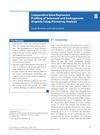 6 citations
,
January 2010 in “Springer eBooks”
6 citations
,
January 2010 in “Springer eBooks” SA linked to mitochondrial issues and oxidative stress, while AGA involves disrupted hair growth genes.
10 citations
,
February 2019 in “Journal of cellular physiology” TGF-β2 helps yak hair follicles enter the regression phase, while HSP70 tries to prevent it.
 August 2010 in “Journal of Investigative Dermatology”
 New hair regrowth model introduced, imiquimod kills skin cancer cells, T-cadherin loss makes skin cancer more invasive, no strong link between PTCH1 gene and skin cancer after transplant, and male teens more likely to have hereditary hair loss.