 30 citations
,
January 2021 in “Journal of Clinical Immunology”
30 citations
,
January 2021 in “Journal of Clinical Immunology” FOXN1 mutations can cause varying immune and physical issues, with severity influenced by gene activity and possibly other factors.
45 citations
,
January 2018 in “International Journal of Dermatology” Nail problems are common in people with alopecia areata, often leading to cosmetic and functional issues, but more research is needed for treatment guidelines.
January 2022 in “Clinical Cases in Dermatology” A 7-year-old girl's scalp infection was cured with oral medication and medicated shampoo.
2 citations
,
January 2022 in “Journal of Veterinary and Animal Sciences” Trichophyton and Microsporum fungi are the main causes of skin infections in dogs in Thrissur, Kerala.

Experts created guidelines to better diagnose and treat uncommon fungal skin infections.
January 2011 in “Journal of the American Academy of Dermatology” Dr. Conroy's book on Morgellon's disease lacks credible evidence and scientific validity.
5 citations
,
August 2002 in “Veterinary Dermatology” Combining terbinafine and mitotane effectively treated a schnauzer's skin infection and hormone disorder.
 5 citations
,
January 2018 in “Acta Dermatovenerologica Alpina Pannonica et Adriatica”
5 citations
,
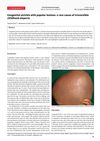
January 2018 in “Acta Dermatovenerologica Alpina Pannonica et Adriatica” Congenital atrichia with papular lesions causes permanent hair loss in children.
10 citations
,
January 1997 in “Dermatology” Two siblings were diagnosed with Trichothiodystrophy, identified by brittle hair and low sulfur content.
 February 2025 in “Indian Dermatology Online Journal”
 Sports influence skin condition names and help in diagnosis and treatment.
2 citations
,
June 2024 in “Journal of Clinical Medicine” Alopecia Areata can affect nails, often improving on its own, but JAK inhibitors may help.
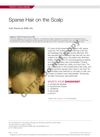
A 5-year-old girl has sparse, dry, and brittle hair but is otherwise healthy.
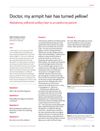
A 15-year-old boy's smelly, yellow armpit hair improved with clindamycin treatment.
3 citations
,
January 2017 in “Dermatology online journal” Dermoscopy helped diagnose a rare hair disorder in a 2-year-old boy.
30 citations
,
January 2013 in “Human Mutation” A mutation in the HOXC13 gene causes hair and nail problems in a Syrian family.
 3 citations
,
August 2022 in “Cutis”
3 citations
,
August 2022 in “Cutis” Certain nail conditions can suggest thyroid problems, with different symptoms for underactive (slow, thin nails) and overactive (spoon-shaped, brittle nails) thyroid.
 January 2025 in “International Journal of Advanced Biochemistry Research”
 Microsporum spp. is the most common fungus causing skin infections in dogs.
 May 2019 in “Small Animal Dermatology”
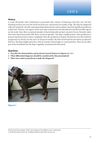
 The dog has Color Dilution Alopecia, causing hair loss and increased risk of skin infections.
17 citations
,
January 2013 in “Journal of Cutaneous Pathology” The onychodermis helps anchor the nail bed and may aid in nail formation.
14 citations
,
June 1989 in “Journal of dermatology” Three siblings had both Vohwinkel's disease and congenital alopecia, with no effective treatment.
 40 citations
,
August 2010 in “Archives of dermatology”
40 citations
,
August 2010 in “Archives of dermatology” A 5-year-old boy's skin condition improved with systemic valganciclovir after a cardiac transplant and immunosuppressive therapy.
 7 citations
,
July 2019 in “The Journal of Dermatology”
7 citations
,
July 2019 in “The Journal of Dermatology” Terbinafine effectively treated kerion celsi despite disrupted immune responses.
16 citations
,
January 1995 in “Dermatology” The treatment for alopecia areata with diphenylcyclopropenone was unsuccessful.
November 2024 in “Journal of Investigative Dermatology” Genetic defects in the Wnt/PCP pathway may cause congenital yellow nail syndrome.
Mutant Cx43 causes slower wound healing and hair growth issues in ODDD.
6 citations
,
March 2005 in “Journal of the American Academy of Dermatology” Follicular dystrophy in immunocompromised patients may be linked to medication or viral factors and can improve with treatment changes.
2 citations
,
June 2010 in “Medicina de Familia SEMERGEN” The girl's "dandruff" was actually harmless hair casts, not a hygiene issue.
 August 2022 in “Turkish journal of veterinary research”
 Demodicosis causes significant oxidative stress in dogs.
15 citations
,
April 1970 in “PubMed” Netherton's syndrome may have a familial link and doesn't always include atopy.
 September 2003 in “Current Paediatrics”
 The document concludes that accurate diagnosis and understanding the type of hair disorder are crucial for treating hair loss in children.