10 citations
,
January 2013 in “International Journal of Trichology” Systemic steroids effectively treated severe nail issues in a card illusionist with alopecia areata.
Trichoscopic examination is crucial for diagnosing congenital triangular alopecia.
 January 2026 in “International Journal of Research and Innovation in Applied Science”
 Recognizing specific markers is crucial for correctly diagnosing and treating rare multifocal MPTT in males.
July 2024 in “Clinical Case Reports” Recognizing rare hair loss patterns in young females can improve understanding and treatment.
 13 citations
,
March 2016 in “Journal of Cutaneous Pathology”
13 citations
,
March 2016 in “Journal of Cutaneous Pathology” Some people's hair loss is caused by multiple factors, with the most common being a mix of AGA and CCCA.
4 citations
,
January 2020 in “Dermatology Online Journal” Congenital atrichia with papular lesions causes permanent hair loss and skin bumps due to a gene mutation.
 6 citations
,
January 2020 in “Postepy Dermatologii I Alergologii”
6 citations
,
January 2020 in “Postepy Dermatologii I Alergologii” Trichoscopy is useful for diagnosing hair-pulling disorder.
33 citations
,
September 1987 in “American Journal of Medical Genetics” Uncombable hair is inherited dominantly with complete penetrance.
 3 citations
,
June 2022 in “European journal of human genetics”
3 citations
,
June 2022 in “European journal of human genetics” A new type of pachyonychia congenita linked to a specific keratin gene mutation was found in two Pakistani families.
27 citations
,
February 2006 in “International Journal of Dermatology” Some children and young adults with eyebrow and eyelash hair loss actually have a hair-pulling disorder, often with related psychological issues.
 28 citations
,
February 2010 in “British journal of dermatology/British journal of dermatology, Supplement”
28 citations
,
February 2010 in “British journal of dermatology/British journal of dermatology, Supplement” WNT10A mutations cause varied symptoms in patients with odonto-onycho-dermal dysplasia.
2 citations
,
April 2025 in “Pediatric Dermatology” Macular alopecia is a distinct, non-scarring hair loss pattern that mostly affects young Hispanic/Latinx females and often resolves on its own.
14 citations
,
January 2014 in “Annals of Dermatology” Some cases of folliculotropic mycosis fungoides may progress slowly and not need aggressive treatment.
 February 2024 in “Skin research and technology”
 LC-OCT is a promising tool for diagnosing and monitoring Alopecia areata.
8 citations
,
May 2005 in “The American journal of dermatopathology/American journal of dermatopathology” The hair defect is due to abnormal inner root sheath keratinization.

The chapter explains that there are many genetic skin disorders affecting skin cell formation, including both common and rare types.
 2 citations
,
February 2019 in “Anais brasileiros de dermatologia/Anais Brasileiros de Dermatologia”
2 citations
,
February 2019 in “Anais brasileiros de dermatologia/Anais Brasileiros de Dermatologia” Tufted folliculitis is common in patients with folliculitis decalvans.
July 2019 in “Indian dermatology online journal” Alopecia areata can show unusual red-dotted vessels and dithranol treatment may mask typical patterns.
 January 2021 in “Nasza Dermatologia Online”
 Plica polonica is a rare condition where hair becomes irreversibly tangled, and the treatment is to cut the matted hair.
 3 citations
,
April 2016 in “International Journal of Dermatology”
3 citations
,
April 2016 in “International Journal of Dermatology” A young man was diagnosed with trichoepitheliomas, causing thick skin and hair loss.
35 citations
,
September 2006 in “American Journal Of Pathology” Odontogenic keratocysts are caused by abnormal Hedgehog signaling and can lead to tooth and bone issues.
53 citations
,
August 2015 in “The Italian Journal of Pediatrics/Italian journal of pediatrics” Excessive body hair can signal complex health issues.
A six-year-old girl with extra hair on her elbows was treated with hair removal methods.
19 citations
,
June 2020 in “BMC Cancer” Trichilemmal carcinoma shares genetic changes with other skin cancers, suggesting similar causes and potential treatments.
 May 2020 in “Research Square (Research Square)”
 Trichilemmal carcinoma shares genetic traits with other skin cancers, suggesting similar treatment options.
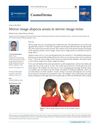
Mirror-image twins can have alopecia areata on opposite sides of their heads.
October 2025 in “Indian Journal of Paediatric Dermatology” Trichoscopy is a helpful tool for diagnosing Netherton syndrome.
Recognizing bamboo hair helps diagnose Netherton’s syndrome.
June 2025 in “British Journal of Dermatology” A rare dual diagnosis of alopecia areata and lichen planopilaris requires thorough evaluation for effective treatment.
 4 citations
,
August 2017 in “International journal of molecular sciences”
4 citations
,
August 2017 in “International journal of molecular sciences” The conclusion is that Pigmented Epithelioid Melanocytoma can start from hair follicle stem cells or from a mole on the skin.