 October 2023 in “Journal of dermatological science”
 New mutations in MBTPS2 reduce its function and cause IFAP syndrome with unusual symptoms.
 January 2018 in “The Kaohsiung journal of medical sciences”
 A young man had a rare case of hair cysts on his elbows, which was hard to diagnose and treat.

Ovol2 is crucial for hair growth and skin healing by controlling cell movement and growth.
January 2026 in “JDDG Journal der Deutschen Dermatologischen Gesellschaft” A 5-year-old boy has Nevus Comedonicus Syndrome, causing skin lesions and a cataract.
23 citations
,
July 2016 in “JAMA Ophthalmology” CDH3-related disease causes worsening eye and hair issues.
December 2016 in “The journal of investigative dermatology/Journal of investigative dermatology” Hedgehog signaling controls hair follicle development and can affect skin cancer growth.
17 citations
,
May 2022 in “Cells and Development”  9 citations
,
January 2008 in “Medical mycology”
9 citations
,
January 2008 in “Medical mycology” A dog's skin infection caused by the fungus Chaetomium globosum was effectively treated with ketoconazole.
 February 2010 in “Journal of the American Academy of Dermatology”
 Umbilical cord blood transplantation improved the boy's symptoms despite complications.
July 2025 in “Clinical Case Reports” A new genetic mutation in the TRPS1 gene causes Trichorhinophalangeal Syndrome, leading to specific hair, dental, and bone issues.
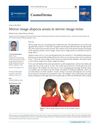
Mirror-image twins can have alopecia areata on opposite sides of their heads.
26 citations
,
April 2007 in “Journal of clinical oncology” March 1998 in “JEADV. Journal of the European Academy of Dermatology and Venereology/Journal of the European Academy of Dermatology and Venereology” Removing a tumor may resolve associated skin and hair symptoms.
Early genetic testing and new therapies like secukinumab are crucial for managing Netherton syndrome effectively.
June 2001 in “European Journal of Dermatology” A 54-year-old woman experienced progressive hair loss starting in adolescence, leading to sparse scalp hair and almost no eyebrows or eyelashes.
4 citations
,
April 1983 in “The Journal of Dermatology” A 15-year-old girl with hypothyroidism had excess hair and skin issues due to blocked hair follicles.
July 2024 in “Journal of Investigative Dermatology” Cell movements and forces shape feather growth in chicken skin.
 April 2018 in “Journal of Investigative Dermatology”
 Ovol2 is important for proper skin healing and hair growth.
 9 citations
,
November 2013 in “Dermatologic Surgery”
9 citations
,
November 2013 in “Dermatologic Surgery” Hair transplant complications were likely due to deep graft placement and rough handling.
10 citations
,
August 2002 in “British Journal of Ophthalmology” Surgical excision is the best treatment for SCC, but intralesional cidofovir might be a good alternative.
August 2024 in “Archives of Dermatological Research” CHI3L1 and CXCL5 proteins help promote hair growth.
2 citations
,
February 2021 in “PubMed” Koilonychia in alopecia areata can improve with oral corticosteroids.
5 citations
,
February 2005 in “Journal of the American Academy of Dermatology” Focal palmoplantar callosities may help diagnose non-Herlitz junctional epidermolysis bullosa.
2 citations
,
August 2008 in “Oncotarget” Apoptosis in hair follicles spreads through cell death signals, with stem cells slowing the process.
 3 citations
,
May 2004 in “Journal of neurosurgery”
3 citations
,
May 2004 in “Journal of neurosurgery” Endoscopy-assisted surgery for craniosynostosis showed excellent outcomes with minimal complications and most patients went home the day after surgery.
1 citations
,
October 2021 in “The journal of investigative dermatology/Journal of investigative dermatology” Removing HIF-P4H-2 from certain skin cells in mice causes hair loss on the body but not the head.
 62 citations
,
January 2000 in “Developmental dynamics”
62 citations
,
January 2000 in “Developmental dynamics” Notch-related genes play a key role in the development and cycling of hair follicles.
 July 2024 in “Journal of Pediatric Endocrinology and Metabolism”
 Ovarian hyperthecosis should be considered in young women with severe male-like symptoms and can be managed with hormone treatments.
7 citations
,
April 2004 in “International Journal of Dermatology” The newborn's skin blistering is due to a genetic condition called epidermolytic hyperkeratosis.
81 citations
,
March 2006 in “Journal of Investigative Dermatology” Mutations in the DSG4 gene cause specific hair and scalp issues.