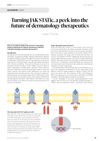
 August 2024 in “New Zealand Medical Student Journal”
 JAK inhibitors show promise for treating skin diseases effectively and safely.
 June 2024 in “Skin Research and Technology”
 hsa-miR-193a-5p may help diagnose and treat alopecia areata.

Betamethasone dipropionate lotion is more effective than minoxidil solution for treating Alopecia Areata.
January 2024 in “Indian Journal of Paediatric Dermatology” A rare case links early-onset alopecia universalis and nephrotic syndrome, suggesting genetic immune issues.

Tofacitinib helped a woman with total-body hair loss grow her hair back.
 October 2023 in “European medical journal. Dermatology”
 Hair loss greatly affects quality of life, and dermatologists are crucial for proper diagnosis and treatment.
 September 2023 in “Pharmaceuticals”
 Tiny particles improved delivery of hair loss treatments to hair follicles, with lipid-based particles performing best.
 July 2023 in “IntechOpen eBooks”
 New treatments for alopecia areata show promise, but more research is needed to confirm their effectiveness.

Some dermatologists in Saudi Arabia prescribe Tofacitinib for hair loss, but many don't due to its unavailability and safety concerns.
 May 2023 in “Journal of managed care & specialty pharmacy”
 Alopecia areata causes hair loss and life quality issues; current treatments are often unsatisfactory, but new drugs like JAK inhibitors show promise.
 May 2023 in “Frontiers in Immunology”
 Treg cell-based therapies might help treat hair loss from alopecia areata, but more research is needed to confirm safety and effectiveness.

A patient with patchy hair loss was successfully treated for Tumid Lupus Erythematosus after other treatments failed.
 February 2023 in “Global journal of health sciences and research”
 Zinc levels are not significantly linked to the presence or severity of alopecia areata.
 January 2023 in “Dermatologic Therapy”
 Platelet-rich plasma therapy is a safe and effective treatment for alopecia areata.
December 2022 in “IntechOpen eBooks” 308 excimer phototherapy is a safe and effective way to treat hair loss from Alopecia Areata.
 September 2022 in “Journal of Ayub Medical College Abbottabad”
 Steroid injections are more effective than platelet rich plasma for treating patchy hair loss.
 June 2022 in “Frontiers in Medicine”
 Acupuncture and moxibustion may help treat hair loss, but more research is needed.
 January 2021 in “The Ochsner journal”
 ADHD stimulant medications might be linked to a specific type of hair loss called Alopecia Universalis.
 January 2019 in “Journal of Dermatology and Venereology”
 Sesame and pumpkin seed oil can effectively regrow hair in alopecia areata.
 August 2018 in “Journal of The American Academy of Dermatology”
 Older men's scalp damage increases with age and sun exposure, a baby girl in the Philippines has Schimmelpenning syndrome, and thyroid screening is advised for children with hair loss and certain risk factors.
 1 citations
,
January 1967 in “The BMJ”
1 citations
,
January 1967 in “The BMJ” The document concludes that while some hair and scalp disorders can be treated, hair loss from destroyed follicles is permanent, and damaged hair can only regrow naturally.
October 2025 in “International Journal of Dermatology” Baricitinib is a safe and effective treatment for alopecia areata, with better results in patients with lower initial severity, shorter disease duration, and longer treatment.
14 citations
,
January 2015 in “Annals of dermatology/Annals of Dermatology” Corticosteroid pulse therapy is more effective for severe alopecia areata than combination therapy.
9 citations
,
January 2019 in “International Journal of Trichology” Combining calcipotriol with mometasone is more effective for treating alopecia areata than using mometasone alone.
May 2026 in “Inflammopharmacology” January 2026 in “Cytokine” September 2025 in “Value in Health” February 2026 in “Archives of Dermatological Research”  18 citations
,
March 2022 in “Drug design, development and therapy”
18 citations
,
March 2022 in “Drug design, development and therapy” Platelet-rich plasma (PRP) may help with various hair loss types, but more research is needed to find the best use method.
 3 citations
,
August 2020 in “PubMed”
3 citations
,
August 2020 in “PubMed” Platelet-rich plasma (PRP) is effective in treating various skin conditions and improving hair density, thickness, and patient satisfaction, with lower relapse rates for Alopecia Areata.