9 citations
,
August 2002 in “British journal of ophthalmology” The document reports a rare case of ECCL with a new association with optic disc colobomas.
 2 citations
,
July 2024 in “Cermin Dunia Kedokteran”
2 citations
,
July 2024 in “Cermin Dunia Kedokteran” Glaucoma can lead to blindness, but it can be managed with surgery and medication.
 2 citations
,
September 2021 in “JCPSP. Journal of the College of Physicians & Surgeons Pakistan”
2 citations
,
September 2021 in “JCPSP. Journal of the College of Physicians & Surgeons Pakistan” Women with PCOS have thicker parafoveal areas in their retinas, but their macular blood vessel density is normal.
2 citations
,
January 2018 in “PubMed” The man's symptoms improved and the tumor shrank after treatment with cabergoline.
 May 2025 in “BMJ Case Reports”
 Minoxidil can cause temporary vision loss and color blindness.
 1 citations
,
March 2009 in “Hair transplant forum international”
1 citations
,
March 2009 in “Hair transplant forum international” The TrichoScan method effectively measures hair growth and helps choose patients for hair restoration surgery.
 14 citations
,
October 2018 in “Brain Research Bulletin”
14 citations
,
October 2018 in “Brain Research Bulletin” Exosomes help nerve fibers grow by affecting specific cell signaling pathways.
 May 2026 in “Pharmaceuticals”
 Incretin-based drugs for obesity often cause gastrointestinal issues, with tirzepatide having the most reports.
 October 2022 in “Journal of ophthalmology”
 Light therapy may improve eye conditions by stimulating cell activity and increasing oxygen availability.
 January 2013 in “Psychiatry and clinical neurosciences”
 Physical symptoms in depression can reveal underlying medical conditions.
 September 1994 in “Otolaryngology-Head and Neck Surgery”
 Several doctors received research grants, new workshops and conferences were announced, and new officers were elected.
3 citations
,
January 2011 in “Proceedings of SPIE, the International Society for Optical Engineering/Proceedings of SPIE” Male mice have thicker skin, causing more light scattering than females.
 3 citations
,
May 2004 in “Journal of neurosurgery”
3 citations
,
May 2004 in “Journal of neurosurgery” Endoscopy-assisted surgery for craniosynostosis showed excellent outcomes with minimal complications and most patients went home the day after surgery.
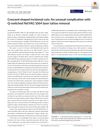 1 citations
,
November 2020 in “Journal of Cosmetic Dermatology”
1 citations
,
November 2020 in “Journal of Cosmetic Dermatology” A man got unusual crescent-shaped cuts from a laser tattoo removal due to a laser technical issue, but healed without scars.
May 2013 in “Optometry and Vision Science” Experience-dependent plasticity offers rehabilitation potential for macular degeneration, partial orthokeratology slows myopia, and axis misalignment affects astigmatism surgery effectiveness.
 January 2022 in “Acta dermatovenerologica Alpina, Pannonica et Adriatica (Tiskana izd.)”
 Uncombable hair syndrome causes frizzy hair and can affect the nervous system, eyes, and ears, often co-occurring with other hair, skin, nail, and teeth conditions, and is linked to three specific gene mutations.
 42 citations
,
January 2011 in “Journal of Biomedical Optics”
42 citations
,
January 2011 in “Journal of Biomedical Optics” Infrared and Raman imaging can non-destructively analyze hair structure and help diagnose hair conditions.
 1 citations
,
November 2014 in “Journal of Biomedical Optics”
1 citations
,
November 2014 in “Journal of Biomedical Optics” Reflectance spectroscopy can noninvasively track hair growth stages by measuring skin reflectance and melanin changes.
46 citations
,
December 2018 in “Biomedical Optics Express” Raman spectroscopy could effectively guide skin cancer surgery by identifying tumor margins.
 264 citations
,
January 2008 in “Journal of biomedical optics”
264 citations
,
January 2008 in “Journal of biomedical optics” Zinc oxide nanoparticles in sunscreen do not penetrate deep into the skin.
95 citations
,
January 2009 in “Journal of Biomedical Optics” Nanoparticles penetrate hair follicles better when their size matches the cuticula thickness.
90 citations
,
November 2014 in “Journal of Biomedical Optics” Silver nanoparticles can penetrate porcine skin up to about 15.6 μm, possibly through hair follicles.
69 citations
,
January 2002 in “Journal of biomedical optics” Dyes can penetrate human skin and hair follicles up to 1.2 mm deep and the sebaceous gland can store dye; Indocyanine Green lotion was made for safe dyeing and monitoring.
57 citations
,
December 2012 in “Journal of Biomedical Optics” Confocal microscopy is useful for studying how nanoparticles interact with skin.
27 citations
,
November 2012 in “Journal of Biomedical Optics” Confocal Raman microscopy can effectively study drug delivery in hair follicles using pig ear models.
20 citations
,
September 2022 in “Journal of Biomedical Optics” PBM helps improve cell survival in 3D tissue engineering.
17 citations
,
May 2018 in “Journal of Biomedical Optics” Certain types of human hair might help ultraviolet rays reach and damage cells, possibly leading to melanoma.
12 citations
,
May 2012 in “Journal of Biomedical Optics” Trichoscan® is best for measuring hair growth, RCM for analyzing hair follicles, and OCT is useful for both.
 10 citations
,
January 2012 in “Journal of biomedical optics”
10 citations
,
January 2012 in “Journal of biomedical optics” Melanin density affects hair color, and this method can help in cosmetic assessments and diagnosing hair diseases.
10 citations
,
January 2011 in “Journal of biomedical optics” OCT is a reliable, noninvasive way to measure hair thickness.