 May 2025 in “Modern technologies in ophtalmology”
 Minoxidil might rarely increase eye pressure.
29 citations
,
January 2020 in “Frontiers in endocrinology” Fibrodysplasia ossificans progressiva is a rare genetic disorder that causes extra bone growth and symptoms of premature aging.
February 2023 in “Zenodo (CERN European Organization for Nuclear Research)” Trichoscopy is a useful and affordable tool for diagnosing Alopecia areata.
 1 citations
,
December 2013 in “Journal of Evolution of Medical and Dental Sciences”
1 citations
,
December 2013 in “Journal of Evolution of Medical and Dental Sciences” Alopecia areata causes patchy hair loss due to unknown factors, affecting all ages and genders.
6 citations
,
March 2005 in “Journal of the American Academy of Dermatology” Follicular dystrophy in immunocompromised patients may be linked to medication or viral factors and can improve with treatment changes.
 5 citations
,
December 1964 in “Australasian journal of dermatology”
5 citations
,
December 1964 in “Australasian journal of dermatology” Congenital atrichia is a rare condition where children are born without hair, and treatment is often ineffective.
 August 2022 in “Case reports in medicine”
 Long eyelashes in a patient were an unusual sign of systemic lupus erythematosus.
1 citations
,
January 2022 in “Skin Appendage Disorders” Lupus erythematosus can mimic alopecia areata, and trichoscopy is key for accurate diagnosis and better patient outcomes.
36 citations
,
January 2000 in “British journal of dermatology/British journal of dermatology, Supplement” A mother and daughter had severe skin, hair, and eye issues linked to IFAP.
17 citations
,
May 2007 in “British Journal of Dermatology” Gomez–Lopez–Hernandez syndrome can cause focal hair loss and developmental delays but some children can still function well and excel in school and sports.
May 2022 in “Dermatology practical & conceptual” Trichoscopy is crucial for diagnosing and managing androgenetic alopecia, showing increased vellus hairs, empty follicles, and fibrosis with severity.
May 2025 in “Skin Appendage Disorders” Frontal fibrosing alopecia can be diagnosed by examining facial areas and treated with specific medications to stop its progression.
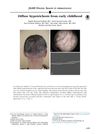 September 2016 in “Journal of The American Academy of Dermatology”
 The girl has a genetic hair condition causing thin hair since childhood.
A woman had eye pain and vision loss after a hair growth treatment, but her symptoms improved after a month.
October 2024 in “Dermatology Practical & Conceptual” Trichoscopy effectively diagnoses eyebrow hair loss in certain conditions.
January 2016 in “Yanwaishang zhiye yanbing zazhi” Atropine and neosynephrine effectively prevent floppy iris syndrome during cataract surgery.
Alopecia areata often starts around age 23, can be permanent in 30% of cases, and treatments are usually temporary.
 1 citations
,
March 2013 in “PubMed”
1 citations
,
March 2013 in “PubMed” The study found that it's hard to tell the difference between two types of hair loss, alopecia areata and telogen effluvium, by looking at symptoms and tissue samples.
July 2025 in “Dermatology Reports” Dermatologists should recognize diverse discoid lupus signs to avoid misdiagnosis.
23 citations
,
July 2016 in “JAMA Ophthalmology” CDH3-related disease causes worsening eye and hair issues.
4 citations
,
January 1992 in “American Journal of Ophthalmology”  4 citations
,
September 2019 in “Journal of cosmetic dermatology”
4 citations
,
September 2019 in “Journal of cosmetic dermatology” Topical bimatoprost 0.01% improves eyebrow density and diameter, especially at the tail.
3 citations
,
January 2015 in “Indian journal of paediatric dermatology” Oral isotretinoin temporarily improved skin symptoms in a child with IFAP syndrome.
 April 2024 in “Indian journal of ophthalmology. Case reports”
 Using minoxidil for hair loss might rarely cause a vision problem where fluid builds up under the retina.
January 2025 in “Veterinary Record Case Reports” The dog's skin condition improved quickly with treatment and did not return.
February 2023 in “International Journal of Advanced Research” Trichoscopy is a cost-effective and non-invasive tool for diagnosing alopecia areata.
 31 citations
,
November 2014 in “Investigative Ophthalmology & Visual Science”
31 citations
,
November 2014 in “Investigative Ophthalmology & Visual Science” A natural steroid in the body may protect against eye damage in glaucoma.
23 citations
,
May 2017 in “Journal of the American Academy of Dermatology” FFA patients have fewer melanocytes and thinner skin compared to others.

The document's conclusion cannot be provided because the document is not readable or understandable.
1 citations
,
January 2018 in “Indian dermatology online journal” Early diagnosis and genetic evaluation of ADULT syndrome are crucial to reduce stress and medical costs.