 24 citations
,
January 2011 in “International Journal of Trichology”
24 citations
,
January 2011 in “International Journal of Trichology” Light microscopy is useful for diagnosing different hair disorders.
5 citations
,
May 2001 in “Proceedings of SPIE, the International Society for Optical Engineering/Proceedings of SPIE” The DWLSM provides detailed imaging of hair shafts and follicles with high accuracy.
1 citations
,
January 2021 in “Springer Proceedings in Materials” Researchers developed a new method to clearly see and label hair proteins with minimal errors using advanced freezing and microscopy techniques.
 February 2023 in “International journal of research - granthaalayah”
 The new microscope method helps study energy from pre-cancerous skin cells.
 15 citations
,
July 2002 in “Clinical and Experimental Dermatology”
15 citations
,
July 2002 in “Clinical and Experimental Dermatology” Hair microscopy is useful for diagnosing certain hair loss conditions but has limitations and must be interpreted carefully.

A portable imaging system shows promise for diagnosing skin diseases and checking laser treatment effects.
25 citations
,
March 2002 in “Scanning” Confocal microscopy is better than scanning electron microscopy for studying hair in its natural state and understanding hair products' effects.
 May 2023 in “Experimental Dermatology”
 RCM and OCT are effective for diagnosing and monitoring hair-related skin diseases but lack standardized protocols and need more research.
 January 2015 in “Hair therapy & transplantation”
 New hair and scalp disease diagnosis methods are important for correct treatment.
27 citations
,
January 2016 in “Indian Dermatology Online Journal” Dermoscopy is better than a magnifying lens for examining skin because it shows deeper details.
29 citations
,
April 2011 in “Journal of Microscopy” The modified osmium method improves hair cortex staining for better visualization.
 10 citations
,
January 2015 in “Skin appendage disorders”
10 citations
,
January 2015 in “Skin appendage disorders” Low-cost videomicroscopes are not as reliable as standard videodermatoscopes for scalp examination due to lower image quality.
Multiphoton microscopy can effectively distinguish between scarring and non-scarring alopecia.
 1 citations
,
February 2018 in “Australasian journal of dermatology”
1 citations
,
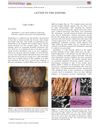
February 2018 in “Australasian journal of dermatology” Advanced imaging techniques are crucial for accurately diagnosing Monilethrix, a rare hair disorder.
October 2014 in “Microscopy” The method using ionic liquid improves observation of cell structures with less damage.
1 citations
,
May 2023 in “bioRxiv (Cold Spring Harbor Laboratory)” A new tool allows easier long-term imaging of live skin cells, helping study diseases like skin cancer.
 2 citations
,
May 2023 in “Experimental dermatology”
2 citations
,
May 2023 in “Experimental dermatology” New imaging techniques can assess and track changes in mouse acne without harm, aiding treatment choices.
6 citations
,
March 2022 in “IET Image Processing” Targeting the narrowest part of the anterior chamber angle may help prevent pupil block in glaucoma.
September 2016 in “Journal of Dermatological Science” Polarizing light microscopy can easily and reliably diagnose congenital keratinizing disorders like Netherton syndrome.
5 citations
,
March 2022 in “STAR Protocols” The method helps study hair follicle stem cells and calcium signals in mouse skin.
 1 citations
,
October 2023 in “Skin research and technology”
1 citations
,
October 2023 in “Skin research and technology” LC-OCT is an effective new method for diagnosing classic lichen planopilaris.
1 citations
,
January 2022 in “Anais brasileiros de dermatologia/Anais Brasileiros de Dermatologia” Reflectance confocal microscopy may help diagnose trichofolliculoma by showing specific skin features.

New imaging tools help doctors better examine hair and scalp health without surgery.
3 citations
,
October 2006 in “Journal of dermatology” X-ray microscopy can non-invasively show hair structure changes after treatments, but it's less detailed than TEM and needs improvement.
 191 citations
,
November 1959 in “Annals of the New York Academy of Sciences”
191 citations
,
November 1959 in “Annals of the New York Academy of Sciences” Hair and wool have complex microscopic structures with microfibrils and varying cystine content.
15 citations
,
June 2021 in “Medicina” Combined light therapy improves eye health and quality of life for those with meibomian gland dysfunction.
18 citations
,
August 2009 in “Skin Research and Technology” OCT can identify hair structures, but chemical treatments can damage them.
 April 2016 in “Journal of The American Academy of Dermatology”
 Low-cost videomicroscopes might not be reliable for examining scalp disorders compared to standard methods.
 44 citations
,
August 2008 in “Archives of Dermatology”
44 citations
,
August 2008 in “Archives of Dermatology” Trichoscopy is a non-invasive way to diagnose hair and scalp problems without needing hair samples.
March 2026 in “Mendeley Data”