March 2026 in “Actas Dermo-Sifiliográficas” Dermatologists in Spain now mostly prescribe oral minoxidil and dutasteride for hair loss.
March 2026 in “International Society of Hair Restoration Surgery” Minoxidil is a safe, FDA-approved treatment for hair loss, available in topical and possibly low-dose oral forms.
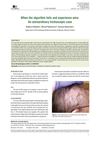 January 2026 in “Forum Dermatologicum”
 Thorough hair examination is crucial for accurate diagnosis and treatment.
 January 2026 in “International Society of Hair Restoration Surgery”
 Tattoo machine-assisted drug delivery may improve hair growth in androgenetic alopecia.
 November 2025 in “SKIN The Journal of Cutaneous Medicine”
 "Dread shed" is common with minoxidil but less so with other hair loss treatments.
 November 2025 in “Open Repository of the University of Porto (University of Porto)”
 Continuous use of finasteride and minoxidil is effective for treating androgenetic alopecia.
 November 2025 in “Australian Journal of General Practice”
 Oral finasteride and topical minoxidil can regrow hair, but finasteride may affect fertility.
 October 2025 in “Journal of Cosmetic Dermatology”
 Conventional treatments like dutasteride and minoxidil are effective for male hair loss, with some alternative treatments also showing promise.
 September 2025 in “Journal of Cutaneous Medicine and Surgery”
 Experts recommend specific treatments like minoxidil and finasteride for managing hereditary hair loss.
 September 2025 in “PubMed”
 Prevent persistent hair loss after chemotherapy with scalp cooling and early minoxidil use.
 September 2025 in “Editora Pasteur eBooks”
 Continuous learning and personalized treatments are crucial in dermatology due to rapid technological advancements.
August 2025 in “JAAD International” Bicalutamide may take longer to work for female hair loss, and higher doses might be needed.
 July 2025 in “SKIN The Journal of Cutaneous Medicine”
 Adding dupilumab led to almost complete hair regrowth in a patient with alopecia areata who only partially responded to baricitinib.
 July 2025 in “SKIN The Journal of Cutaneous Medicine”
 Oral minoxidil can help regrow hair lost from antibody-drug conjugate treatment.
July 2025 in “Skin Appendage Disorders” Interest in hair loss treatments, especially Minoxidil and Finasteride, has increased globally, with variations by region.
 July 2025 in “Current Treatment Options in Oncology”
 Scalp cooling helps prevent hair loss during chemotherapy, and minoxidil aids regrowth.
June 2025 in “British Journal of Dermatology” A rare dual diagnosis of alopecia areata and lichen planopilaris requires thorough evaluation for effective treatment.
May 2025 in “Skin Appendage Disorders” Frontal fibrosing alopecia can be diagnosed by examining facial areas and treated with specific medications to stop its progression.

Janus kinase inhibitors are the most supported treatment for pediatric alopecia areata, while other options have limited evidence.
 February 2025 in “PLoS ONE”
 Androgenetic alopecia starts earlier in males than females, with different treatments, and is linked to income, education, alcohol use, and mental health.
 February 2025 in “Pediatric Dermatology”
 Some pediatric Ewing's sarcoma patients may experience permanent hair loss after chemotherapy, and treatments might not fully restore hair.
 January 2025 in “Expert Opinion on Pharmacotherapy”
 Dutasteride is more effective than finasteride for hair loss but may affect male fertility and should be used cautiously.
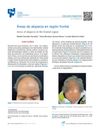 January 2025 in “Revista del Centro Dermatológico Pascua”
 Early diagnosis and treatment can help manage fibrosing alopecia in older women.
 December 2024 in “Journal of the American Academy of Dermatology”
 Dermatologist visits offer safer and more ethical treatment for hair loss than direct-to-consumer platforms.
 November 2024 in “Journal of Education Health and Sport”
 Microneedling, PRP therapy, and pharmacological treatments show promise for hair loss, but more research is needed.
 November 2024 in “SKIN The Journal of Cutaneous Medicine”
 The gummy improved hair growth and reduced shedding in women.
 September 2024 in “Journal of the American Academy of Dermatology”
 Botulinum toxin is not effective or cost-efficient for treating male pattern baldness.
 June 2024 in “Journal of Education, Health and Sport”
 Androgenetic alopecia can be treated with minoxidil and finasteride, requiring long-term use and patient cooperation.
 June 2024 in “Australasian Journal of Dermatology”
 Tofacitinib is safe and effective for treating moderate-to-severe alopecia areata.
 May 2024 in “Journal of cosmetic dermatology”
 "Dutasteride 0.5 mg daily is the most effective treatment for male hair loss."