 2 citations
,
September 2020 in “Hair transplant forum international”
2 citations
,
September 2020 in “Hair transplant forum international” A new tool makes hair transplant surgeries faster by creating multiple cuts in one go.
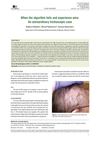 January 2026 in “Forum Dermatologicum”
 Thorough hair examination is crucial for accurate diagnosis and treatment.
 June 2004 in “Dermatologic Surgery”
 Dr. Walter P. Unger suggests that copying a person's natural hair direction and angle during transplants leads to a more natural and fuller appearance.
 March 2022 in “Osaka City University (Osaka City University)”
 Ovariectomy in mice affects hair growth and skin thickness, suggesting potential for obesity treatment research.
 4 citations
,
July 2001 in “Personality and Individual Differences”
4 citations
,
July 2001 in “Personality and Individual Differences” Men with moderate hair loss had the best spatial thinking, and long-term DHT might affect cognition.
 13 citations
,
May 2004 in “Dermatologic Surgery”
13 citations
,
May 2004 in “Dermatologic Surgery” The paper concludes that copying the natural direction and angle of hair in transplants is key for a natural look and doesn't harm hair survival.
January 2020 in “AYBU AVESIS” No significant differences in finger ratios or autism scores were found between acne patients and healthy individuals.
November 2023 in “Pakistan Journal of Medical & Health Sciences” Hair transplants improve hairlines and reduce distress from hair loss.
27 citations
,
March 2018 in “Journal of Experimental Biology” Wool fibre curvature is due to longer orthocortical cells compared to paracortical cells.
3 citations
,
January 2010 Refined open donor harvesting techniques can reduce hair follicle damage in hair restoration surgery.
 3 citations
,
September 2010 in “International Society of Hair Restoration Surgery”
3 citations
,
September 2010 in “International Society of Hair Restoration Surgery” Balancing artistic design and precision improves hair transplant results.
 September 2025 in “Cancer Innovation”
 Clinical trials should use innovative designs and biomarkers to improve precision therapy and patient outcomes.
 1 citations
,
October 2023 in “Veterinary Dermatology”
1 citations
,
October 2023 in “Veterinary Dermatology” Transversal biopsy sections are better than longitudinal sections for diagnosing alopecia X.
 109 citations
,
January 2011 in “Frontiers in Systems Neuroscience”
109 citations
,
January 2011 in “Frontiers in Systems Neuroscience” Choosing the right model order in brain connectivity analysis can affect the detection of differences between healthy individuals and those with seasonal affective disorder.
2 citations
,
June 2024 in “Heliyon” The rare cliff plant Oresitrophe rupifraga has diverse metabolites, with leaves rich in phenolic acids and rhizomes and bulblets high in terpenoids, aiding its growth and potential use.
April 2019 in “The journal of investigative dermatology/Journal of investigative dermatology” Blocking JAK1 or JAK3 helps reverse hair loss in a mouse model of alopecia areata.
 308 citations
,
December 2018 in “PLOS Genetics”
308 citations
,
December 2018 in “PLOS Genetics” The research found that PCOS has common genetic factors regardless of how it is diagnosed and is linked to metabolic and reproductive issues.
The model predicts minoxidil's effectiveness and side effects better than traditional methods.
 February 2026 in “Optics”
 Stretching wool changes its structure and improves fiber alignment.
June 2025 in “Skin Research and Technology”  5 citations
,
November 2017 in “Dermatologica Sinica”
5 citations
,
November 2017 in “Dermatologica Sinica” Transverse scalp biopsies are more accurate for diagnosing non-cicatricial alopecia, but examining both types is best for accuracy.
April 2025 in “Experimental Eye Research” The Oat mouse model shows mild retinal degeneration, useful for testing treatments.
August 2001 in “Dermatologic Surgery” Elliptografting gives better hair appearance and satisfaction than other methods.
 34 citations
,
January 2014 in “International Journal of Trichology”
34 citations
,
January 2014 in “International Journal of Trichology” Polarized dermoscopy is slightly better than nonpolarized for diagnosing hair disorders, with each method having its own strengths.
2 citations
,
July 2023 in “AACE Clinical Case Reports” Ovarian vein sampling can effectively locate ovarian tumors when imaging is unclear.
 1 citations
,
June 2001 in “Annals of Internal Medicine”
1 citations
,
June 2001 in “Annals of Internal Medicine” The conclusion is that maintaining blinding in clinical trials is crucial for reliable results.
 5 citations
,
October 2021 in “Indian Journal of Plastic Surgery”
5 citations
,
October 2021 in “Indian Journal of Plastic Surgery” Semiconical blades and coronal slits minimize vascular damage in hair transplants.
 42 citations
,
September 2007 in “The Journal of Clinical Endocrinology and Metabolism”
42 citations
,
September 2007 in “The Journal of Clinical Endocrinology and Metabolism” The research found that polycystic ovary syndrome (PCOS) has two distinct types, with one having more severe hormone and insulin issues.
9 citations
,
March 2005 in “International Journal of Cosmetic Science” The torsional method effectively evaluates hair damage and the performance of hair care ingredients.