 May 2023 in “Experimental Dermatology”
 RCM and OCT are effective for diagnosing and monitoring hair-related skin diseases but lack standardized protocols and need more research.
April 2023 in “International journal of molecular sciences” People with Collagen VI-related myopathies may often have hair loss and scalp issues.
 March 2023 in “Revista médica Clínica Las Condes”
 The study suggests a possible increase in androgen receptors in patients with frontal fibrosing alopecia, but more research is needed.
 January 2023 in “Skin appendage disorders”
 Hair loss is common in autoimmune diseases and can be an early sign of the condition, often requiring prompt treatment to prevent permanent damage.
 June 2022 in “Indian Dermatology Online Journal”
 A man with total hair loss developed blackhead-like spots on his scalp, possibly because no hair was present to help drain oils.
 January 2022 in “Journal of Dermatology and Dermatologic Surgery”
 Trichoscopy is useful for quickly diagnosing different types of hair loss without needing biopsies.
July 2021 in “Anais brasileiros de dermatologia/Anais Brasileiros de Dermatologia” Monilethrix causes different levels of hair loss in family members.
 January 2017 in “Journal of Investigative Dermatology Symposium Proceedings”
 The 2015 Hair Research Congress concluded that stem cells, maraviroc, and simvastatin could potentially treat Alopecia Areata, topical minoxidil, finasteride, and steroids could treat Frontal Fibrosing Alopecia, and PTGDR2 antagonists could also treat alopecia. They also found that low-level light therapy could help with hair loss, a robotic device could assist in hair extraction, and nutrition could aid hair growth. They suggested that Alopecia Areata is an inflammatory disorder, not a single disease, indicating a need for personalized treatments.
June 2022 in “Our Dermatology Online” Trichoscopy is essential for early detection and monitoring of female-pattern hair loss.
December 2021 in “2021 International Conference on Electronic Information Technology and Smart Agriculture (ICEITSA)” Chemical dyes damage hair's internal structure more than perming, as shown by a special imaging technique.
 16 citations
,
January 2010 in “American Journal of Neuroradiology”
16 citations
,
January 2010 in “American Journal of Neuroradiology” Specific brain and bone imaging findings can help diagnose Trichothiodystrophy.
 12 citations
,
January 2014 in “Annals of Dermatology”
12 citations
,
January 2014 in “Annals of Dermatology” Modified superoxide dismutase may trigger an autoimmune response in alopecia areata.
 56 citations
,
April 2015 in “American journal of medical genetics. Part A”
56 citations
,
April 2015 in “American journal of medical genetics. Part A” Patients with Bohring-Opitz syndrome and ASXL1 mutations need regular kidney ultrasounds to check for tumors.
7 citations
,
June 2019 in “Coloration Technology” Translucent keratin films are better for testing hair dyes.
1 citations
,
July 2017 in “Microscopy and Microanalysis” Iron oxide nanoparticles mainly enter the skin through hair follicles and sebocytes, not the dermis.
11 citations
,
September 1973 in “Canadian Journal of Botany” Calcium is essential for normal root and root hair growth in oats.
 25 citations
,
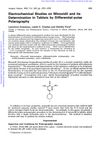
January 1983 in “Analyst”
25 citations
,
January 1983 in “Analyst” Method measures minoxidil in tablets accurately and easily.
 September 2018 in “Cosmetics”
 Inositol and arginine solutions improve hair follicle health and turnover.
January 2019 in “Florida International University Digital Commons (Florida International University)” TOF-SIMS improved chemical mapping in cells, confirming gunshot residue, tracking anti-tumor drugs, and identifying molecules in mosquitoes and wounds.
21 citations
,
October 2023 in “The Journal of Physical Chemistry C” Phosphates strongly attach to cerium dioxide nanoparticles, showing specific spectral patterns.
October 2014 in “Journal of Nutrition & Food Sciences” Higher copper and lower chromium and selenium in hair are linked to insulin resistance in visceral-obese adults.
9 citations
,
January 2011 in “Journal of X-ray science and technology” Perming and bleaching damage hair differently, with bleached hair having more cysteic acid in the cuticle.
January 2024 in “Kafkas Universitesi Veteriner Fakultesi Dergisi” A specific genetic variation affects wool quality in sheep.
 June 2022 in “Research Square (Research Square)”
 Lipid peroxidation may worsen social behavior issues in autism.
1 citations
,
May 2013 in “Oncology Times” ODAC members faced intense pressure but prioritized scientific evidence in drug approval decisions.
 April 2018 in “Journal of Investigative Dermatology”
 Nonmelanoma skin cancers have higher levels of certain osteopontin variants than normal skin.
 January 2023 in “Austin Journal of Obstetrics and Gynecology”
 PCOS affects many young women in KSA, with mild cases being most common.
5 citations
,
May 2017 in “Journal of dermatological science” The combined treatment effectively managed severe skin issues in Olmsted syndrome.
 4 citations
,
July 2018 in “The Journal of Allergy and Clinical Immunology: In Practice”
4 citations
,
July 2018 in “The Journal of Allergy and Clinical Immunology: In Practice” Four new substances—minoxidil, ferrimanitol ovalbumin, clarithromycin, and glucosamine-hydrochloride—can cause occupational asthma.