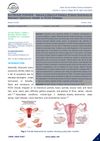
 January 2020 in “Asian Journal of Basic Science & Research”
 Nutrease powder, a high-protein, low-carb supplement, can help manage Polycystic Ovary Syndrome symptoms, regulate periods, improve ovulation, and restore fertility.
 July 2019 in “International Journal of Advance Research in Community Health Nursing”
 Raising awareness about PCOS in young females can help prevent long-term health issues.
 June 2019 in “Journal of Akhtar Saeed Medical & Dental College”
 Prolactin levels are higher in women with hirsutism but don't relate to its severity.
 May 2019 in “Paediatrics and child health”
 The document concludes that personalized treatment, including lifestyle changes and medication, is essential for managing PCOS in teenagers, while also addressing their psychological well-being.
 January 2019 in “Current research in diabetes & obesity journal”
 A woman with type 2 diabetes developed alopecia areata, suggesting a link between the two autoimmune conditions.
 January 2019 in “Springer eBooks”
 Acne is linked to inflammation and insulin resistance, and is associated with various syndromes that require different treatments.
 January 2019 in “ISGE series”
 The document concludes that effectively managing PCOS requires a multifaceted approach.
 November 2018 in “International Journal of Current Pharmaceutical Research”
 PCOS is a hormonal disorder causing symptoms like irregular periods and acne, and increases the risk of diabetes and heart disease.
 October 2018 in “International journal of reproduction, contraception, obstetrics and gynecology”
 Higher testosterone levels in Nigerian women with PCOS are linked to glucose disorders like diabetes.
 October 2018 in “International journal of reproduction, contraception, obstetrics and gynecology”
 Most adult women with PCOS in Port Harcourt, Nigeria, have high levels of bad fats in their blood, especially younger women.
 October 2018 in “Springer eBooks”
 The document concludes that various hair disorders have different treatments, including medication, surgery, and addressing underlying causes.
 February 2018 in “InTech eBooks”
 Diagnosing and treating PCOS is complex due to differing criteria and requires a team approach.
 July 2017 in “Contemporary Endocrinology”
 The document concludes that patient outcomes for Congenital Adrenal Hyperplasia are often not ideal because of poor management and a need for better diagnosis and treatment methods.
The conclusion is that a more comprehensive and precise approach is needed for diagnosing PCOS to address its broader health risks.
 April 2017 in “European Psychiatry”
 Women with schizophrenia on atypical antipsychotics are more likely to have polycystic ovarian syndrome (PCOS) than women without schizophrenia.
 April 2017 in “European Psychiatry”
 Some antidepressants can cause emotional numbness and other unusual side effects.
 January 2017 in “Springer eBooks”
 The document explains various skin conditions and their treatments.
The conclusion is that endocrinology significantly impacts medicine with various common medications used for treatment.
 February 2016 in “Evidence Based Women Health Journal (Online)”
 Women with PCOS had higher SRAGE levels, possibly linked to BMI, not PCOS.
 January 2016 in “Research Explorer (The University of Manchester)”
 Activating the Eda/Edar pathway improves wound healing by enhancing hair follicle growth.
 December 2015 in “JAMA Dermatology”
 Dermatologists can help diagnose endocrine disorders like PCOS and metabolic syndrome by looking at skin symptoms.
 December 2015 in “Kosin Medical Journal”
 PCOS treatment should address both symptoms and metabolic risks, starting with lifestyle changes and possibly including medication.
 August 2015 in “Postgraduate obstetrics & gynecology”
 Women with PCOS often have insulin resistance, abnormal lipid levels, and a higher risk of diabetes and heart disease; lifestyle changes and medication like metformin can help manage these risks.
 August 2015 in “Postgraduate obstetrics & gynecology”
 Women with PCOS often have metabolic issues like insulin resistance and a higher risk of diabetes and abnormal lipid levels.
 July 2015 in “Cambridge University Press eBooks”
 The document concludes that careful history and physical exams are crucial for accurately diagnosing polycystic ovary syndrome and distinguishing it from other similar conditions.
 January 2015 in “International journal of reproduction, contraception, obstetrics and gynecology”
 Women with PCOS often have irregular periods, a higher chance of infertility and miscarriages, and may improve fertility with lifestyle changes and treatment.
 October 2014 in “Journal of Minimally Invasive Gynecology”
 Genetic testing for cancer risk can lead to early and life-saving treatments in people without symptoms.
 September 2014 in “Springer eBooks”
 Men and women experience skin aging differently due to changes in sex hormone levels with age.
 August 2013 in “Fertility and Sterility”
 High levels of fatty acids are linked to increased androgen production and inflammation in women with PCOS, which may affect IVF outcomes.
 August 2013 in “Fertility and Sterility”
 Hair loss is common in women with PCOS and is linked to symptoms like acne and excess hair but not to worse metabolic health.