22 citations
,
September 2003 in “Journal of Investigative Dermatology” New mutations in the EBP gene cause CDPX2, affecting bones, skin, eyes, and hair, with females generally less affected than males.
 33 citations
,
May 2006 in “Journal of Investigative Dermatology”
33 citations
,
May 2006 in “Journal of Investigative Dermatology” PTHrP and its receptor can control blood vessel growth and hair development in mouse skin.
12 citations
,
December 2013 in “Immunological Investigations” The SNP rs6457452 is linked to a higher risk of alopecia areata in Koreans.
 June 2023 in “Research Square (Research Square)”
 A higher genetic risk score increases the chance of getting benign prostatic hyperplasia and affects treatment outcomes in Han Chinese men.
 May 2025 in “Frontiers in Veterinary Science”
 Cashmere quality differences are due to gene expression variations affecting hair development and adaptation to cold.
 5 citations
,
September 2013 in “The Journal of Dermatology”
5 citations
,
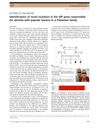
September 2013 in “The Journal of Dermatology” Researchers found a new mutation in the HR gene causing hair loss and skin bumps in a Pakistani family.
October 2021 in “Postepy Dermatologii I Alergologii” No significant link was found between the studied genes and female hair loss in the Polish population.
ANE syndrome is caused by a mutation in the RBM28 protein that disrupts ribosome assembly.
1 citations
,
January 2022 in “Annals of Dermatology” A new mutation in the MBTPS2 gene causes a mild form of IFAP syndrome.
7 citations
,
August 2017 in “Genetic testing and molecular biomarkers” A new mutation in the FLCN gene linked to Birt-Hogg-Dube syndrome was found, suggesting people with certain lung collapse should be tested for this mutation and screened for kidney and colon cancer.
5 citations
,
March 2021 in “F1000Research” A specific gene variation increases the risk of high uric acid and cholesterol in young Mexican males.
150 citations
,
June 1999 in “Oncogene” 13 citations
,
June 2017 in “Biochimie open” All five human steroid 5α-reductase enzymes are found in the endoplasmic reticulum.

Genetic factors in PCOS are complex, with potential influences from the MC4R gene.
FGF5 spliceosomes inhibit rabbit hair growth by affecting gene expression.

The number of CAG repeats in the androgen receptor gene doesn't significantly affect female pattern hair loss in the Han Chinese population.
55 citations
,
December 2021 in “BMC Veterinary Research” Certain genes in Iranian sheep are linked to wool production and heat adaptation.
 14 citations
,
December 2010 in “Journal of human genetics”
14 citations
,
December 2010 in “Journal of human genetics” A Japanese patient with IFAP syndrome had a severe MBTPS2 gene mutation but showed milder symptoms than previously observed cases.
6 citations
,
January 2010 in “Journal of Biochemical and Molecular Toxicology” The ID2 gene can help distinguish between sensitizers and irritants in skin cells.
12 citations
,
September 2002 in “Journal of Neurochemistry” Pregnancy-related hormone changes affect Y1 receptor gene expression in mice.
 42 citations
,
February 1998 in “The Journal of Steroid Biochemistry and Molecular Biology”
42 citations
,
February 1998 in “The Journal of Steroid Biochemistry and Molecular Biology” PNU 157706 is a more effective treatment than finasteride for conditions caused by DHT, like enlarged prostate and hair loss.
11 citations
,
October 2014 in “Gene” Researchers identified a new variant of the FGF5 gene in sheep that affects hair length.
 5 citations
,
January 2020 in “Bioscience Reports”
5 citations
,
January 2020 in “Bioscience Reports” Certain changes in the VEGF gene can increase or decrease the risk of polycystic ovary syndrome.
April 1996 in “Journal of Dermatological Science” 211 citations
,
February 1994 in “Proceedings of the National Academy of Sciences” Too much parathyroid hormone-related protein in skin disrupts hair growth in mice.
 98 citations
,
June 2001 in “Journal of biological chemistry/The Journal of biological chemistry”
98 citations
,
June 2001 in “Journal of biological chemistry/The Journal of biological chemistry” A cluster of sulfur-rich hair protein genes was found on chromosome 17.
July 2005 in “The American Journal of Human Genetics” The AR gene is linked to male-pattern baldness, TNFSF4 to heart disease, SLC19A3 to BBGD, MCT8 to a syndrome, and segmental duplications to genetic variation.
27 citations
,
April 2004 in “Biochemical and Biophysical Research Communications” Two new gene clusters important for hair formation were found on human chromosome 11.
12 citations
,
January 2000 in “Biochemical and Biophysical Research Communications” The study mapped keratin 15 and 19 genes, aiding future genetic disorder research.
January 2024 in “Biomarker Insights” Certain genetic variants may increase the risk of developing PCOS.