 19 citations
,
April 2015 in “Developmental Dynamics”
19 citations
,
April 2015 in “Developmental Dynamics” The conclusion is that skin and hair patterns are formed by a mix of cell activities, molecular signals, and environmental factors.
 16 citations
,
March 2016 in “The journal of investigative dermatology/Journal of investigative dermatology”
16 citations
,
March 2016 in “The journal of investigative dermatology/Journal of investigative dermatology” The Notch signaling pathway helps in mouse hair development through a noncanonical mechanism that does not rely on RBPj or transcription.
 May 2026 in “Journal of Health and Allied Sciences NU”
 Optimized culture conditions improve human epidermal stem cell growth for skin regeneration.
August 2025 in “BMC Genomics” Certain genes contribute to stronger hooves in barefoot racing horses.
 June 2023 in “British Journal of Dermatology”
 Coinheritance of BRCA2 and CYLD genes may lead to new treatment options for certain cancers.

The document concludes that the development of certain tumors is influenced by genetic background and that a specific gene modification can lead to tumor regression and reduced growth.
 February 2019 in “bioRxiv (Cold Spring Harbor Laboratory)”
 The gene Prss53 affects hair shape and bone development in rabbits.
Cornification is the process where living skin cells die to create a protective barrier, and problems with it can cause skin diseases.
 April 2018 in “Journal of Investigative Dermatology”
 Aging reduces skin cell renewal and defense against germs due to TGFbeta, but blocking TGFbeta could help restore these functions.
 April 2017 in “Journal of Investigative Dermatology”
 Deleting the CRIF1 gene in mice disrupts skin and hair formation, certain proteins affect hair growth, a new compound may improve skin and hair health, blood cell-derived stem cells can create skin-like structures, and hair follicle stem cells come from embryonic cells needing specific signals for development.
 September 2016 in “Journal of dermatological science”
 Adult skin cells can be used to create new hair in a lab.
 April 2016 in “Journal of Investigative Dermatology”
 Boosting HGF signaling could improve the creation of hair follicles in lab-made skin.
 March 2015 in “Plastic and reconstructive surgery”
 Human skin has multiple layers and functions, with key roles in protection, temperature control, and appearance.
 January 2014 in “Journal of Investigative Dermatology”
 Proteins like aPKC and PDGF-AA, substances like adenosine and ATP, and adipose-derived stem cells all play important roles in hair growth and health, and could potentially be used to treat hair loss and skin conditions.
 January 2012 in “Elsevier eBooks”
 New treatments for skin and hair repair show promise, but further improvements are needed.
 165 citations
,
June 2007 in “European Journal of Cell Biology”
165 citations
,
June 2007 in “European Journal of Cell Biology” Hair follicle stem cells are key for hair and skin regeneration, can be reprogrammed, and have potential therapeutic uses, but also carry a risk of cancer.
 44 citations
,
January 2005 in “Dermatology”
44 citations
,
January 2005 in “Dermatology” Hair problems can be caused by genetics or the environment, and treatment should focus on the cause and reducing hair damage.
 41 citations
,
September 2012 in “Cellular and Molecular Life Sciences”
41 citations
,
September 2012 in “Cellular and Molecular Life Sciences” MicroRNAs play a crucial role in skin and hair health, affecting everything from growth to aging, and could potentially be used in treating skin diseases.
 182 citations
,
August 2016 in “Development”
182 citations
,
August 2016 in “Development” ATP-dependent chromatin-remodeling complexes are crucial for gene regulation, cell differentiation, and organ development in mammals.
 143 citations
,
September 2008 in “Experimental gerontology”
143 citations
,
September 2008 in “Experimental gerontology” Skin aging is due to impaired stem cell mobilization or fewer responsive stem cells.
 129 citations
,
May 2015 in “Cell Stem Cell”
129 citations
,
May 2015 in “Cell Stem Cell” Different types of stem cells exist within individual skin layers, and they can adapt to damage, transplantation, or tumor growth. These cells are regulated by their environment and genetic factors. Tumor growth is driven by expanding, genetically altered cells, not long-lived mutant stem cells. There's evidence of cancer stem cells in skin tumors. Other cells, bacteria, and genetic factors help maintain balance and contribute to disease progression. A method for growing mini organs from single cells has been developed.
 119 citations
,
November 2014 in “Trends in Cell Biology”
119 citations
,
November 2014 in “Trends in Cell Biology” Fibroblast growth factor receptor signaling controls cell development and repair, and its malfunction can cause disorders and cancer, but it also offers potential for targeted therapies.
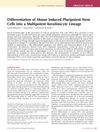 101 citations
,
December 2010 in “The journal of investigative dermatology/Journal of investigative dermatology”
101 citations
,
December 2010 in “The journal of investigative dermatology/Journal of investigative dermatology” Scientists turned mouse stem cells into skin cells that can grow into skin layers and structures.
 86 citations
,
December 2001 in “Experimental dermatology”
86 citations
,
December 2001 in “Experimental dermatology” Mutant mice help researchers understand hair growth and related genetic factors.
 82 citations
,
March 2012 in “Development”
82 citations
,
March 2012 in “Development” Drosha and Dicer are essential for hair follicle health and preventing DNA damage in skin cells.
 71 citations
,
February 2020 in “Journal of Translational Medicine”
71 citations
,
February 2020 in “Journal of Translational Medicine” Progress has been made in skin and nerve regeneration, but more research is needed to improve methods and ensure safety.
 66 citations
,
January 2017 in “Acta dermato-venereologica”
66 citations
,
January 2017 in “Acta dermato-venereologica” Isotretinoin's effects and side effects, like birth defects and depression, might be due to it causing cell death in various cells.
 57 citations
,
January 2014 in “Cold Spring Harbor Perspectives in Medicine”
57 citations
,
January 2014 in “Cold Spring Harbor Perspectives in Medicine” Skin stem cells maintain and repair the outer layer of skin, with some types being essential for healing wounds.
 52 citations
,
October 2012 in “Journal of Dermatological Science”
52 citations
,
October 2012 in “Journal of Dermatological Science” The document concludes that mouse models are crucial for studying hair biology and that all mutant mice may have hair growth abnormalities that require detailed analysis to identify.
 40 citations
,
January 2016 in “PLoS ONE”
40 citations
,
January 2016 in “PLoS ONE” Shorter daylight increases hair growth in Cashmere goats.