 16 citations
,
December 2016 in “Skin appendage disorders”
16 citations
,
December 2016 in “Skin appendage disorders” Nickel, cobalt, balsam of Peru, fragrance mix, carba mix, and propylene glycol are common allergens causing scalp contact dermatitis.
 May 2026 in “Scientific and Technical Bulletin оf State Scientific Research Control Institute of Veterinary Medical Products and Fodder Additives аnd Institute of Animal Biology”
 Zinc carbonate nanoparticles are not irritating or absorbed by the skin.
 2 citations
,
February 2023 in “Research Square (Research Square)”
2 citations
,
February 2023 in “Research Square (Research Square)” The scaffold effectively prevents melanoma relapse and aids wound healing.
April 2017 in “Journal of Investigative Dermatology” Certain compounds can protect hair cells from aging and promote growth.
 208 citations
,
July 2001 in “Journal of The American Academy of Dermatology”
208 citations
,
July 2001 in “Journal of The American Academy of Dermatology” Pregnancy can cause various skin changes and diseases, with PUPPP being the most common skin condition specific to pregnancy.
August 2013 in “Toxicology letters”  September 2015 in “British Journal of Dermatology”
 Most clinicians follow discharge guidelines, many lupus patients don't use sunscreen regularly, dithranol is effective for psoriasis, biopsy methods should be based on lesion type, voriconazole may raise skin cancer risk, a new scale can help diagnose female hair loss early, and most melanomas may develop from existing moles.
Certain biomarkers can help distinguish between irritant and allergic contact dermatitis.
 8 citations
,
August 2015 in “Journal of dermatological science”
8 citations
,
August 2015 in “Journal of dermatological science” Rhododendrol in skin-whitening products can cause skin depigmentation and immune reactions.
5 citations
,
December 2018 in “Annals of plastic surgery” Some burn patients grew extra hair in areas treated with pressure garments or silicone.
 June 2026 in “HAL (Le Centre pour la Communication Scientifique Directe)”
 SH‑1 is safer for cosmetic use than PP405.
 August 2022 in “Journal of Cosmetic Dermatology”
 The document's conclusion cannot be provided because the document is not readable.
April 2011 in “Reactions Weekly”  4 citations
,
June 2005 in “British Journal of Dermatology”
4 citations
,
June 2005 in “British Journal of Dermatology” HPV 60 may cause cysts and warts on the face, not just hands and feet.
 1 citations
,
January 1997 in “Skin research”
1 citations
,
January 1997 in “Skin research” Hinokitiol and pantothenylethylether in hair products can cause strong allergic reactions.
2 citations
,
September 2014 in “International Journal of Dermatology” Sodium valproate can worsen psoriasis-like skin conditions.
 January 2013 in “Journal of dermatology”
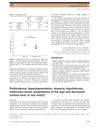
 A new medical syndrome may include skin changes, hair loss, sweating issues, bone malformations, leg swelling, and low cortisol.
 1 citations
,
March 2022 in “Journal of burn care & research”
1 citations
,
March 2022 in “Journal of burn care & research” Eyebrow tinting can cause chemical burns and increased awareness of its risks is needed.
May 2023 in “Indian Journal of Dermatology” BCG site reactions after COVID-19 mRNA vaccination are mild, temporary, and likely under-reported.
 April 2017 in “Journal of Investigative Dermatology”
 Psoriasis patients experience moderate functional impairment related to disease severity and less satisfaction.
 February 2003 in “Dermatology Times”
 Pay attention to early warnings.
 30 citations
,
September 2017 in “Environmental health perspectives”
30 citations
,
September 2017 in “Environmental health perspectives” Exposure to Corexit dispersants during the oil spill cleanup was linked to increased respiratory and eye irritation symptoms in workers.
2 citations
,
March 2023 in “Frontiers in Medicine” Proper cleansing can resolve dermatosis neglecta, which may indicate underlying psychiatric issues.
August 2024 in “Case Reports in Ophthalmology” Older patients with new retinal lesions may have cancer, and local radiation might not stop it from spreading.
35 citations
,
February 1993 in “International Journal of Dermatology” Cosmetic procedures can trigger pemphigus, an autoimmune disease.
 35 citations
,
January 2009 in “Indian Journal of Dermatology, Venereology and Leprology”
35 citations
,
January 2009 in “Indian Journal of Dermatology, Venereology and Leprology” Older adults commonly experience wrinkles, itchy skin, psoriasis, fungal infections, skin growths, grey hair, hair loss, and nail ridging, but no skin cancer was found in this group.
29 citations
,
December 1998 in “European Respiratory Journal” Hair bleach can make rabbit airways more sensitive.
 8 citations
,
November 2020 in “Nature Communications”
8 citations
,
November 2020 in “Nature Communications” Adult stem cells with Tp63 can form hair and skin cells when placed in new skin, showing they have hidden abilities for skin repair.
The document listed medical job ads and guidelines for breast cancer screening.
January 2018 in “Acta dermato-venereologica”