Defective nuclear transport may cause gene expression changes in Progeria.
 May 2026 in “International Journal of Molecular Sciences”
 The new human placental extract may help prevent hair graying and reduce nerve pain from chemotherapy.
 51 citations
,
July 2010 in “Trends in Endocrinology and Metabolism”
51 citations
,
July 2010 in “Trends in Endocrinology and Metabolism” Prolactin may play a significant role in skin and hair health and could be a target for treating skin and hair disorders.
5 citations
,
June 2011 in “InTech eBooks” High S100B protein levels indicate poor survival in advanced melanoma.
VDAC2 promotes cell death in cashmere goat hair follicles through the P53 pathway.
 November 2023 in “The journal of investigative dermatology/Journal of investigative dermatology”
 Removing MCPIP1 from myeloid cells in mice leads to hair loss and prevents skin tumors but causes pigmented spots.
July 2022 in “Journal of Investigative Dermatology”  December 2024 in “Journal of Cosmetic Dermatology”
 ME1 and PPAR signaling may influence hair loss in androgenetic alopecia.
114 citations
,
July 2003 in “PubMed” Lack of KSR1 stops certain skin tumors in mice.
85 citations
,
March 2008 in “Journal of Cell Science” The mutation causing Hutchinson-Gilford progeria syndrome leads to severe skin problems and early death in mice.
 August 2016 in “Journal of Investigative Dermatology”
 The enzyme CD73 helps control human hair growth and could be targeted to treat hair growth disorders.
18 citations
,
December 1992 in “Journal of Cutaneous Pathology” Skin tumors and normal skin structures have different lectin-binding patterns.
 September 2016 in “Journal of Dermatological Science”
 The protein aPKCλ is crucial for keeping hair follicle stem cells inactive and for hair growth and regeneration.
 May 2011 in “Value in Health”
 CP-690,550 significantly reduced itching in patients with moderate-to-severe plaque psoriasis.
Keratinocytes can reverse the effects of the GNAQ oncogene, inhibiting melanoma cell growth.
April 2026 in “Research Square” 85 citations
,
May 2009 in “Hippocampus” Progesterone helps adult male mice grow more neurons and improves memory.
 November 2022 in “Journal of Investigative Dermatology”
 Scientists found a new type of skin cell that could help with skin repair and these cells work better with a certain protein.
 20 citations
,
May 2013 in “International Journal of Molecular Medicine”
20 citations
,
May 2013 in “International Journal of Molecular Medicine” Researchers found a new gene variant linked to a rare bone disease, which doesn't always cause symptoms in carriers.
GPC1 is important for blood vessel growth in hair follicles and could help treat hair loss.
64 citations
,
March 2004 in “The journal of investigative dermatology/Journal of investigative dermatology” GPRC5D is linked to the formation of hair, nails, and certain tongue areas.
69 citations
,
October 2014 in “Stem Cells” PDGF-D boosts stem cell growth and movement, enhancing hair regeneration.

Newly designed proteins can effectively degrade specific proteins in cells, offering a promising alternative for targeted protein degradation.
 1 citations
,
May 2022 in “Голова и шея.”
1 citations
,
May 2022 in “Голова и шея.” p53 protein may help protect or kill neurons under stress.
43 citations
,
March 2017 in “Drug Design Development and Therapy” The new nanoparticles could improve melanoma treatment by working better than current options.
 1 citations
,
January 2013 in “The Journal of Dermatology”
1 citations
,
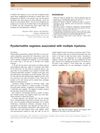
January 2013 in “The Journal of Dermatology” A skin condition called pyodermatitis vegetans was found in a patient with multiple myeloma for the first time.
1 citations
,
January 2020 in “Indian journal of dermatology, venereology, and leprology” CD117 and platelet-derived growth factor receptor α may play a role in alopecia areata.
 30 citations
,
February 2017 in “Histochemistry and Cell Biology”
30 citations
,
February 2017 in “Histochemistry and Cell Biology” TPA promotes hair growth by increasing stem cell activity and activating specific cell signals.
 4 citations
,
October 2022 in “International Journal of Molecular Sciences”
4 citations
,
October 2022 in “International Journal of Molecular Sciences” Thy-1 protein helps improve blood flow and wound healing in the skin.
22 citations
,
August 2020 in “Cells” TGM3 is important for skin and hair structure and may help diagnose cancer.