 11 citations
,
September 2012 in “The journal of investigative dermatology/Journal of investigative dermatology”
11 citations
,
September 2012 in “The journal of investigative dermatology/Journal of investigative dermatology” A mutation in the KRT71 gene causes a hair disorder by disrupting hair follicle structure and texture.
April 2016 in “Journal of the American Academy of Dermatology” Treatment improved some symptoms but not all.
 May 2026 in “Repository of the University of Ljubljana (University of Ljubljana)”
 Chemical exfoliants, especially with glycolic acid, are more effective for keratosis pilaris.
July 1974 in “Archives of dermatology” The woman's widespread skin condition did not improve despite various treatments.
5 citations
,
August 2001 in “International Journal of Dermatology” A 20-year-old had hair loss and skin issues from lichen planopilaris starting at age 10.
9 citations
,
September 2019 in “PLoS ONE” K42 and K124 keratins are only found in horse hoof lamellae.
13 citations
,
February 1980 in “Journal of Cutaneous Pathology” Rubbing seborrheic keratoses causes specific skin changes and may link them to hair follicles.
 April 2023 in “Journal of Investigative Dermatology”
 The document's conclusion cannot be provided because the content is not accessible.
18 citations
,
May 2006 in “Journal of Cutaneous Medicine and Surgery” Linear lichen planopilaris can affect the trunk, not just the face.
 5 citations
,
July 2014 in “Actas dermo-sifiliográficas/Actas dermo-sifiliográficas”
5 citations
,
July 2014 in “Actas dermo-sifiliográficas/Actas dermo-sifiliográficas” Latanoprost eye drops caused excessive hair growth and eyelash whitening in a woman.
 2 citations
,
August 2012 in “Journal of the American Academy of Dermatology”
2 citations
,
August 2012 in “Journal of the American Academy of Dermatology” Two patients with the same genetic mutation had both blistering skin and easily pulled out hair.
51 citations
,
March 1990 in “Journal of Investigative Dermatology” September 2016 in “Journal of Dermatological Science” Polarizing light microscopy can easily and reliably diagnose congenital keratinizing disorders like Netherton syndrome.
November 2018 in “Journal of dermatology & cosmetology” The document reports the first case of a rare skin condition in Colombia, the 19th case worldwide.
3 citations
,
January 1989 in “The Nishinihon Journal of Dermatology” A hair cyst can become cancerous, showing specific keratins from the hair sheath.
5 citations
,
March 1981 in “PubMed” A girl grew extra hair in areas where she had insect bites.
11 citations
,
January 1977 in “Archives of dermatological research” Mouse tail skin has different keratinization near hair follicles and scales.
2 citations
,
May 2022 in “International Journal of Trichology” Brazilian Keratin Treatment can cause skin reactions like redness and scaling, possibly due to formaldehyde.
3 citations
,
December 2013 in “American Journal of Dermatopathology” A rare skin growth in a baby was successfully removed without coming back.
1 citations
,
January 2013 in “Indian journal of dermatology, venereology, and leprology” A girl inherited excessive body hair from her mother and grandmother.
10 citations
,
April 2004 in “Journal of the American Academy of Dermatology” Localized hair growth and fat loss may share a common cause in lupus panniculitis.
23 citations
,
July 2003 in “Journal of Investigative Dermatology” Genetic testing for hairless gene mutations is crucial to correctly diagnose and treat atrichia with papular lesions.
50 citations
,
July 2008 in “British Journal of Dermatology” 4 citations
,
February 2018 in “Annales de Dermatologie et de Vénéréologie” Onychomatricome is a benign nail tumor with specific dermoscopic features that help distinguish it from cancer.
18 citations
,
July 2001 in “International Journal of Dermatology” A 12-year-old boy's hair loss and skin issues improved significantly with medication.
 6 citations
,
September 1990 in “International Journal of Gynecology & Obstetrics”
6 citations
,
September 1990 in “International Journal of Gynecology & Obstetrics” The skin condition PUPP usually gets better on its own after giving birth and is unlikely to happen again in future pregnancies.
54 citations
,
September 1999 in “PubMed” K15 staining helps distinguish basal cell carcinoma from trichoepithelioma.
47 citations
,
February 2014 in “Journal of Cutaneous Pathology” Matrical tumors share a common growth mechanism involving the Wnt pathway and consistent PHLDA1 expression.
 13 citations
,
July 2007 in “Pediatric dermatology”
13 citations
,
July 2007 in “Pediatric dermatology” Vitamin D3 ointment improved skin bumps on the chin but didn't give lasting results after stopping use.
 1 citations
,
January 2015 in “Actas dermo-sifiliográficas/Actas dermo-sifiliográficas”
1 citations
,
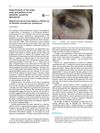
January 2015 in “Actas dermo-sifiliográficas/Actas dermo-sifiliográficas” Latanoprost eye drops caused excessive cheek hair growth and eyelash whitening in a woman.