1 citations
,
May 2022 in “International journal of molecular sciences” Faulty LEF1 activation causes faster skin cell differentiation in premature aging syndrome.
11 citations
,
January 2021 in “British Journal of Dermatology” Mutations in the AP1B1 gene cause a new syndrome with skin, hearing, and developmental issues.
101 citations
,
June 2003 in “The EMBO Journal” Phospholipase Cδ1 is crucial for normal skin and hair development.
3 citations
,
August 2017 in “Clinical case reports” A rare skin condition causes red and dark patches on the face and limbs.
Pseudopelade is likely an independent disease due to its distinct features.
 April 2017 in “Journal of Investigative Dermatology”
 Scientists can control how skin stem cells divide by using different treatments.
April 2017 in “The journal of investigative dermatology/Journal of investigative dermatology” A girl with excessive hair growth had a genetic change on chromosome 17 that reduced the activity of two genes linked to hair growth.
 8 citations
,
January 2012 in “International journal of polymer analysis and characterization/IJPAC. International journal of polymer analysis and characterization/IJPAC. International journal of analysis and characterization”
8 citations
,
January 2012 in “International journal of polymer analysis and characterization/IJPAC. International journal of polymer analysis and characterization/IJPAC. International journal of analysis and characterization” Hydrogenated palm oil repairs and conditions damaged hair by preventing swelling.
August 1993 in “Journal of Dermatological Science”  7 citations
,
October 2006 in “Medical hypotheses”
7 citations
,
October 2006 in “Medical hypotheses” UV light might cause excessive hair growth by increasing PGE2 in the skin.
18 citations
,
January 2018 in “BMC dermatology” A new mutation in the PLEC gene causes a rare condition with skin blistering, muscle weakness, and hair loss.
 April 2016 in “Journal of Investigative Dermatology”
 Double-stranded RNA activates a pathway that causes a skin protein to be expressed in the wrong place.
1 citations
,
April 2011 in “Clinical Kidney Journal” A benign skin tumor grew quickly in a dialysis patient and was surgically removed.
9 citations
,
February 2016 in “Anatomical Science International” Hair proteins change location and structure as hair cells mature.
30 citations
,
January 2013 in “Human Mutation” A mutation in the HOXC13 gene causes hair and nail problems in a Syrian family.
July 2021 in “Authorea (Authorea)” Graham-Little Piccardi Lassueur Syndrome is a rare skin condition with specific hair loss and skin symptoms.
2 citations
,
January 2018 in “Indian dermatology online journal” A homeopathic antidandruff shampoo caused severe hair matting in a girl.
January 2022 in “The Pan African medical journal” Hypertrichosis causes excessive hair growth and needs psychological support due to its impact on self-esteem.
277 citations
,
October 1982 in “The Journal of Cell Biology” Basal-cell epitheliomas and the pilosebaceous tract share a unique keratin, distinguishing them from other skin areas.
 2 citations
,
July 2022 in “Cureus”
2 citations
,
July 2022 in “Cureus” A rare skin disorder affecting the face was found in a 28-year-old Saudi man.
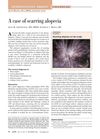 December 2005 in “Journal of the American Academy of Physician Assistants”
 The woman was diagnosed with lichen planopilaris and can be treated with corticosteroids.
14 citations
,
January 1998 in “Dermatology” Polythelia pilosa is a type of extra breast tissue with hair and should be classified as such.
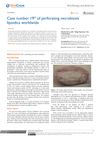 2 citations
,
January 2018
2 citations
,
January 2018 The document reports the 19th global case of a rare skin condition in a patient from Colombia.
36 citations
,
January 2000 in “British journal of dermatology/British journal of dermatology, Supplement” A mother and daughter had severe skin, hair, and eye issues linked to IFAP.
20 citations
,
January 2002 in “Laboratory Animals” Mutations in the hairless gene cause hair loss and skin cysts in rhesus macaques.
June 2023 in “British Journal of Dermatology” Facial lichen planopilaris may be triggered by shaving and mustard oil, and early detection is crucial for better treatment outcomes.
61 citations
,
January 2002 in “American Journal of Clinical Dermatology”  7 citations
,
March 2020 in “PloS one”
7 citations
,
March 2020 in “PloS one” α-parvin is necessary for skin and hair growth and for the correct orientation of skin cells.
 February 2026 in “Cosmetics”
 Perifollicular elastolysis is poorly understood, with limited treatment options and inconsistent results.