 24 citations
,
May 2019 in “PLOS ONE”
24 citations
,
May 2019 in “PLOS ONE” The African spiny mouse can fully regenerate its muscle without scarring, unlike the common house mouse.
 10 citations
,
August 2023 in “Developmental cell”
10 citations
,
August 2023 in “Developmental cell” The research maps the complex development of early mouse skin, identifying diverse cell types and their roles in forming skin layers and structures.
 8 citations
,
July 2024 in “Scientific Reports”
8 citations
,
July 2024 in “Scientific Reports” Salicylate helps wounds heal without scarring in mice.
 3 citations
,
December 2022 in “bioRxiv (Cold Spring Harbor Laboratory)”
3 citations
,
December 2022 in “bioRxiv (Cold Spring Harbor Laboratory)” The research reveals how early embryonic mouse skin develops from simple to complex structures, identifying various cell types and their roles in this process.
35 citations
,
October 2014 in “Wound Repair and Regeneration” The model helps understand scar contraction and develop new treatments.
 276 citations
,
December 2017 in “Journal of Dermatological Science”
276 citations
,
December 2017 in “Journal of Dermatological Science” The document concludes that mouse models are helpful but have limitations for skin wound healing research, and suggests using larger animals and genetically modified mice for better human application.
 48 citations
,
May 2015 in “NPJ microgravity”
48 citations
,
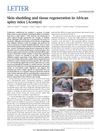
May 2015 in “NPJ microgravity” A 3-month stay in space causes skin thinning, disrupts hair growth, and changes muscle-related genes in mice.
 April 2026 in “Experimental & Molecular Medicine”
 Mouse and human skin development share similar fibroblast timelines.
 418 citations
,
September 2012 in “Nature”
418 citations
,
September 2012 in “Nature” African spiny mice can regenerate skin, hair, and cartilage, but not muscle, and their unique abilities could be useful for regenerative medicine.
2 citations
,
September 2023 in “International journal of molecular sciences” Special proteins are important for skin balance, healing, and aging, and affect skin stem cells.
49 citations
,
January 2006 in “Developmental Dynamics” Noggin gene inactivation causes skeletal defects in mice, varying by genetic background.
39 citations
,
June 2018 in “Burns” The spiny mouse can fully regenerate skin after burns, unlike the lab mouse.
 19 citations
,
November 2018 in “Experimental Dermatology”
19 citations
,
November 2018 in “Experimental Dermatology” The spiny mouse can regenerate its skin without scarring, which could help us learn how to heal human skin better.
 86 citations
,
December 2001 in “Experimental dermatology”
86 citations
,
December 2001 in “Experimental dermatology” Mutant mice help researchers understand hair growth and related genetic factors.
 January 2019 in “Advances in stem cells and their niches”
 Skin health and repair depend on the signals between skin stem cells and their surrounding cells.
 69 citations
,
December 2016 in “Facial plastic surgery”
69 citations
,
December 2016 in “Facial plastic surgery” Different types of facial fat affect aging and treatment outcomes; more research is needed to enhance anti-aging procedures.
 30 citations
,
December 2018 in “Trends in Endocrinology and Metabolism”
30 citations
,
December 2018 in “Trends in Endocrinology and Metabolism” Both immature and mature fat cells are important for hair growth cycles, with immature cells promoting growth and mature cells possibly inhibiting it.
 211 citations
,
May 2018 in “Trends in cell biology”
211 citations
,
May 2018 in “Trends in cell biology” Different types of skin cells play specific roles in development, healing, and cancer.
 5 citations
,
January 2019 in “Elsevier eBooks”
5 citations
,
January 2019 in “Elsevier eBooks” Current therapies cannot fully regenerate adult skin without scars; more research is needed for scar-free healing.
 3 citations
,
January 2022 in “PLoS ONE”
3 citations
,
January 2022 in “PLoS ONE” The amnion bilayer dressing improved healing and reduced scarring in full-thickness burns.
 1 citations
,
January 2018 in “Elsevier eBooks”
1 citations
,
January 2018 in “Elsevier eBooks” The skin's dermal layer contains true stem cells with diverse functions and interactions that need more research to fully understand.
 June 2023 in “Research Square (Research Square)”
 Hyaluronic acid and polycaprolactone improve skin regeneration, with polycaprolactone having a stronger effect on healing and tissue repair.
 124 citations
,
June 2020 in “Cell Stem Cell”
124 citations
,
June 2020 in “Cell Stem Cell” Fat cells in the skin help start healing and form important repair cells after injury.
 47 citations
,
November 2012 in “Wound repair and regeneration”
47 citations
,
November 2012 in “Wound repair and regeneration” Nude mice with grafted human skin developed scars similar to human hypertrophic scars.
 26 citations
,
December 2017 in “Journal of Investigative Dermatology”
26 citations
,
December 2017 in “Journal of Investigative Dermatology” Disrupting Notch signaling in blood vessels increases scarring during wound healing in mice.
 9 citations
,
July 2019 in “Folia Morphologica”
9 citations
,
July 2019 in “Folia Morphologica” Brandt's hedgehog has thick skin on its back and many glands near its nostrils.
 9 citations
,
January 2017 in “Elsevier eBooks”
9 citations
,
January 2017 in “Elsevier eBooks” Skin's epithelial stem cells are crucial for repair and maintenance, and understanding them could improve treatments for skin problems.
 7 citations
,
January 2016 in “Methods in molecular biology”
7 citations
,
January 2016 in “Methods in molecular biology” Mouse hair follicle stem cells were successfully isolated and used to regenerate hair follicles with two different methods.

A stem cell-derived matrix speeds up healing of diabetic skin wounds.
 408 citations
,
January 2017 in “Science”
408 citations
,
January 2017 in “Science” Some wound-healing cells can turn into fat cells around new hair growth in mice.