December 2021 in “Pathologica” Trichogerminoma is a rare, benign skin tumor from hair cells, with a small risk of becoming cancerous.
11 citations
,
February 2011 in “The Journal of Dermatology” Mutations in the hairless gene cause a rare form of permanent hair loss.
7 citations
,
January 1990 in “Archives of Dermatological Research” Syringomas likely start in the upper dermis and form distinct luminal structures.
 5 citations
,
March 2009 in “Pediatric Dermatology”
5 citations
,
March 2009 in “Pediatric Dermatology” The study found that pili bifurcati causes hair to intermittently split into two branches, each with its own outer layer.
 72 citations
,
November 2012 in “PloS one”
72 citations
,
November 2012 in “PloS one” The protein folliculin, involved in a rare disease, works with another protein to control how cells stick together and their organization, and changes in this interaction can lead to disease symptoms.
27 citations
,
December 1997 in “Archives of Dermatological Research” Rat dermal papilla cells have unique properties and interact differently with their environment compared to other skin cells.
29 citations
,
July 2008 in “British Journal of Dermatology” The patient had paraneoplastic pemphigus without mucosal involvement.
24 citations
,
January 1989 Human papilla cells from hair follicles show unique growth behaviors but don't induce hair growth in vitro.

Inhibiting AP-1 changes skin tumor types and affects tumor cell identity.
 96 citations
,
June 2017 in “Nature Communications”
96 citations
,
June 2017 in “Nature Communications” A WNT10A gene mutation leads to ectodermal dysplasia by disrupting cell growth and differentiation.
1 citations
,
November 2022 in “Indian Journal of Dermatology/Indian journal of dermatology” Dermoscopy helps accurately diagnose and treat benign skin cysts.
Pilomatricoma is a rare, harmless skin lump that needs accurate diagnosis and timely treatment.
Encapsulating hair follicle cells in a special gel boosts their activity.
 1 citations
,
October 2022 in “Dermatology practical & conceptual”
1 citations
,
October 2022 in “Dermatology practical & conceptual” Isolated patchy heterochromia with pili annulati can occur without other health issues.
December 2016 in “The journal of investigative dermatology/Journal of investigative dermatology” Hedgehog signaling controls hair follicle development and can affect skin cancer growth.
56 citations
,
October 2010 in “Pediatric Clinics of North America” Epidermal nevi are skin cell clusters linked to various syndromes.
 November 2025 in “Journal of Skin and Sexually Transmitted Diseases”
 Trichofolliculoma was found in a person with amniotic band syndrome for the first time.
64 citations
,
March 2004 in “Journal of Clinical Investigation” Targeting ornithine decarboxylase can help prevent skin cancer.
1 citations
,
August 2021 Biomimetic dermal papilla spheres can help regenerate hair to some extent.
 8 citations
,
August 2007 in “Histopathology”
8 citations
,
August 2007 in “Histopathology” Different growth patterns in thyroid tumors are influenced by where cell growth and death occur.
 November 2022 in “Journal of Investigative Dermatology”
 The medicine Cyclosporin A might cause excessive hair growth by reducing a protein that controls hair growth.
26 citations
,
May 2001 in “British Journal of Dermatology” Pilomatrixomas likely originate from the hair matrix due to changes in hair keratin expression.
73 citations
,
January 2004 in “Journal of the American Academy of Dermatology” Immunocompromised patients can develop skin and hair issues due to a virus.
 September 2017 in “Journal of Investigative Dermatology”
 Hair follicle cells change their DNA packaging during growth cycles and when grown in the lab.
 April 2018 in “Journal of Investigative Dermatology”
 The document concludes that ERBB2 mutations are common in extramammary Paget disease and may respond to systemic treatments like cancer immunotherapy.
November 2022 in “American Journal of Clinical Pathology” TURP specimens should be checked for various tumors, not just common prostate issues.
 76 citations
,
August 2018 in “International Journal of Cosmetic Science”
76 citations
,
August 2018 in “International Journal of Cosmetic Science” Dermal Papilla cells are a promising tool for evaluating hair growth treatments.
 September 2024 in “Genes”
 CRABP1 boosts hair cell growth in Hu sheep by affecting key genes.
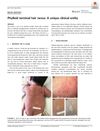 August 2018 in “Pediatric Dermatology”
 A baby had a unique skin condition with a pale patch and surrounding dark hairs, not linked to other health issues.
21 citations
,
September 1968 in “Cancer” Citrulline in certain skin tumors suggests they mimic hair growth, helping distinguish them from other cancer types.