January 2025 in “Genetics in Medicine Open” Biotinidase deficiency can mimic neuromyelitis optica and should be considered for accurate diagnosis and treatment.
76 citations
,
February 1993 in “Journal of Biological Chemistry” KAP6 genes are conserved across species and active in hair follicles.
 42 citations
,
January 2017 in “Genes”
42 citations
,
January 2017 in “Genes” The gene KAP22-1 affects wool yield and fiber shape in sheep.
 August 2021 in “Journal of medical science and clinical research”
 An infant with seizures and hair loss was diagnosed with biotinidase deficiency and treated successfully with biotin.
8 citations
,
January 2014 in “Indian Journal of Paediatric Dermatology” Congenital atrichia with papular lesions causes permanent hair loss and skin bumps from birth.
2 citations
,
November 1996 in “PubMed” Most people have similar hair protein patterns, but a rare variant was found in two women.
5 citations
,
October 2021 in “American Journal of Medical Genetics Part A” A new genetic variant causes BRESHECK syndrome by disrupting cell growth and stress response.
May 2023 in “Asian Journal of Transfusion Science” Platelet-rich plasma helps treat hair loss, and better screening improves transfusion safety.
65 citations
,
September 2014 in “Orphanet Journal of Rare Diseases” Different STUB1 gene mutations cause varied symptoms in autosomal recessive ataxias.
1 citations
,
June 2022 in “Tidsskrift for Den norske legeforening” A young boy's uncombable hair is due to a rare genetic condition that usually improves over time.
 September 2019 in “The journal of investigative dermatology/Journal of investigative dermatology”
 Not having enough cystatin M/E protein causes less hair growth and dry skin.
5 citations
,
June 2014 in “Der Hautarzt” Genetic testing can identify causes of rare hair loss disorders in children, but no treatments exist.
 June 2024 in “Journal of Psychiatry Spectrum”
 Iron deficiency can cause psychiatric symptoms that improve with proper treatment.
34 citations
,
November 1998 in “Journal of Investigative Dermatology” A common mutation in the hHb6 gene is linked to monilethrix, but other factors may also play a role.
95 citations
,
September 2012 in “Oman Medical Journal” Mutations in keratin genes can cause skin and mucosa disorders.
 June 2026 in “World Journal of Clinical Pediatrics”
 Early diagnosis and tailored treatment improve outcomes for non-nutritional rickets.
47 citations
,
July 1998 in “Journal of Investigative Dermatology” A new mutation, Glu402Lys, in hair keratin is linked to variable symptoms of monilethrix.
 January 2022 in “Revista Dermatológica Centro Uraga”
 Monilethrix is a genetic hair disorder affecting hair shape, seen in two brothers.
 January 2007 in “Revista del Centro Dermatológico Pascua”
 A 2-year-old boy was diagnosed with a rare genetic condition causing fragile hair, intellectual issues, and short stature.
ANE syndrome is caused by a mutation in the RBM28 protein that disrupts ribosome assembly.
66 citations
,
January 2020 in “Acta Dermato Venereologica” New genetic variants linked to inherited ichthyoses were identified, offering insights for potential gene therapy.
 January 2026 in “Cosmoderma”
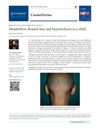
 A 9-year-old girl has a rare hair disorder causing beaded, sparse hair.
 2 citations
,
May 2018 in “Expert opinion on orphan drugs”
2 citations
,
May 2018 in “Expert opinion on orphan drugs” Newborn screening and gene therapy are expected to improve outcomes for Omenn syndrome patients.
December 2020 in “Pathology” A man's skin condition and poor diet led to a scurvy diagnosis.
51 citations
,
September 2012 in “Gene” The research identified a gene in sheep important for wool quality, which could help improve wool traits.
 2 citations
,
January 2019 in “Springer eBooks”
2 citations
,
January 2019 in “Springer eBooks” The conclusion is that different blood diseases cause specific oral symptoms and require varied treatments to manage these symptoms and improve patient health.
305 citations
,
March 2008 in “AJP Endocrinology and Metabolism” SSAT is a key enzyme affecting cell growth and metabolism, with potential but risky use in disease treatment.
January 1999 in “Journal of Investigative Dermatology” October 2022 in “Amplla Editora eBooks” 33 citations
,
December 1982 in “Developmental Medicine & Child Neurology” Hair-shaft abnormalities can indicate neurological disorders, some of which are treatable.