 July 2023 in “Nasza Dermatologia Online”
 More research is needed on CCCA in children, especially Black and Asian adolescents.

A 12-year-old girl was misdiagnosed with alopecia areata but actually had a nevus sebaceus with a genetic mutation.
 January 2023 in “Vìsnik problem bìologìï ì medicini”
 Androgenic alopecia causes hair follicle degradation and skin restructuring, but some hair elements remain.
 August 2022 in “FAKUMI MEDICAL JOURNAL Jurnal Mahasiswa Kedokteran”
 Dandruff does not significantly affect androgenic alopecia.
 March 2022 in “Benha Journal of Applied Sciences”
 ULBP3 levels are higher in Tinea capitis patients and may help predict the disease's severity.
 January 2022 in “Revista Dermatológica Centro Uraga”
 Monilethrix is a genetic hair disorder affecting hair shape, seen in two brothers.
 April 2021 in “International Journal of Research in Dermatology”
 A child with a rare scalp condition regrew hair after treatment.
 December 2020 in “Skin appendage disorders”
 A young man with an unusual type of scarring hair loss suggests a possible new variant of a known scalp condition.
 October 2020 in “International journal of Ayurvedic medicine”
 Leech therapy and Ayurvedic treatment can effectively regrow hair in recent Alopecia areata cases.

Using calvarial bone for maxilla augmentation is less painful and allows for single-procedure dental implants.
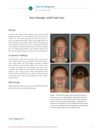 July 2019 in “Journal der Deutschen Dermatologischen Gesellschaft”
 A mother and daughter have a rare genetic hair loss disorder with no effective treatment.
 April 2019 in “Journal of Medical Science And clinical Research”
 The grey patch variant of tinea capitis is most common, mainly spread through family and animals.
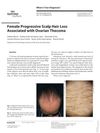 January 2019 in “Skin appendage disorders”
 A woman's hair loss was linked to a rare hormone-secreting ovarian tumor, treated with surgery and hair loss medication.
 January 2019 in “Global Dermatology”
 Genetic hair shaft abnormalities can be seen with microscopes and often affect scalp hair.
 July 2018 in “International Journal of Research in Dermatology”
 The patient was diagnosed with hypothyroidism and treated with medication and supplements.
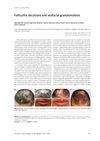 January 2018 in “Advances in Dermatology and Allergology”
 Treatment with dapsone, topical corticosteroids, and antibiotics improved the man's skin conditions.
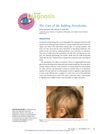 November 2017 in “Pediatrics in Review”
 A 4-year-old girl with hair loss was diagnosed with early-onset trichotillomania and improved with behavioral interventions.
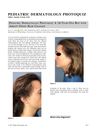 September 2017 in “Pediatric Dermatology”
 A 14-year-old boy was diagnosed with a rare hair condition that may lead to hair thinning and has no known effective treatments.
 February 2017 in “Medicina cutánea ibero-latino-americana”
 An 8-year-old boy with hair loss had hair regrowth and responded well to clobetasol propionate treatment.
 January 2017 in “International journal of science and research”
 Trichotillomania is a chronic hair-pulling disorder, more common in females, treated with therapy and sometimes medication.
 September 2016 in “Más dermatología”
 New factors in female hair loss include genetics, hormones, stress, and inflammation; future treatments should also focus on these areas and consider the patient's emotional well-being.
 April 2016 in “Proceedings of SPIE”
 UV-induced autofluorescence is effective for identifying different types of alopecia.
 January 2015 in “Hair therapy & transplantation”
 New hair and scalp disease diagnosis methods are important for correct treatment.
 January 2015 in “Springer eBooks”
 Understanding hair structure and growth is key for diagnosing hair diseases accurately.
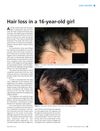 November 2014 in “Prescriber”
 The 16-year-old girl with hair loss was successfully treated for alopecia areata, leading to significant hair regrowth.
Human scalp hair follicles have PGE2 and its receptors, which might affect hair growth.
 December 2012 in “Drugs & Therapy Perspectives”
 Doctors use their experience to choose treatments for scarring hair loss because it's hard to diagnose and treat.
 June 2012 in “Springer eBooks”
 Eating disorders can cause various hair problems, and while hair loss in these disorders is linked to metabolic syndrome, treatment focuses on specific medications and lifestyle changes for the syndrome.
 April 2012 in “Informa Healthcare eBooks”
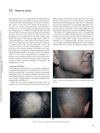
 Alopecia areata is a common autoimmune condition causing varying hair loss, diagnosed by specific patterns of inflammation around hair follicles, with several treatment options available.
 March 2012 in “Journal of The American Academy of Dermatology”
 Hand-foot-mouth disease may cause nail loss in children.