
Fractional CO2 laser is more effective and safer than steroid injections for treating alopecia areata.
June 2018 in “Chinese Journal of Dermatology” Connective tissue nevi have distinct features, and reflectance confocal microscopy is useful for early diagnosis.
 April 2018 in “Dermatologic Surgery”
 A new surgical technique using vellus hair grafts effectively treated vitiligo without causing unwanted hair growth.
 September 2017 in “Journal of Investigative Dermatology Symposium Proceedings”
 Some people with the skin color loss condition, vitiligo, also develop the skin inflammation condition, lichen planus, possibly due to local trauma, sun damage, or genetic factors.
 February 2017 in “Medicina cutánea ibero-latino-americana”
 An 8-year-old boy with hair loss had hair regrowth and responded well to clobetasol propionate treatment.
 January 2017 in “International journal of biomedical engineering and clinical science”
 Cri-du-chat syndrome can cause skin and oral lesions affecting nutrition and quality of life.
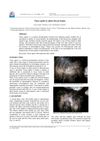
An adult Libyan woman was successfully treated for a rare scalp infection usually seen in children.
Low level laser therapy effectively treats alopecia areata on the scalp.
September 2013 in “Canadian Medical Association Journal” Alopecia areata causes sudden hair loss, often resolves within a year, but can recur.
 April 2012 in “Journal of the American Academy of Dermatology”
 Clofazimine may be effective for treating ashy dermatosis.