 1 citations
,
March 2020 in “Australasian Journal of Dermatology”
1 citations
,
March 2020 in “Australasian Journal of Dermatology” The paper concludes that recognizing bitemporal alopecia areata is important for early treatment and preventing its progression.
 1 citations
,
February 2020 in “International Journal of Research in Dermatology”
1 citations
,
February 2020 in “International Journal of Research in Dermatology” Scalp alopecia areata mostly affects young adult males, often starts suddenly, and usually presents as single, patchy lesions.
February 2026 in “International Journal of Clinical Dermatology” Alopecia areata in children shows varied forms and treatment challenges, with some achieving full or partial hair regrowth.
August 2025 in “Medical Journal of Armed Police Force Nepal” Alopecia areata is more common in males, mostly affects the scalp, and often appears as patchy hair loss.
November 2024 in “Journal of Investigative Dermatology” Hair evaluation is crucial for early diagnosis and management of ARCI, as hair loss often indicates severity.
July 2024 in “Zagazig University Medical Journal” Excimer laser can effectively treat mild to moderate patchy alopecia areata.
Excluding alopecia and mucous membrane components from the CLASI-A score reduces its effectiveness in capturing important disease activity.
 July 2023 in “The Egyptian Journal of Hospital Medicine ”
 Alopecia areata is a hair loss condition caused by immune factors and can be treated with JAK inhibitors.
 January 2023 in “Asian Journal of Pediatric Research”
 Trichoscopy is crucial for diagnosing and assessing alopecia areata in children.
 July 2013 in “Our Dermatology Online”
 Minoxidil 2% is more effective than tacrolimus 0.1% for hair regrowth in mild to moderate patchy hair loss, and combining both might give better results.
 February 2010 in “Journal of The American Academy of Dermatology”
 The study concluded that patients with total hair loss and recurring hair loss had an earlier onset, longer-lasting condition, and a greater negative impact on their quality of life, with allergic conditions linked to more severe hair loss.
 February 2010 in “Journal of The American Academy of Dermatology”
 Alopecia areata has different forms and can significantly affect quality of life, especially in more severe cases.
December 2025 in “Egyptian Reviews for Medical and Health Sciences .” More lesions mean more severe alopecia areata.
 April 2023 in “Journal of Cosmetic Dermatology”
 There's no strong link between Alopecia Areata, a hair loss condition, and fatty liver, but more research is needed.
 January 2021 in “International journal of dermatology, venereology and leprosy sciences”
 Trichoscopy shows black dots, yellow dots, and empty follicles are common in Alopecia Areata, with broken and exclamation mark hair as typical patterns.
 36 citations
,
January 2015 in “Dermatology”
36 citations
,
January 2015 in “Dermatology” Bimatoprost was found to be safer and more effective than mometasone furoate for treating scalp hair loss.
42 citations
,
March 2015 in “Anais Brasileiros de Dermatologia” Anti-TNF therapy can cause hair loss and skin issues.
 33 citations
,
April 2012 in “British Journal of Dermatology”
33 citations
,
April 2012 in “British Journal of Dermatology” Damaged hair follicle stem cells can cause permanent hair loss, but understanding their role could lead to new treatments.
 31 citations
,
April 2010 in “British journal of dermatology/British journal of dermatology, Supplement”
31 citations
,
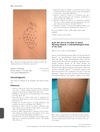
April 2010 in “British journal of dermatology/British journal of dermatology, Supplement” Frontal fibrosing alopecia can cause sudden hair loss on limbs, similar to scalp hair loss.
 8 citations
,
January 1996 in “Springer eBooks”
8 citations
,
January 1996 in “Springer eBooks” Male pattern baldness may be caused by factors like poor blood circulation, scalp tension, stress, and hormonal imbalances, but the exact causes are still unclear.
 3 citations
,
March 2017 in “Case Reports in Dermatology”
3 citations
,
March 2017 in “Case Reports in Dermatology” A woman with lupus improved significantly from scalp hair loss after treatment, highlighting the need to identify psoriatic alopecia in lupus patients to avoid permanent hair loss.
 1 citations
,
November 2017 in “International Journal of Research in Medical Sciences”
1 citations
,
November 2017 in “International Journal of Research in Medical Sciences” Dermoscopy helps distinguish between scarring and non-scarring hair loss and accurately diagnoses hair and scalp conditions without needing hair plucking.
 November 2025 in “International Journal of Recent Innovations in Medicine and Clinical Research”
 Understanding different types of hair loss helps in accurate diagnosis and treatment.
Alopecia areata is more common in males, often appears as patchy hair loss, and is strongly linked to anemia.
 February 2024 in “Actas dermo-sifiliográficas/Actas dermo-sifiliográficas”
 Most alopecia areata patients in the study were women, aged 15-49, with patchy hair loss and often had other health conditions.
 April 2023 in “Voprosy kurortologii fizioterapii i lechebnoĭ fizicheskoĭ kultury”
 COVID-19 may cause hair loss, often after recovery, with androgenetic alopecia being the most common type.
 January 2022 in “Przegla̧d dermatologiczny”
 The document concludes that there are various treatments for diseases linked to scarring hair loss, especially for primary scarring alopecia.
August 2018 in “Ayurline: IJ-RIM” Diet and lifestyle changes can help manage hair loss in alopecia.
 May 2021 in “British Small Animal Veterinary Association eBooks”
 If a dog's skin tests are normal but it has hair loss, consider other non-endocrine causes and choose tests based on the hair loss pattern.
 11 citations
,
October 2016 in “Pediatric dermatology”
11 citations
,
October 2016 in “Pediatric dermatology” Stopping the use of fluocinolone oil containing balsam fragrance improved hair regrowth in children allergic to it.