 34 citations
,
January 2018 in “International Journal of Dermatology”
34 citations
,
January 2018 in “International Journal of Dermatology” Scalp cooling is the most effective FDA-approved method to prevent chemotherapy-induced hair loss, but more research is needed for other treatments.
 March 2025 in “Meditsinskiy sovet = Medical Council”
 Diffuse telogen alopecia is temporary hair loss treated by addressing the root cause and improving scalp health.
 November 2005 in “Journal of Investigative Dermatology Symposium Proceedings”
 The 2004 hair research meeting presented new findings on hair cell differentiation, genetic factors in hair loss, hair pigmentation, and potential targeted therapies.
 128 citations
,
March 2006 in “American Journal of Pathology”
128 citations
,
March 2006 in “American Journal of Pathology” Prolactin contributes to hair loss by promoting hair follicle shrinkage and cell death.
 13 citations
,
March 2017 in “Genomics”
13 citations
,
March 2017 in “Genomics” Genomic approach finds new possible treatments for hair loss.
4 citations
,
January 2010 Low levels of certain trace elements might contribute to hair loss in Egyptian women.
 2 citations
,
July 2022 in “Frontiers in Medicine”
2 citations
,
July 2022 in “Frontiers in Medicine” The cause of Frontal fibrosing alopecia, a type of hair loss, is complex, likely involving immune responses and genetics, but is not fully understood.
 28 citations
,
January 2021 in “Skin appendage disorders”
28 citations
,
January 2021 in “Skin appendage disorders” COVID-19 may cause early hair loss similar to classic temporary hair loss, with further research needed.
 181 citations
,
January 2009 in “Nature Genetics”
181 citations
,
January 2009 in “Nature Genetics” Certain mutations in a hair growth-related gene cause a type of genetic hair loss.
10 citations
,
January 2015 in “Current problems in dermatology” Gentle hair care and avoiding harsh treatments can help manage hair loss.
 5 citations
,
March 2017 in “Biomedical and Pharmacology Journal”
5 citations
,
March 2017 in “Biomedical and Pharmacology Journal” Certain growth factors significantly affect hair loss in women with telogen effluvium.
 3 citations
,
March 2022 in “Annals of Medicine”
3 citations
,
March 2022 in “Annals of Medicine” Hair shedding after COVID-19 is more linked to the disease's severity and inflammation rather than hormones, with women at higher risk.
 2 citations
,
January 2010 in “International Journal of Trichology”
2 citations
,
January 2010 in “International Journal of Trichology” The Hair India 2010 conference introduced a new hair loss classification and highlighted advanced diagnostic techniques in trichology.
 February 2025 in “European Journal of Dermatology”
 Androgenetic alopecia is complex and needs more research for better treatments.
 38 citations
,
September 2014 in “Cell and Tissue Research”
38 citations
,
September 2014 in “Cell and Tissue Research” The hair follicle infundibulum plays a key role in skin health and disease, and understanding it better could lead to new skin disease treatments.
 34 citations
,
January 2014 in “International Journal of Trichology”
34 citations
,
January 2014 in “International Journal of Trichology” Polarized dermoscopy is slightly better than nonpolarized for diagnosing hair disorders, with each method having its own strengths.
 November 2025 in “Clinical Cosmetic and Investigational Dermatology”
 Immune cells and plasma proteins are linked to hair loss, suggesting new treatment options.
 January 2023 in “Annals of dermatology/Annals of Dermatology”
 A substance called miR-1246 may help treat severe hair loss by reducing certain immune cell activities.
January 2015 in “Faculty of 1000 Research Ltd” Androgenetic alopecia may be irreversible due to the detachment of a muscle from hair follicles.
 32 citations
,
May 2020 in “European Journal of Pharmacology”
32 citations
,
May 2020 in “European Journal of Pharmacology” Stem cell therapies show promise for hair regrowth but face production and application challenges.
 February 2024 in “International Journal of Molecular Sciences”
 Hair loss in Androgenetic Alopecia is caused by genetics, aging, and lifestyle, leading to hair follicle shrinkage and related health risks.
 January 2023 in “Skin appendage disorders”
 Hair loss is common in autoimmune diseases and can be an early sign of the condition, often requiring prompt treatment to prevent permanent damage.
The document concludes that current treatments for androgenic alopecia are not fully effective, but new therapies like botulinum toxin and PRP show promise, and future gene therapy could be beneficial.
 November 2025 in “DOAJ (DOAJ: Directory of Open Access Journals)”
 CD25+ CD4+ Tregs and certain plasma proteins are linked to hair loss.
 December 2010 in “Vestnik dermatologii i venerologii”
 Certain genes and X chromosome patterns may significantly contribute to the development of hair loss.
 September 2024 in “Ain Shams Medical Journal”
 Androgenic alopecia causes hair thinning, and treatments include minoxidil, finasteride, and light therapy.
 April 2023 in “The journal of investigative dermatology/Journal of investigative dermatology”
 Activating mitophagy may help manage a key immune response involved in the hair loss condition alopecia areata.
 March 2022 in “Wound practice & research”
 New treatments for alopecia areata show promise, but standardized guidelines are needed.
 8 citations
,
April 1979 in “Journal of Cutaneous Pathology”
8 citations
,
April 1979 in “Journal of Cutaneous Pathology” Giant cells found in some male pattern baldness cases may help diagnose it and suggest hair is mistakenly seen as foreign by the body.
 32 citations
,
March 2021 in “Journal of cosmetic dermatology (Print)”
32 citations
,
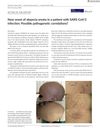
March 2021 in “Journal of cosmetic dermatology (Print)” COVID-19 infection may trigger alopecia areata in some patients.